
Woolly knotweed
Persicaria tomentosa
Description
How to tell it apart
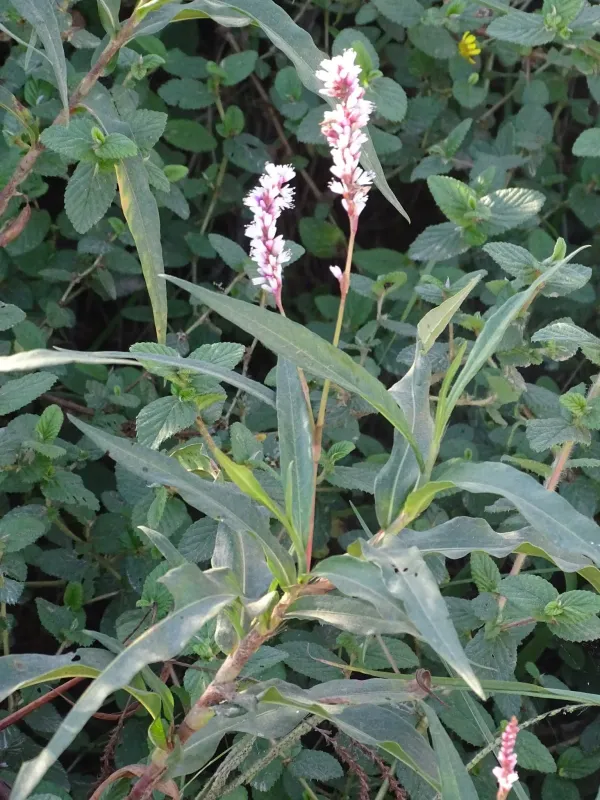
Woolly knotweed (Persicaria tomentosa) belongs to the Polygonaceae family. It is an annual summer weed characterized by a high adaptability to environments with elevated soil moisture.
The plant features an erect or ascending stem, reaching heights of 30 to 80 cm, often branched from the base. The leaves have a distinct lanceolate shape with significant pubescence, which is the origin of its common name.
Inflorescences are dense, spike-like racemes located at the tips of stems or in the axils of upper leaves. The flowers are small and colored in greenish-white or pinkish shades.
The root system is tap-rooted and well-developed, allowing the weed to efficiently absorb nutrients from the soil even under competitive conditions with crop plants.
The fruit is a triangular or flattened nutlet, typically dark brown or black, capable of maintaining high germination rates in the soil for several consecutive years.
Where it grows
This species prefers well-moistened areas and is frequently found along riverbanks, in lowlands, and on waterlogged soils, which makes it a common invader of irrigated agricultural lands.
It is most commonly encountered in row crops such as corn, sunflower, and soybeans, as well as in rice paddies where soil moisture provides an ideal environment for its development.
The plant successfully colonizes waterlogged parts of fields where other weed species might be suppressed by excess moisture, effectively occupying available ecological niches.
Seed dispersal occurs primarily through irrigation water, as well as through the use of poorly cleaned seeds and farm equipment moving across different fields.
Under intensive cultivation practices, woolly knotweed often forms dense mats that spread rapidly along irrigation ditches and drainage systems.
Harm it causes
The primary damage caused by woolly knotweed results from its intense competition for water, light, and mineral nutrition, which leads to significant reductions in crop yields.
Due to its rapid growth and extensive canopy, the weed shades crop seedlings, delaying their development during early and critical growth stages.
The presence of this weed in crops complicates harvest operations, reduces grain quality due to impurities, and increases moisture levels in the harvested product during threshing.
The weed can act as an alternative host for various pests and fungal pathogens, complicating the overall phytosanitary conditions of the agricultural landscape.
Massive infestations deplete soil nutrient reserves, particularly nitrogen, which necessitates increased application rates of mineral fertilizers to compensate for losses.
How to control
Effective management begins with proper soil preparation, including deep autumn plowing, which buries seeds at depths that inhibit their germination.
Strategic agronomic practices include crop rotation and timely inter-row cultivation in row crops to disrupt the weed's life cycle before it produces new seeds.
Chemical control involves the use of soil-applied or post-emergence herbicides targeting members of the Polygonaceae family during the active growth phase of the weed.
To prevent seed dispersal, it is necessary to manage field borders and drainage channels, preventing the weed from reaching the flowering and seed-setting stages.
When selecting herbicides, growers must account for the specific weed spectrum and crop growth stage while strictly following label instructions to avoid crop phytotoxicity.
Taxonomy
- Latin name
- Persicaria tomentosa
- Family
- Гречишка вьюнковая
- EPPO code
- POLTO