
Persicaria posumbu
Persicaria posumbu
Description
How to tell it apart
Persicaria posumbu is an annual herbaceous weed belonging to the Polygonaceae family, closely related to other common species known as smartweeds or knotweeds.
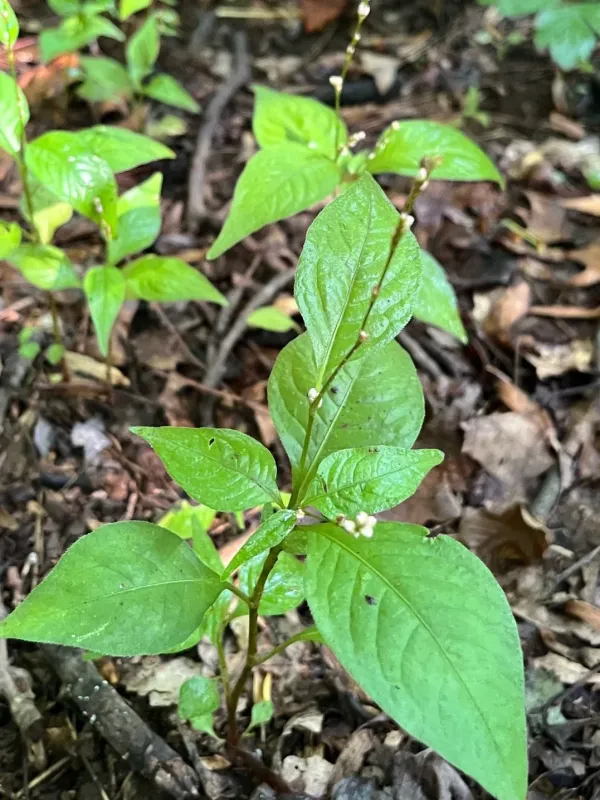
The plant typically features upright or ascending stems that can grow up to 60 centimeters in height. Its leaves are lanceolate, pointed, and often bear a characteristic dark blotch at the center.
It produces small, inconspicuous flowers clustered in dense, terminal spikes. The flower color generally ranges from greenish-white to pale pink, which helps in identifying the species during the summer months.
The root system is taprooted, providing the plant with the ability to penetrate deeper soil layers to extract moisture and nutrients, even during short dry spells.
Reproduction is entirely through seeds, which are produced in large numbers. These seeds can remain dormant in the soil seed bank for several years, ensuring the plant's persistence.
Where it grows
Persicaria posumbu prefers moist environments and is commonly found in wetlands, near irrigation ditches, in damp crop fields, and along roadsides with high soil moisture levels.
In agricultural settings, it is frequently seen in row crops such as corn, soybeans, and vegetables, particularly in poorly drained fields or regions with high annual rainfall.
The weed thrives in areas where soil moisture is consistent, making it a problematic species in irrigated farming systems and low-lying agricultural plains.
It colonizes disturbed ground easily, often following tillage operations or harvest, and can spread rapidly if the area is left unmanaged during the growing season.
Seed dispersal often occurs through contaminated farm machinery, irrigation water flow, or within impure seed lots used in sowing operations.
Harm it causes
The primary agricultural impact of Persicaria posumbu is its ability to compete aggressively with crops for sunlight, water, and essential nutrients, leading to significant yield reductions.
The dense foliage of this weed shades out younger, emerging crop plants, thereby hindering their development and overall biomass accumulation during critical growth stages.
Its presence creates physical obstacles during harvest, often clogging machinery and reducing the efficiency of combine harvesters and other agricultural equipment.
As a host for various pests and plant diseases, this weed poses a secondary risk to crop health, necessitating increased vigilance and additional protective measures.
Continued growth of this species leads to a massive accumulation of seeds in the soil, which increases the long-term cost and effort required for effective weed management.
How to control
Effective control requires an integrated approach starting with proper cultural practices such as deep tillage to bury seeds and prevent germination.
Crop rotation remains a crucial strategy, as it disrupts the growth cycle of the weed and allows for the rotation of different herbicide programs in subsequent seasons.
Mechanical cultivation during the early stages of crop development is highly effective for controlling infestations in row crops before the weed reaches maturity.
Chemical control involves the use of selective herbicides tailored to the specific crop and the growth stage of the weed, ensuring minimal impact on the target harvest.
- Utilizing pre-emergence herbicides to prevent early colonization.
- Applying post-emergence treatments when weeds are in the seedling stage.
- Maintaining soil fertility to boost crop competitive advantage against weeds.
Taxonomy
- Latin name
- Persicaria posumbu
- Family
- Гречишка вьюнковая
- EPPO code
- PRAPO