
Mile-a-minute weed
Persicaria perfoliata
Description
How to tell it apart
Mile-a-minute weed (Persicaria perfoliata) is an annual herbaceous vine in the Polygonaceae family. It is characterized by its rapid growth rate, often extending several meters in a single growing season.
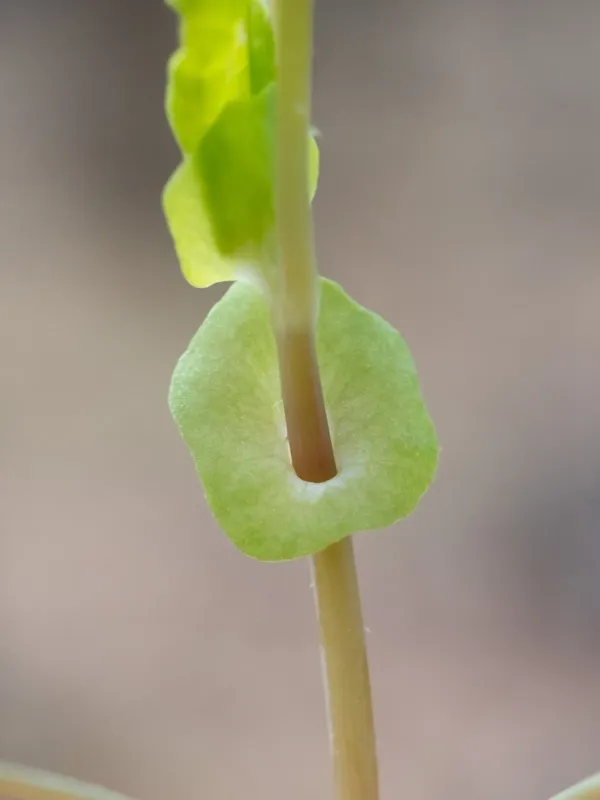
The plant features distinct triangular leaves that appear to be pierced by the stem. At the base of each leaf, there is a saucer-shaped structure known as an ocrea, which is a key identification feature for this species.
The stems are armed with sharp, downward-pointing barbs that allow the plant to scramble over other vegetation. This physical structure makes it highly efficient at smothering neighboring plants and trees.
Flowers are small and white to greenish, maturing into vibrant blue, berry-like fruits. These fruits are highly attractive to birds, which serve as the primary long-distance dispersal agents for the seeds.
The root system is relatively shallow, but the plant's ability to sprout from nodes and its rapid lateral spread make it a formidable invasive species in many parts of the world.
Where it grows
This weed thrives in moist, well-lit environments. It is commonly found along forest edges, stream banks, and wetlands, but it readily invades disturbed habitats such as roadsides and utility rights-of-way.
In agricultural settings, it frequently colonizes row crops, orchards, and nurseries. The plant is particularly problematic in young tree plantations where it can quickly cover and suffocate saplings.
Seed dispersal is frequently facilitated by human activity, particularly through contaminated machinery or soil movement. Once established, it can form dense, impenetrable mats that exclude almost all other native plant species.
The plant shows high adaptability to various soil types and moisture levels. Seeds can remain dormant in the soil for several years, creating a persistent seed bank that complicates eradication efforts.
Its ability to grow in partial shade allows it to invade forest understories, significantly altering local ecosystems and suppressing the regeneration of native flora.
Harm it causes
The primary harm caused by this weed is the physical suppression of crops and native vegetation. Its aggressive climbing behavior leads to heavy shading, which inhibits the growth and development of desired plants.
Mechanical harvesting is severely hindered by the presence of barbed stems, which can clog machinery and increase equipment wear. This leads to increased operational costs and potential crop loss during harvest.
In forestry and nursery environments, the plant causes significant economic damage by deforming young trees and reducing their survival rates. The added weight of the vines can cause physical damage to branches and stems.
Mile-a-minute weed competes aggressively for limited soil resources such as water and nutrients. This competition often leads to lower yields in agricultural fields if the infestation is not managed early.
As an invasive species, it disrupts biodiversity by outcompeting native plants for space and light, leading to the simplification of plant communities and the loss of natural habitat for beneficial insects.
How to control
Effective control requires a multi-year strategy focused on preventing seed production. Small infestations can be pulled by hand, ensuring that the entire root system is removed to prevent regrowth.
Cultural methods include regular mowing along field margins and roadsides to keep the plant in check. Using cover crops can help suppress the emergence of new seedlings by shading the soil surface.
Chemical control is the most reliable method for large infestations. Herbicides containing active ingredients like glyphosate are effective when applied during the active growth phase, before the plant begins to set fruit.
Strict sanitation measures are essential to prevent further spread. All agricultural equipment should be thoroughly cleaned before leaving infested areas to ensure that seeds are not transported to clean fields.
- Monitor field edges and buffers during spring and early summer.
- Apply herbicides according to label instructions for best results.
- Integrate biological control options if available in your region.
Taxonomy
- Latin name
- Persicaria perfoliata
- Family
- Гречишка вьюнковая
- EPPO code
- POLPF