
Prince's feather
Persicaria orientalis
Description
How to tell it apart
Prince's feather (Persicaria orientalis) is an annual herbaceous plant belonging to the Polygonaceae family. It is known for its impressive size and rapid growth in favorable environmental conditions.
The plant features upright, branched stems that can reach heights of over two meters. The stems are typically covered in fine, soft hairs which are characteristic of the species.
The leaves are broadly ovate or heart-shaped, providing a large surface area that allows the plant to dominate the lower vegetation layers through shading.
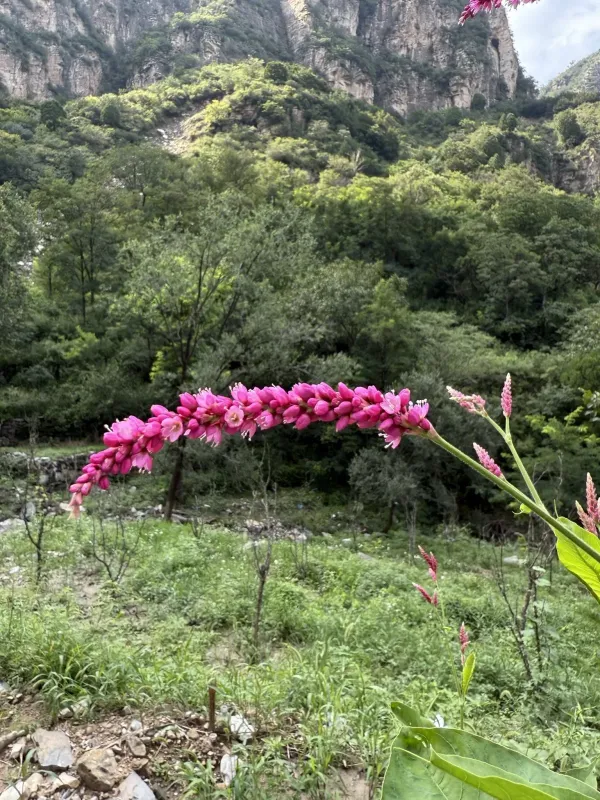
Its inflorescences are distinct, consisting of long, drooping, spike-like racemes filled with small, vibrant pink or purple flowers that bloom from mid-summer until autumn.
Reproduction is solely through seeds, which are produced in massive quantities. A single plant can generate thousands of seeds, which remain viable in the soil for several years.
Where it grows
Prince's feather thrives in moist, nutrient-rich environments. It is frequently found along riverbanks, irrigation canals, and in damp areas of agricultural fields.
In crop production, this weed is a major concern in row crops like maize, soybeans, and sunflowers, particularly in fields with high moisture levels or irrigation.
The weed is highly adaptive and quickly colonizes waste areas, roadsides, and uncultivated patches, where it serves as a source for further spread across farm land.
It prefers warm climates where the combination of high humidity and heat allows it to outpace the development of most standard agricultural crops.
Spread across the landscape occurs through water movement during floods and the transport of contaminated seeds by agricultural machinery or during seed cleaning processes.
Harm it causes
The primary damage caused by Prince's feather is its fierce competition for sunlight, water, and soil nutrients, which leads to stunted growth in neighboring crops.
Due to its significant height and thick foliage, it can effectively shade out shorter crops, drastically reducing the photosynthetic efficiency of the desired plants.
The plant's robust root system extracts large volumes of water from the soil, which creates severe water stress for the crop during critical growth stages.
Large infestations can physically interfere with harvesting equipment, slowing down operations and increasing the costs associated with post-harvest grain cleaning.
Furthermore, the species acts as a reservoir for various crop pests and fungal pathogens, potentially increasing the disease pressure within the field.
How to control
Effective management begins with sound agronomic practices, such as crop rotation and timely soil cultivation, to disrupt the weed's life cycle before seed production.
Inter-row cultivation in row crops is essential for mechanically destroying seedlings and preventing the establishment of large, competitive patches of the weed.
Chemical control remains a critical component, involving the strategic use of herbicides applied at the most vulnerable early growth stages of the weed.
- Application of non-selective herbicides on fallow land to clear seed banks.
- Use of registered selective herbicides during the vegetative stage of the crop.
- Eliminating weed patches on field edges to prevent the dispersal of seeds into cultivated areas.
A multifaceted approach, integrating cultural, mechanical, and chemical control methods, is necessary to minimize the impact of Prince's feather on farm productivity.
Taxonomy
- Latin name
- Persicaria orientalis
- Family
- Гречишка вьюнковая
- EPPO code
- POLOR