
Small knotweed
Persicaria minor
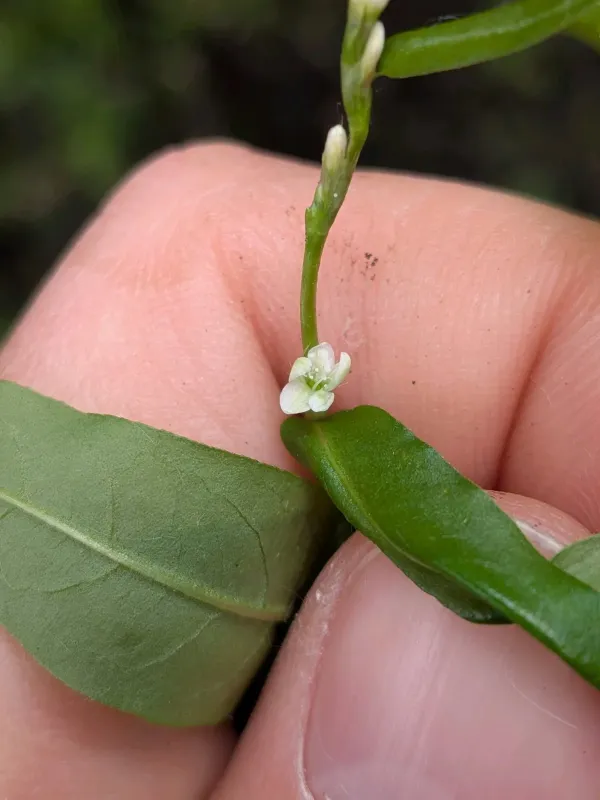
Description
How to tell it apart
Small knotweed (Persicaria minor) is an annual herb belonging to the Polygonaceae family. It is often identified by its slender, reddish-green stems and distinct leaf structure compared to related species.
The plant typically grows up to 40 cm tall, often exhibiting a prostrate or ascending habit. Its leaves are narrow, lanceolate, and sessile, lacking the characteristic stinging taste found in the water-pepper (Persicaria hydropiper).
The inflorescence consists of thin, interrupted spikes of small pinkish or white flowers. The perianth segments are glandless, which serves as a key botanical marker for accurate identification.
The seeds are small, triangular, smooth, and shiny dark brown or black nuts. They are highly persistent in the soil, allowing the plant to re-emerge over many seasons.
Seed germination typically begins in early spring, as soon as the soil temperatures reach 6–10 degrees Celsius, favoring moist and damp conditions.
Where it grows
Small knotweed is primarily a hygrophilous plant, meaning it thrives in wet and marshy habitats. It is commonly found along stream banks, pond margins, and ditches.
In agricultural settings, it frequently infests fields with poor drainage, heavy clay soils, or areas prone to seasonal flooding, competing heavily with crops.
It is often observed in horticultural crops and row crops where constant irrigation or high water tables create a hospitable environment for its growth.
The plant is highly adaptable and can colonize disturbed soil rapidly, especially in fields after heavy rainfall or inadequate land leveling.
Its distribution is frequently linked to compacted soil areas where water logging prevents the successful establishment of the primary crop.
Harm it causes
The main impact of small knotweed is its competitive interference with crop development. It rapidly consumes soil moisture and nitrogen, restricting the growth of surrounding crops.
By shading the soil surface in the early stages of crop growth, it suppresses the germination and development of desirable seedlings, leading to reduced stand density.
Crop contamination with Persicaria minor seeds reduces the commercial quality of grain and harvestable produce, leading to potential dockage at market.
The weed acts as an alternative host for several pests and pathogens, bridging the gap between crop seasons and increasing the disease pressure in the field.
Its high reproductive potential means that even a few surviving plants can replenish the soil seed bank, necessitating long-term management strategies.
How to control
Effective management begins with land improvement techniques, particularly installing drainage systems to lower the water table and reduce soil saturation.
Cultural control measures such as proper crop rotation and the use of competitive cover crops can significantly reduce the establishment of small knotweed populations.
Mechanical control, including frequent inter-row cultivation and timely harrowing, is essential to uproot young seedlings before they reach the flowering stage.
Chemical control involves the use of pre-emergence or post-emergence herbicides compatible with the main crop and effective against annual dicot weeds.
- Regular monitoring of fields to time herbicide application during the most susceptible early growth stages of the weed.
- Integrating chemical and mechanical methods to maintain field sanitation and prevent seed production.
Taxonomy
- Latin name
- Persicaria minor
- Family
- Гречишка вьюнковая
- EPPO code
- POLMI