
Persicaria longiseta
Persicaria longiseta
Description
How to tell it apart
Persicaria longiseta, commonly known as creeping smartweed or long-bristled smartweed, is an annual herbaceous plant belonging to the Polygonaceae family.
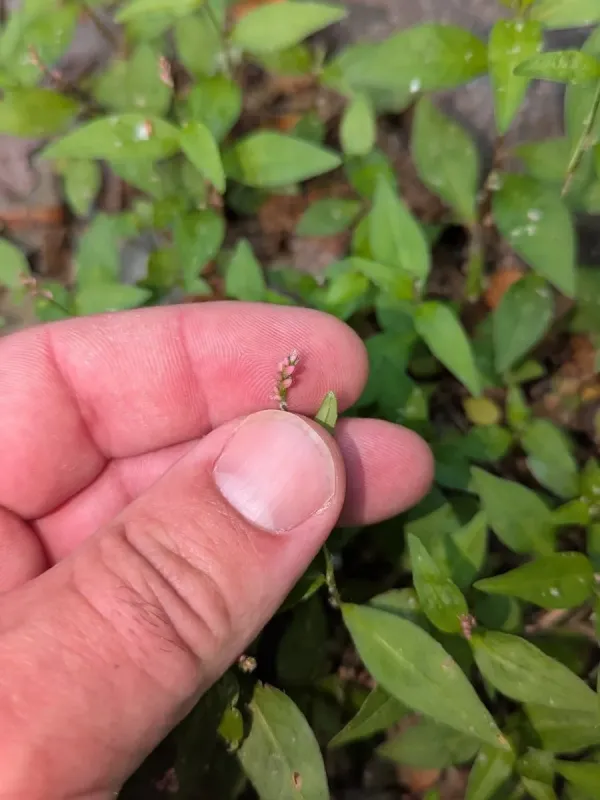
The plant is recognized by its branched stems and lanceolate leaves, which frequently display a distinctive dark reddish or blackish spot in the center.
The most reliable identification feature is the ochrea (the sheath around the stem base), which is fringed with long, prominent bristles that exceed the length of the ochrea itself.
It produces terminal, spike-like inflorescences densely packed with tiny pink to deep magenta flowers that provide a vivid appearance during the blooming phase.
The root system can be shallow, but the plant often develops adventitious roots at the nodes when the stem makes contact with moist soil, aiding its spread.
Where it grows
This weed prefers moist, nutrient-rich environments and is commonly found in disturbed areas, riparian zones, and agricultural fields with high moisture.
It thrives in wet depressions, roadside ditches, and near ponds, where it can establish large, dominant patches that quickly expand into neighboring crop land.
In farming systems, it acts as an invasive colonizer in irrigated fields, vegetable gardens, and spring-planted cereal crops that require consistent soil moisture.
The plant is highly adaptable to various soil types, though it performs significantly better in heavy or loamy soils that retain water effectively throughout the growing season.
Because it produces a vast amount of seeds, it can persist in the soil seed bank for several years, emerging whenever conditions favor its growth.
Harm it causes
The primary agricultural impact of P. longiseta is its competitive nature, as it rapidly consumes water and nutrients, thereby stunting the development of neighboring crops.
Its dense growth pattern creates significant shade, which negatively impacts the early photosynthetic processes of smaller crop seedlings, reducing overall crop vigor.
The weed serves as a harbor for various pests and pathogens, potentially increasing the pressure of diseases that affect agricultural yields in the vicinity.
During the harvest season, the presence of the weed in large quantities can clog machinery, increase grain moisture levels, and complicate post-harvest processing.
Failure to manage the weed early can lead to massive soil seed bank replenishment, making long-term control significantly more difficult and expensive.
How to control
Effective management requires a multi-faceted approach, starting with deep tillage to bury seeds and prevent their germination in the topsoil layer.
Mechanical control, such as timely inter-row cultivation, is essential to disrupt the rooting of the stems and prevent the plant from establishing firm ground cover.
Chemical control should be implemented using selective herbicides, ensuring the treatment is applied during the early growth stages before seed set occurs.
Maintaining proper field drainage can significantly reduce the habitat suitability for this moisture-loving weed, thereby limiting its population density.
- Utilize crop rotation to break the weed's life cycle.
- Clean farm equipment to prevent seed dispersal between fields.
- Monitor field edges to prevent encroachment into crop areas.
Taxonomy
- Latin name
- Persicaria longiseta
- Family
- Гречишка вьюнковая
- EPPO code
- POLBL