
Water pepper
Persicaria hydropiperoides
Description
How to tell it apart
Water pepper (Persicaria hydropiper) is an annual plant belonging to the Polygonaceae family. Its stems are 30–70 cm tall, often reddish, branched, and have swollen nodes.
The leaves are lanceolate, narrowing toward the base, and frequently feature a dark spot. The plant is distinct for its acrid, pungent taste due to the presence of specialized essential oils.
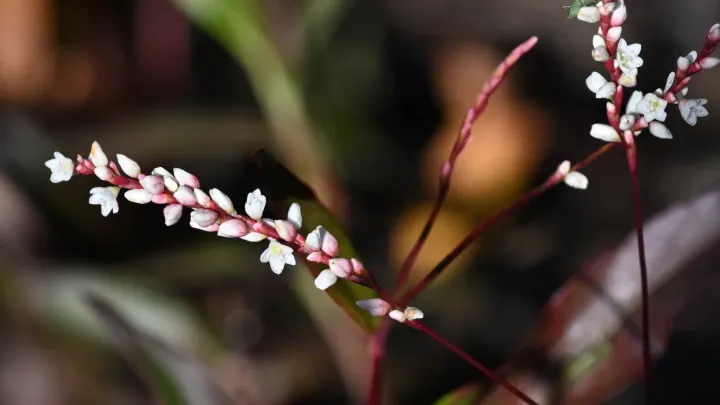
Flowers are arranged in drooping, discontinuous racemes that are greenish-pink or white. The fruit is a dull, triangular achene, typically dark brown or black.
It possesses a shallow taproot system adapted to moist environments. The plant reproduces strictly through seeds, which exhibit high viability and can persist in the soil seed bank.
The flowering stage spans from mid-summer to autumn, which ensures a high production of seeds that spread easily across wet habitats.
Where it grows
Water pepper thrives in wet, marshy areas including pond edges, ditches, wetlands, and flooded lowlands. It is commonly found in areas with high water tables.
In agricultural settings, it becomes a problematic weed in fields with poor drainage or in areas that require heavy irrigation throughout the growing season.
It predominantly impacts row crops, grains, and vegetable patches located on reclaimed peatlands or heavy, clay-rich soils that retain moisture.
The weed rapidly colonizes disturbed patches of soil, effectively outcompeting slow-growing crops due to its rapid biomass accumulation in wet conditions.
Its distribution is strictly linked to moisture availability, making it a primary weed in regional farming areas characterized by high precipitation or poor field drainage.
Harm it causes
The primary damage results from intense competition for water and soil nutrients, which stunts the growth of crop plants during their most sensitive development phases.
High infestations interfere with mechanical harvesting operations, as the succulent stems of the plant cause clogging and damage to combine harvesters.
Water pepper serves as a host for various agricultural pests and pathogens, acting as a secondary source of infection for surrounding crops.
The plant creates dense canopies that shade out emerging crop seedlings, leading to uneven stands and decreased yield potential across the field.
In vegetable production, the high biomass of the weed can restrict air circulation, creating a humid microclimate that favors fungal disease outbreaks.
How to control
Agrotechnical management includes improving field drainage, deep plowing to bury seeds, and using crop rotations that interrupt the weed's life cycle.
Preventative measures involve cleaning farm machinery after working in infested areas to avoid spreading seeds to clean fields.
Chemical control is achieved through the application of selective herbicides targeting broadleaf weeds, ensuring they are applied during the optimal growth stage.
Mechanical cultivation between rows remains an effective way to physically destroy young water pepper plants before they set seed.
- Implementation of proper field drainage systems.
- Timely inter-row cultivation.
- Use of certified weed-free seed material.
- Application of systematic herbicidal treatments.
Taxonomy
- Latin name
- Persicaria hydropiperoides
- Family
- Гречишка вьюнковая
- EPPO code
- POLHP