
Persicaria hydropiper
Persicaria hydropiper
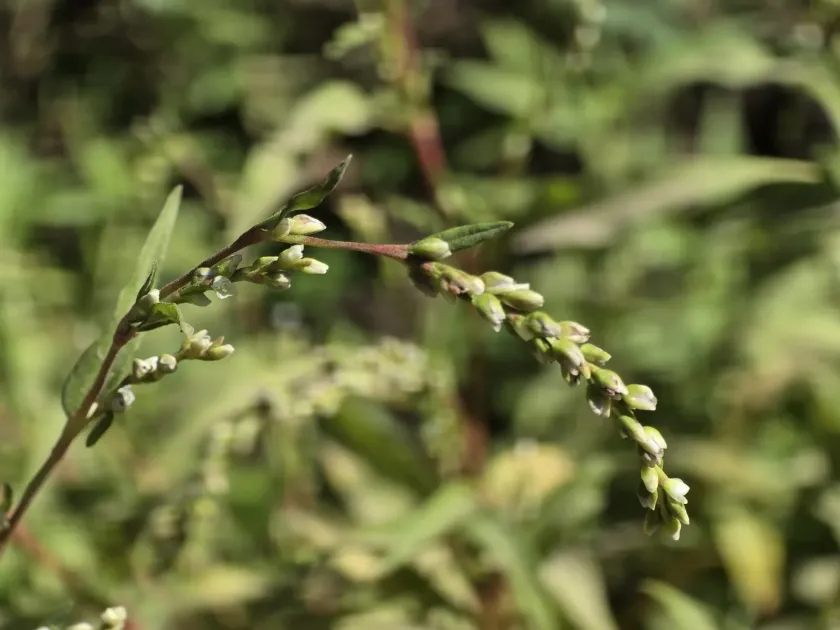
Description
How to tell it apart
Persicaria hydropiper, commonly known as water pepper, is an annual herbaceous plant belonging to the Polygonaceae family. It typically grows to a height of 20 to 70 cm with reddish stems.
The leaves are lanceolate, and when crushed, they release a pungent, peppery odor that characterizes this species and identifies it from related plants.
Its inflorescences are drooping, interrupted spikes that appear greenish or pinkish, blooming from mid-summer until late autumn throughout the growing season.
The root system is a taproot that is not deeply penetrating, but the plant is highly prolific, producing numerous seeds that can persist in the soil for several years.
The presence of small glandular dots on the leaves and stems is a key diagnostic feature, providing the plant with chemical defenses against various herbivores.
Where it grows
This weed thrives in moist or wet environments and is commonly found along the banks of water bodies, ditches, and wetlands where water stagnation is common.
In agricultural settings, Persicaria hydropiper frequently invades field areas with poor drainage or compacted soil, causing it to compete with commercial crops.
It is often observed in cereal and row crop fields where local depressions create pockets of moisture that favor the growth of this specific weed species.
The plant also occupies fallow lands and abandoned plots, acting as an opportunistic species that quickly colonizes areas with high water availability.
Because it prefers high-moisture conditions, it can survive in soils that would otherwise inhibit the development of many typical agricultural crops.
Harm it causes
Persicaria hydropiper acts as a serious competitor in water-logged agricultural fields, where it can rapidly outgrow young crop seedlings for nutrients and space.
By consuming significant amounts of soil moisture and nitrogen, it reduces the overall health and vigor of the primary crop, ultimately leading to yield losses.
The presence of this weed at harvest time creates logistical issues, as it increases the moisture content of the harvested product and hampers cleaning processes.
As a host plant, it may harbor various pests and fungal pathogens, potentially exposing the main crop to increased risks of disease transmission.
- Significant yield reduction in moisture-prone fields.
- Increased post-harvest costs due to seed contamination.
- Difficulties in mechanical harvesting due to dense weed patches.
How to control
Effective management begins with improving field drainage to eliminate the moisture conditions that Persicaria hydropiper requires to establish its population.
Good agricultural practices such as crop rotation and timely soil cultivation are essential for keeping the weed seed bank at low, manageable levels.
Mechanical control, such as inter-row cultivation or early-season harrowing, is highly effective for removing young seedlings before they develop a strong root system.
Chemical control using approved herbicides is a viable option for heavy infestations; however, timing is critical, and applications must target the early vegetative phase.
Integrated weed management should be prioritized to prevent the plant from reaching the flowering and seed-setting stage, ensuring the long-term depletion of the seed bank.
Taxonomy
- Latin name
- Persicaria hydropiper
- Family
- Гречишка вьюнковая
- EPPO code
- POLHY