
Smooth knotweed
Persicaria glabra
Description
How to tell it apart
Smooth knotweed (Persicaria glabra) is a perennial herbaceous plant belonging to the Polygonaceae family. It is a problematic weed in many agricultural regions.
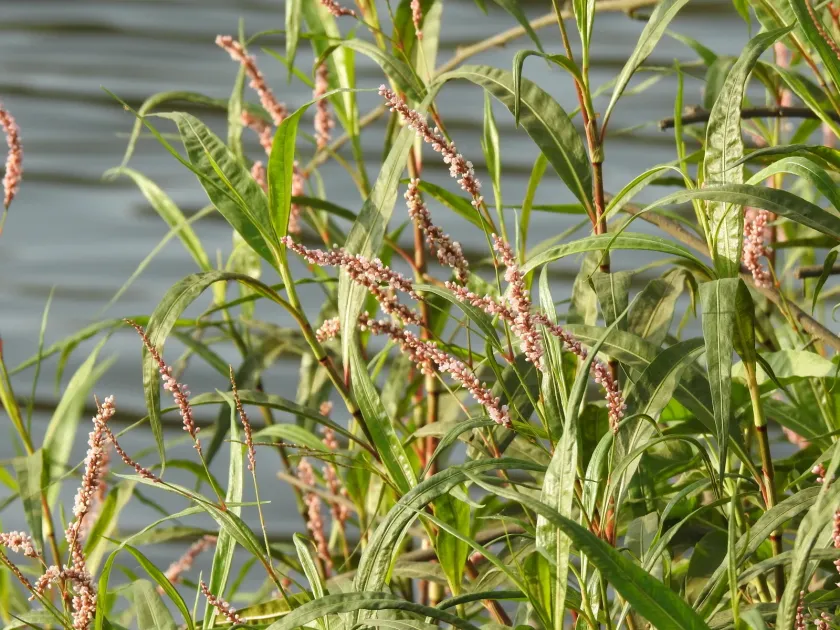
The plant has erect or ascending stems that can grow up to 1 meter in height. A distinctive feature is that the stems are smooth and hairless.
Leaves are lanceolate, usually quite long and narrow, maintaining a smooth surface texture throughout the plant's development cycle.
Flowers are arranged in narrow, spike-like terminal racemes. They are typically white or pinkish, appearing in small clusters along the stalks.
The root system is robust and rhizomatous, allowing the weed to propagate effectively through both seeds and underground structures.
Where it grows
This weed thrives in moist and damp environments. It is frequently found along the banks of rivers, irrigation canals, and in poorly drained lowlands.
In agriculture, it is a significant concern for crops that require high moisture levels, such as rice paddies, soy, and various irrigated vegetable crops.
It prefers heavy soils with a high water retention capacity, where it can quickly establish dense colonies that outcompete native or planted vegetation.
The plant is highly adaptable to fluctuating water tables, often surviving periods of shallow flooding that would kill many other non-aquatic weed species.
Dispersal is largely facilitated by moving water, meaning that fields irrigated from infested canals are at high risk of rapid weed colonization.
Harm it causes
Smooth knotweed causes significant economic loss by competing with crops for water, light, and soil nutrients, directly reducing yield potential.
The dense foliage creates a canopy that suppresses the growth of neighboring crop seedlings, leading to uneven crop stands and stunted plant development.
Its deep root system extracts moisture from the soil profile efficiently, leaving less water available for crops during critical dry periods of the season.
Infestations complicate field operations, specifically harvesting and inter-row cultivation, as the weed can clog machinery and increase harvesting costs.
Additionally, the plant acts as a host for various insects and pathogens, increasing the risk of diseases spreading to the main agricultural crops.
How to control
Effective management begins with improving field drainage, which reduces the moisture availability that the plant relies on for rapid proliferation.
Mechanical control through deep tillage is essential to disrupt and expose rhizomes, which significantly reduces the potential for vegetative regrowth.
Strategic timing of inter-row cultivation ensures that young weeds are destroyed before they can develop a deep, established root system.
- Application of systemic herbicides during the active growth stage for root control.
- Spot-spraying or directed applications in row crops to minimize damage to the primary plant.
- Maintaining clean ditch banks and irrigation channels to prevent seed dispersal into fields.
Chemical control is most effective when combined with proper crop management, ensuring the crop can quickly achieve canopy closure to shade out any remaining weeds.
Taxonomy
- Latin name
- Persicaria glabra
- Family
- Гречишка вьюнковая
- EPPO code
- POLDE