
Carey's smartweed
Persicaria careyi
Description
How to tell it apart
Carey's smartweed (Persicaria careyi) is an annual herbaceous plant belonging to the Polygonaceae family, often recognized by its specific physical characteristics.
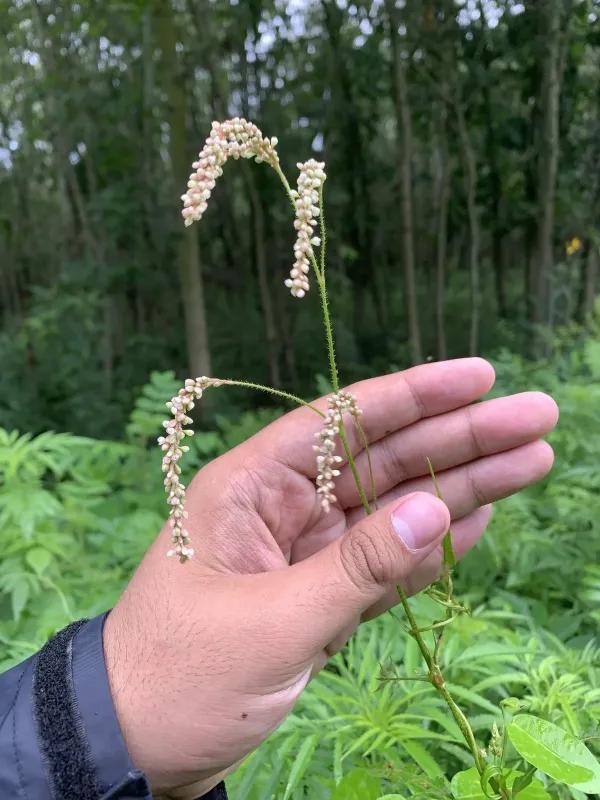
The plant features an erect, branched stem, which can reach heights of 30 to 90 centimeters, and is covered with sticky glandular hairs that distinguish it from similar species.
Leaves are lanceolate and alternate, typically tapering to a point, contributing to the plant's overall architecture in the field environment.
The inflorescences are dense, spike-like racemes featuring vibrant pink to dark purple flowers, which become very prominent as the plant reaches maturity.
The root system is primarily a taproot, providing stability and efficient nutrient absorption, which allows the plant to thrive in moist and loose soil conditions.
Where it grows
Carey's smartweed is typically found in moist environments, including riverbanks, wet meadows, and low-lying areas where soil moisture remains consistently high.
In agricultural settings, it frequently infests crops that require irrigation, as these fields provide the perfect habitat for its rapid growth and seed maturation.
The weed is commonly associated with disturbed soils, such as field edges, drainage ditches, and pathways, from which it spreads into larger cultivated areas.
Seeds are easily transported by water runoff, making fields with poor drainage systems particularly susceptible to heavy infestation after rainfall events.
Agricultural equipment is another primary vector, carrying seeds between fields and introducing the weed to new, previously uninfested areas of a farm.
Harm it causes
The primary agricultural impact of Carey's smartweed is its ability to compete fiercely with crops for sunlight, water, and essential soil nutrients, leading to reduced yields.
Due to its vigorous growth habit, the weed creates dense patches that shade out young crop seedlings, significantly stunting their early-stage development.
Presence of the weed at harvest time is detrimental, as it interferes with the mechanical harvesting process and increases the moisture content of the grain.
Furthermore, Carey's smartweed serves as an alternative host for various pests and pathogens, providing a refuge that allows them to persist and migrate to crops.
The prolific seed production of the plant leads to the accumulation of a large persistent seed bank in the soil, ensuring long-term infestation problems.
How to control
Managing Carey's smartweed effectively requires an integrated weed management strategy that utilizes cultural practices alongside chemical interventions.
Cultural control involves crop rotation and consistent tillage practices that bury seeds at depths where they cannot successfully germinate, limiting population density.
Timely inter-row cultivation during the early stages of crop growth is critical to preventing the weed from becoming established and reaching its flowering stage.
Chemical control programs utilizing appropriate pre-emergence or post-emergence herbicides should be tailored to the specific crop and the growth stage of the weed.
- Applying selective herbicides during the early seedling stage of the weed.
- Maintaining clean field margins to prevent seed encroachment from surrounding areas.
- Improving soil drainage to make the environment less favorable for smartweed germination.
Taxonomy
- Latin name
- Persicaria careyi
- Family
- Гречишка вьюнковая
- EPPO code
- POLCY