
Water smartweed
Persicaria amphibia
Description
How to tell it apart
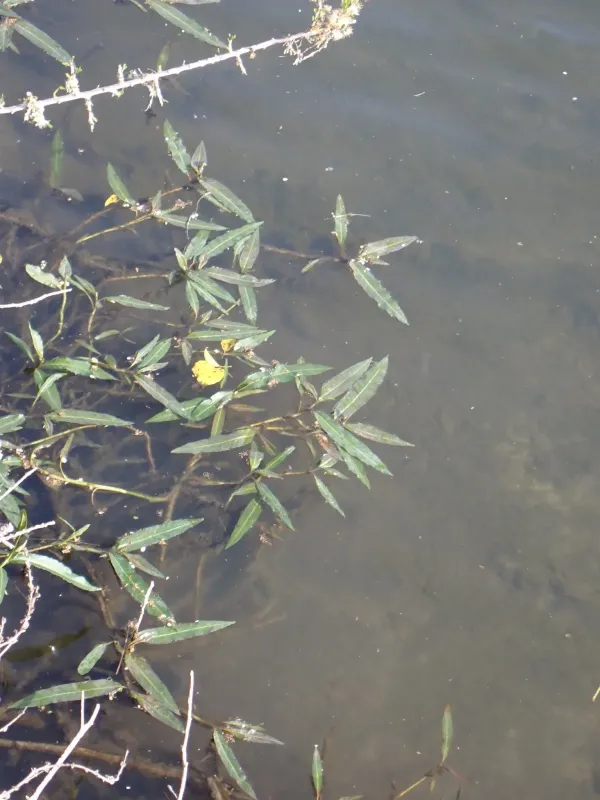
Water smartweed (Persicaria amphibia) is a perennial herbaceous plant belonging to the Polygonaceae family. It is known for its remarkable morphological plasticity, adapting to both aquatic and terrestrial environments.
The terrestrial form features erect, hairy stems with lanceolate leaves and terminal inflorescences consisting of dense, pink, spike-like racemes.
The plant's most defining feature is its extensive and deep creeping rhizome system, which allows it to persist in the soil even after repeated surface disturbances.
Reproduction occurs through both seeds and vegetative propagation via rhizome fragments, enabling the weed to spread rapidly across agricultural landscapes.
Flowering typically spans from June through September, and the plant thrives in areas with high moisture availability, making it a persistent competitor in its preferred habitats.
Where it grows
Water smartweed naturally favors moist conditions, such as the margins of ponds, ditches, wetlands, and other areas with periodic water saturation.
In agricultural settings, it is a significant weed in poorly drained fields, including reclaimed peatlands and areas with high water tables.
It frequently invades cereal crops, corn, and vegetable fields, especially where traditional soil drainage systems are insufficient or poorly maintained.
By forming dense colonies, the plant effectively crowds out cultivated crops, reducing the overall planting density and field uniformity.
Additionally, it creates maintenance challenges by clogging irrigation channels and drainage ditches, often leading to increased sedimentation and water stagnation.
Harm it causes
The primary damage caused by water smartweed is significant yield loss resulting from intense competition for soil nutrients, water, and sunlight with the main crop.
The presence of this weed complicates harvest operations. Its dense foliage often clogs harvesting machinery, leading to equipment downtime and grain loss.
This species serves as a host for various agricultural pests and fungal pathogens, which can easily migrate to crops and cause further yield degradation.
In infested areas, water smartweed creates pockets of stunted or non-existent crop growth, essentially creating patches of bare land in productive fields.
The excessive green mass of the weed increases humidity within the crop canopy, providing an ideal environment for mold development and grain rot prior to harvest.
How to control
Effective management of water smartweed requires an integrated approach, as simple mechanical removal of top growth is rarely sufficient to eliminate the deep rhizome network.
Agrotechnical strategies, such as deep plowing with moldboard inversion, are recommended to physically disturb and weaken the underground biomass over several seasons.
Improving soil drainage and field moisture management are critical long-term strategies to discourage the spread of this hydrophilic weed species.
Chemical control involving systemic herbicides applied to actively growing foliage is often the most effective method to ensure the active ingredient translocates to the rhizomes.
When selecting herbicides, it is essential to consider the crop's safety, choosing selective products that target broadleaf weeds without damaging the primary production crop.
Taxonomy
- Latin name
- Persicaria amphibia
- Family
- Гречишка вьюнковая
- EPPO code
- POLAM