
Polygonum ciliinode
Parogonum ciliinode
Description
How to tell it apart
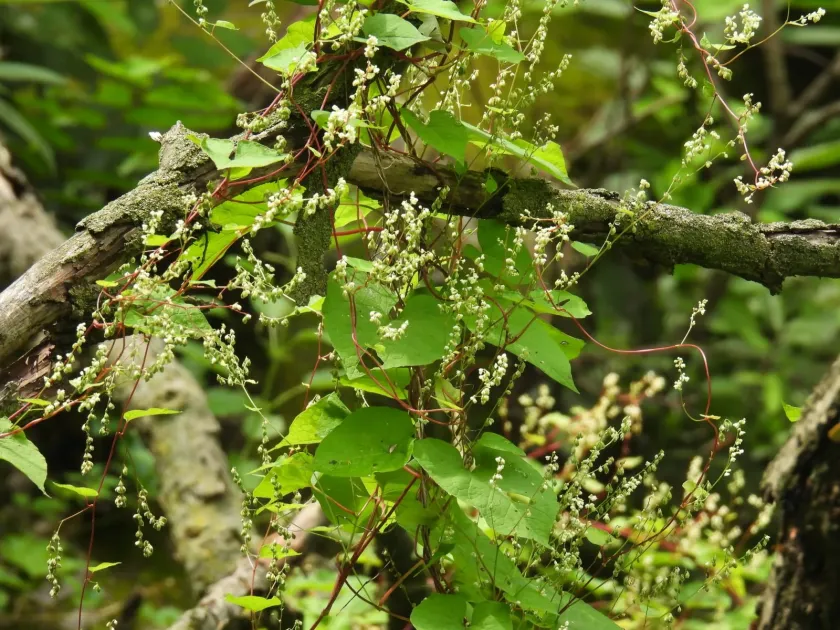
Polygonum ciliinode is an annual herbaceous plant belonging to the Polygonaceae family, characterized by its climbing or scrambling growth habit.
The stems can reach lengths of up to 100 cm, often displaying a reddish tinge, and are covered with fine hairs, particularly near the nodes.
The leaves are heart-shaped or arrowhead-shaped, with the species name reflecting the presence of distinct cilia (hairs) along the edges of the ocreae.
Its flowers are small, arranged in loose racemes, appearing greenish-white or pale pink, which are inconspicuous but produce numerous seeds.
The seeds are dark brown, three-angled achenes that are smooth and shiny, enabling them to survive in the soil bank for extended periods until conditions are ideal.
Where it grows
This weed thrives in moist environments, commonly found on forest edges, clearings, and moist agricultural fields throughout its distribution range.
In agricultural settings, it frequently infests small grain fields and inter-row spaces in row crops, particularly in regions with high soil moisture levels.
It often establishes along field margins, road verges, and drainage ditches, using these corridors to spread into cultivated areas via machinery and wind.
The plant prefers soils that are rich in organic matter and possess a near-neutral pH, making it highly competitive in fertile agricultural lands.
Its occurrence often indicates poor drainage or high humidity, as the plant requires stable moisture conditions to establish its initial growth phase.
Harm it causes
The primary damage caused by Polygonum ciliinode is its climbing habit, which causes lodging in cereal crops and hinders mechanized harvesting operations.
By overtopping crop plants, the weed competes aggressively for sunlight, drastically reducing the photosynthetic efficiency and biomass production of the crop.
The extensive vegetative growth depletes soil moisture and nitrogen, which are essential for crop development, especially during critical vegetative stages.
Harvesting becomes significantly more difficult, as the tangled masses of the weed increase the moisture content of the grain and clog harvesting equipment.
Additionally, the weed can host various agricultural pests and pathogens, serving as a reservoir that facilitates the infection of nearby crops.
How to control
Agricultural control strategies focus on deep plowing, which serves to bury the seeds deep enough to prevent successful germination in subsequent seasons.
Pre-planting cultivation and early-season harrowing are highly effective in destroying young seedlings before they reach a stage of rapid growth.
Strategic crop rotation, particularly using competitive cover crops, helps suppress the weed by limiting the light available for its development.
Chemical control involves the use of selective systemic herbicides that are effective against broad-leaved weeds during their early growth stages.
- Regular mechanical weeding in row crops.
- Using weed-free certified seeds for sowing.
- Monitoring field edges and drainage areas to prevent initial spread.
Taxonomy
- Latin name
- Parogonum ciliinode
- Family
- Гречишка вьюнковая
- EPPO code
- POLCI