
Himalayan knotweed
Koenigia polystachya
Description
How to tell it apart
Himalayan knotweed (Koenigia polystachya) is a robust perennial plant belonging to the Polygonaceae family. It is recognized by its vigorous growth habit and ability to form dense, tall stands.
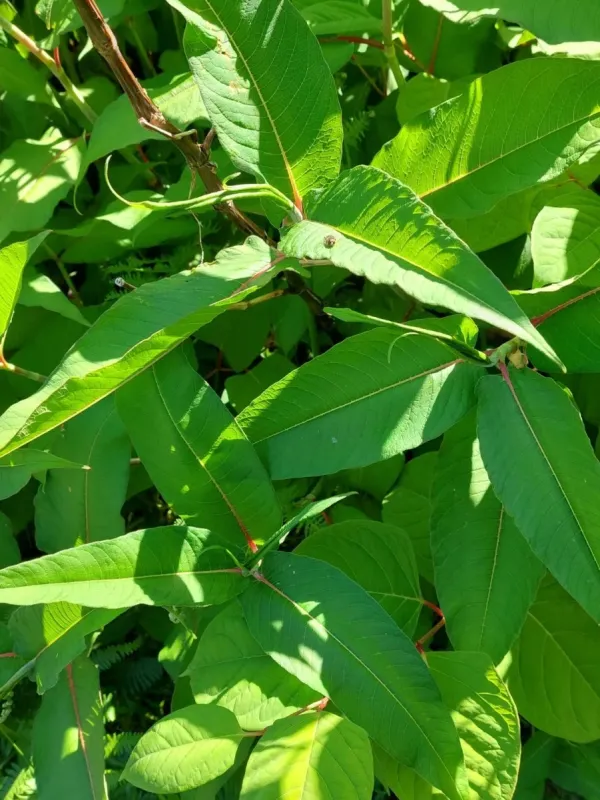
The stems are erect, branched, and can grow to considerable heights. The leaves are alternate and typically lanceolate or ovate, providing a clear botanical marker for identification.
Its inflorescences consist of large, loose panicles of small white to cream-colored flowers. Flowering occurs during the late summer, which is a critical phase for monitoring and management.
The plant possesses a strong, extensive root system that facilitates vegetative spread. This resilience makes it a persistent weed that is difficult to eradicate once established in an area.
The seeds are small and lightweight, equipped with structures for easy wind and water dispersal, enabling the plant to colonize new agricultural and natural environments efficiently.
Where it grows
Himalayan knotweed typically thrives in moist environments, including riverbanks, wet meadows, and areas with high rainfall, such as mountainous regions and foothills.
In agricultural settings, it frequently invades row crops, grain fields, and pasturelands. It favors loose, fertile soils that remain consistently moist throughout the growing season.
The plant is highly adaptable and often establishes itself in disturbed sites, such as field margins, roadsides, and abandoned lands, from where it spreads into productive fields.
It often occupies low-lying areas of fields where water accumulates, showing a preference for higher humidity levels compared to the surrounding drier sections of the plot.
Its ecological plasticity allows it to compete effectively with native vegetation, eventually creating monocultures that displace diverse plant life and reduce biodiversity.
Harm it causes
The primary damage caused by Himalayan knotweed is its aggressive competition with crops for essential resources such as water, light, and soil nutrients.
Due to its rapid vertical growth and dense foliage, it shades out crops, leading to inhibited photosynthesis and significantly reduced yields in affected patches.
It acts as a host for various pests and pathogens, increasing the risk of disease outbreaks in adjacent fields and necessitating higher inputs of pesticides and fungicides.
Its extensive root system depletes soil moisture reserves, which puts stress on primary crops, particularly during drought conditions, leading to stunted growth.
The presence of knotweed biomass during harvest contaminates grain samples, forcing farmers to incur additional costs for seed cleaning and reducing the overall quality of the harvested produce.
How to control
Controlling Himalayan knotweed requires a long-term management strategy that combines mechanical interventions with targeted chemical applications to kill the root system.
Mechanical methods involve deep plowing and regular cultivation to disrupt and exhaust the rhizomes. This is most effective when carried out over several seasons to weaken the population.
Chemical control focuses on the use of systemic herbicides applied during the peak growth stage, ensuring the active ingredients are translocated down into the roots.
- Systemic herbicides like glyphosate are highly effective when applied appropriately to the foliage.
- Frequent mowing or cutting of the stems prevents seed set and helps exhaust the root carbohydrate reserves.
- Integrating competitive crops into the rotation can help naturally suppress the growth of knotweed in the field.
Strict sanitation measures for farm equipment are essential to prevent the spread of rhizome fragments and seeds from infested areas to non-infected parts of the farm.
Taxonomy
- Latin name
- Koenigia polystachya
- Family
- Гречишка вьюнковая
- EPPO code
- POLPS