
Soft knotweed
Koenigia mollis
Description
How to tell it apart
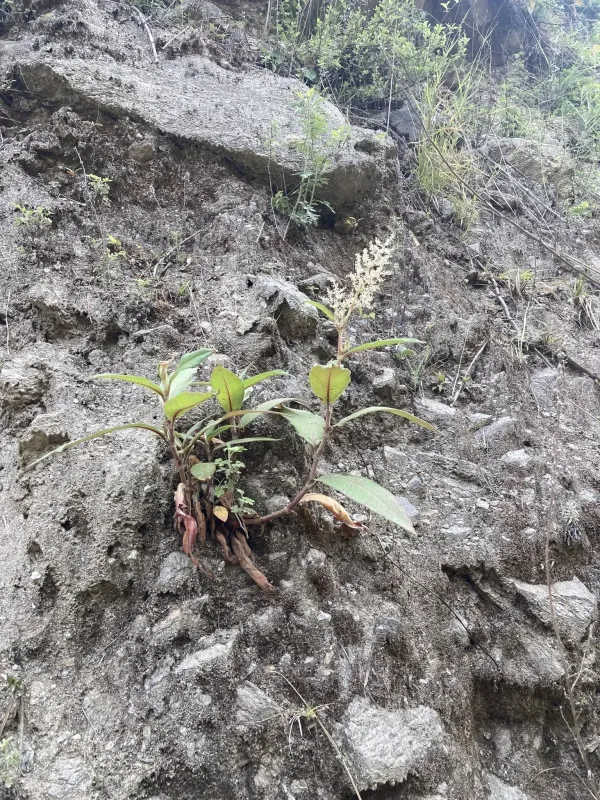
Soft knotweed is a perennial herbaceous plant belonging to the Polygonaceae family. It is characterized by erect stems, which can be somewhat woody at the base and are often covered with fine hairs, giving the plant its specific texture.
The leaves are alternate, usually lanceolate or egg-shaped, with entire margins. A distinct feature is the slightly rough or pubescent surface of the leaf blades, which helps in identifying the species during its vegetative growth stage.
The flowers are tiny and grouped in loose panicles at the tips of the stems. The perianth is typically white or greenish-white, making the plant clearly visible when it reaches its flowering phase in the field.
Its root system is extensive and highly branched, capable of reaching deep into the soil. This structural strength provides the plant with significant resilience against environmental stress and mechanical disturbance.
Seeds of the soft knotweed are highly viable and can persist in the soil seed bank for several years. They are evolved for easy dispersal by wind and water, facilitating rapid colonization of new agricultural areas.
Where it grows
The plant thrives in moist and nutrient-rich soils, making it common in low-lying areas, along riverbanks, and in irrigated agricultural lands where water supply is abundant.
Soft knotweed is particularly problematic in row crops such as corn, soybeans, and sunflowers. It often invades vegetable crop rotations where high-intensity farming provides ideal conditions for its proliferation.
Field margins, fences, and non-cultivated plots are typical habitats for this weed. These areas often serve as reservoirs from which seeds spread into commercial crop fields during cultivation cycles.
While it adapts to various climates, it shows the highest levels of aggressiveness in regions with warm summers and consistent moisture, where the growing season is long enough for the plant to mature fully.
Abandoned fields or fallow lands are frequently colonized by soft knotweed. Without proper management, it can rapidly dominate these areas and spread into surrounding active farm land.
Harm it causes
The primary damage caused by this weed is its intense competition for limited resources, specifically sunlight, water, and soil nutrients, which directly impacts the yield potential of crops.
Due to its rapid vertical growth, soft knotweed shades out younger crop plants early in the season. This early-stage suppression prevents the crop from developing a strong root and leaf system.
The plant’s deep-reaching root system effectively extracts moisture from the soil profile, creating a significant disadvantage for crops during peak summer droughts and reducing total harvest tonnage.
Infestations of soft knotweed create major operational difficulties during harvesting. The thick stems can clog combine harvesters and other equipment, leading to downtime and increased harvest losses.
The weed acts as a host for various pathogens and pests. These organisms can migrate from the weed to the commercial crop, forcing farmers to increase the use of fungicides and insecticides.
How to control
Agrotechnical management includes deep autumn plowing with soil inversion, which effectively slices the root system and buries seeds deep enough to inhibit successful germination.
Mechanical inter-row cultivation is a crucial strategy in row crops. It physically eliminates seedlings and weakens the established root systems of the weed before it becomes too dominant.
Implementing a diverse crop rotation that includes dense-canopy crops helps shade the soil, significantly reducing the success of soft knotweed in competing for light in the fields.
Chemical control involving systemic herbicides is effective if timed correctly during the active growth phase of the weed, allowing the chemical to reach the root system for complete destruction.
- Deep plowing with soil inversion.
- Consistent inter-row mechanical cultivation.
- Proper crop rotation planning.
- Timely application of systemic herbicides.
Taxonomy
- Latin name
- Koenigia mollis
- Family
- Гречишка вьюнковая
- EPPO code
- PRAML