
Phyllanthus maderaspatensis
Phyllanthus maderaspatensis
Description
How to tell it apart
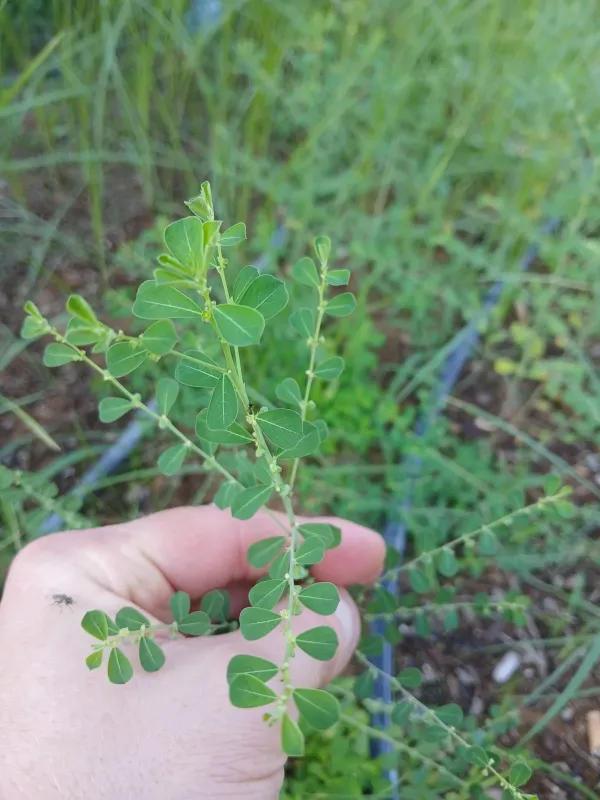
Phyllanthus maderaspatensis, belonging to the Phyllanthaceae family, is an annual herb known for its branched stems that can grow up to 60 centimeters in height. Its structure is relatively slender but highly competitive.
The leaves are alternate, simple, and typically lanceolate or oblong in shape. They feature a smooth surface and a prominent central midrib that is often lighter in color than the rest of the leaf blade, serving as a reliable identification marker.
The flowers are small, inconspicuous, and unisexual, emerging from the leaf axils. Because they lack petals, they are easily overlooked until the plant matures and begins to develop its characteristic fruit capsules.
The fruit is a small, globose, dehiscent capsule. When the plant is mature, these capsules burst open to release numerous small seeds, which are highly efficient at spreading through water runoff, wind, or agricultural machinery.
This species possesses a robust taproot system that allows it to anchor firmly in the soil. This root structure enables the plant to survive in various soil types and extract nutrients even in competitive environments.
Where it grows
Phyllanthus maderaspatensis thrives in tropical and subtropical regions. It is widely distributed across parts of Asia, Africa, and Australia, where it frequently colonizes disturbed land and agricultural fields.
This weed is commonly found in fields growing cotton, sorghum, peanuts, and various pulse crops. It shows a strong preference for well-irrigated areas, where high moisture levels accelerate its germination and rapid colonization.
Beyond cultivated fields, the plant often inhabits irrigation ditches, roadsides, and abandoned pastures. These non-crop areas act as reservoirs, from which the seeds readily disperse into adjacent agricultural lands.
The weed adapts well to a variety of soil textures, ranging from sandy loams to heavier clays, provided there is adequate light and moisture. It is particularly persistent in fields with intensive irrigation practices.
Agricultural operations often unintentionally facilitate its spread. Equipment used for tillage or harvest can transport seeds between fields, turning minor infestations into significant agronomic challenges within a few growing seasons.
Harm it causes
The primary harm caused by Phyllanthus maderaspatensis is its ability to outcompete crops for light and space. Dense patches of this weed can quickly shade out young seedlings, leading to reduced plant vigor and stand density.
By competing for essential soil nutrients like nitrogen and phosphorus, the weed significantly depletes the resources available to the crop, often resulting in marked declines in total yield and harvest quality.
The plant can act as an alternative host for various pests and pathogens, including viruses and insects. By harboring these threats, it poses a recurring risk to nearby crops, complicating pest management strategies throughout the season.
In addition to physiological competition, the physical presence of the weed interferes with mechanical operations. Dense infestations can clog machinery such as cultivators or harvesters, leading to increased fuel usage and labor costs.
Furthermore, if this plant becomes a contaminant in forage, it may reduce the overall nutritional quality of the feed, potentially causing digestive issues for livestock if consumed in large quantities.
How to control
Effective management of Phyllanthus maderaspatensis requires an integrated approach that focuses on depleting the soil seed bank and preventing the weed from reaching the reproductive stage where seeds are produced.
Mechanical control, such as deep plowing after harvest, is highly recommended to bury seeds at depths where they cannot germinate effectively. Regular inter-row cultivation during the early stages of crop growth is also essential to manage existing plants.
Crop rotation is a critical agronomic strategy. By alternating crops, growers can break the weed's life cycle and utilize different herbicide modes of action, which helps prevent the development of resistant weed populations.
Chemical control involves the application of pre-emergence and post-emergence herbicides. Choosing the correct product is vital to ensure efficacy against the weed while remaining safe for the primary agricultural crop.
- Monitor field edges and irrigation channels to prevent initial establishment.
- Ensure that all agricultural machinery is cleaned when moving between fields.
- Use certified clean seed to avoid introducing the weed to new areas.
- Mow or remove the weed before seed capsules reach maturity.
Taxonomy
- Latin name
- Phyllanthus maderaspatensis
- Family
- Филлантовые
- EPPO code
- PYLMP