
Baldwin's ironweed
Vernonia baldwinii
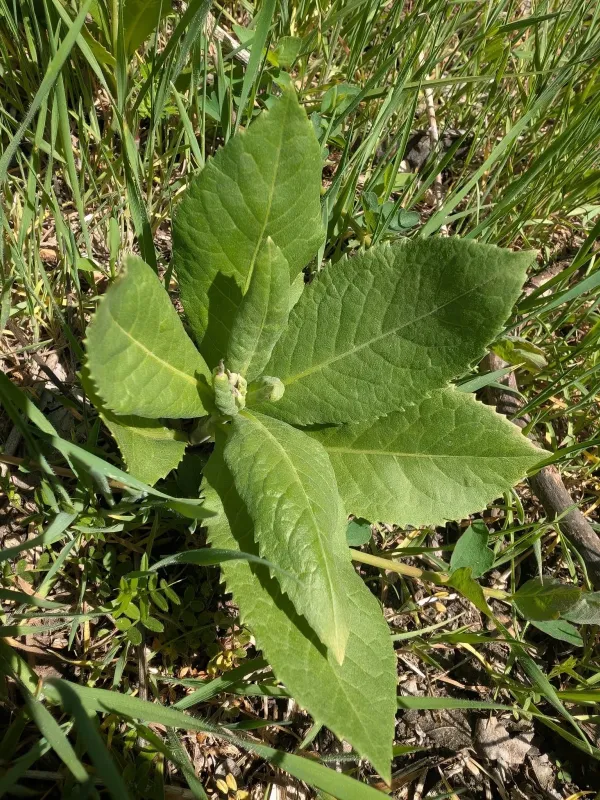
Description
How to tell it apart
Baldwin's ironweed (Vernonia baldwinii) is a perennial herbaceous plant belonging to the Asteraceae family, known for its persistent growth habits.
The plant features a sturdy, upright stem that can reach heights of up to four feet, often covered in coarse, hair-like structures.
Leaves are lanceolate, alternate, and distinguished by a felt-like, grayish tomentum on the underside, which is a key diagnostic feature.
The inflorescence consists of deep purple to magenta composite flower heads arranged in terminal corymbs that bloom mid-to-late summer.
Its root system is a dense, woody rhizome structure, making the plant exceptionally resilient to environmental stress and physical disturbance.
Where it grows
Originally native to the central United States, this weed is commonly found in prairies, open meadows, and pastures across North America.
Baldwin's ironweed thrives in full sun conditions and is well-adapted to various soil types, ranging from sandy to heavy clay soils.
It frequently colonizes areas with disturbed soil, such as roadsides, fence rows, and abandoned field margins, where it can easily establish long-term populations.
The plant prefers areas that are not frequently tilled, allowing its perennial root systems to grow undisturbed for many years.
It is particularly problematic in grazing lands, as it colonizes areas that are otherwise productive for forage production.
Harm it causes
The primary concern with Baldwin's ironweed is its impact on pasture productivity, as it is unpalatable and often avoided by cattle.
As a competitive perennial, it occupies space and utilizes nutrients that would otherwise support desirable forage grasses.
In dense stands, the plant creates significant shade, which inhibits the growth of beneficial pasture species beneath it.
The presence of this weed reduces the overall carrying capacity of the land, requiring farmers to reduce stocking rates to compensate for lost forage.
Controlling this plant is difficult, and failing to manage it can lead to total takeover of specific field sections over several seasons.
How to control
Chemical control using systemic herbicides, specifically those containing 2,4-D or dicamba, is often the most effective method for large infestations.
Applications should be timed during the early bloom stage when the plant is actively translocating nutrients to its root system.
Cultural control involves regular mowing, which can prevent seed set and gradually reduce the plant's vigor over several consecutive years.
For smaller areas, mechanical removal of the entire rootstock is necessary; otherwise, regrowth from dormant buds on the rhizomes will occur.
- Systemic herbicide application
- Repeated mowing regimes
- Proper pasture fertilization to promote competition
Taxonomy
- Latin name
- Vernonia baldwinii
- Family
- Сложноцветные (астровые)
- EPPO code
- VENBA