
Golden crownbeard
Verbesina encelioides
Description
How to tell it apart
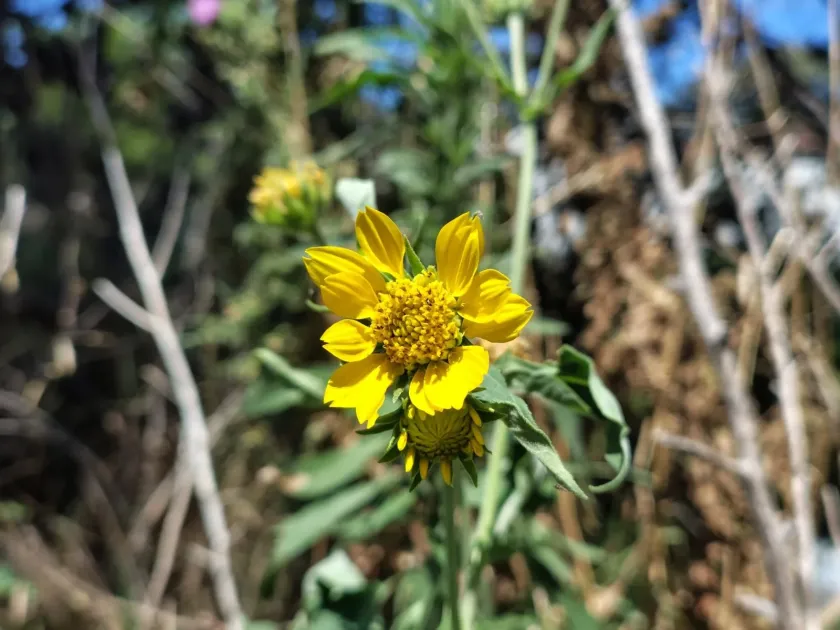
Golden crownbeard (Verbesina encelioides) is a member of the Asteraceae family. It is an annual herbaceous plant featuring an erect, branched stem that typically grows to a height of 60 to 100 cm.
The leaves are alternate, petiolate, and triangular-ovate in shape with serrated margins. The surface of the foliage is grey-green and covered in fine hairs, giving the plant a distinct, ashy appearance.
The inflorescences are showy, yellow flower heads located at the tips of the branches. The bright color makes the weed easily recognizable during the flowering stage.
Its fruits are achenes, often equipped with wing-like structures that facilitate dispersal by wind, allowing for rapid spread across agricultural land.
A key identifying characteristic is the strong, unpleasant odor released when the plant tissue is crushed or damaged, which often serves as a quick field diagnostic tool.
Where it grows
Native to North America, this species has successfully naturalized in many warm and arid regions worldwide. It primarily thrives in sandy soils and disturbed environments.
In agricultural settings, Golden crownbeard frequently infests row crops, including corn, sunflowers, and vegetable gardens, especially where irrigation is provided.
The weed often occupies roadsides, fence lines, and areas surrounding irrigation canals, which act as corridors for the plant to invade nearby cropland.
It prefers open, sunlit areas and exhibits high drought tolerance, which allows it to outcompete crops in regions where water availability is a limiting factor.
The seeds possess a high degree of longevity in the soil, ensuring that the plant can persist in the seed bank and re-emerge quickly after soil disturbance.
Harm it causes
The primary economic impact results from severe competition with crops for water, nutrients, and sunlight, leading to significant yield reductions if left unmanaged.
Golden crownbeard contains toxic compounds that can be harmful to livestock, potentially causing poisoning if the weed is ingested in contaminated pastures or fodder.
Due to its rapid growth and deep root system, it can effectively suppress seedling establishment in crops, resulting in poor crop density and uneven development.
The weed acts as a host for various agricultural pathogens and pests, which can transfer to crops, increasing the overall risk of disease and insect infestations.
Infestations also complicate harvesting operations and increase the cost of grain cleaning, as the weed's debris can interfere with standard machinery efficiency.
How to control
Cultural control methods include deep primary tillage, which buries seeds at depths that inhibit successful germination and subsequent emergence in the following season.
Crop rotation remains a highly effective strategy, specifically utilizing competitive crops that can close their canopy quickly to shade out emerging weeds.
Sanitation practices such as mowing non-crop areas, including field borders and ditches, before the flowering stage are crucial to prevent seed bank replenishment.
Chemical control involves the use of systemic herbicides that are capable of translocating through the plant to target the root system and inhibit regrowth.
It is essential to apply herbicides according to the specific growth stage of the plant and follow regulatory guidelines to minimize risk to the main crop.
Taxonomy
- Latin name
- Verbesina encelioides
- Family
- Сложноцветные (астровые)
- EPPO code
- VEEEN