
Stemless goldenweed
Stenotus acaulis
Description
How to tell it apart
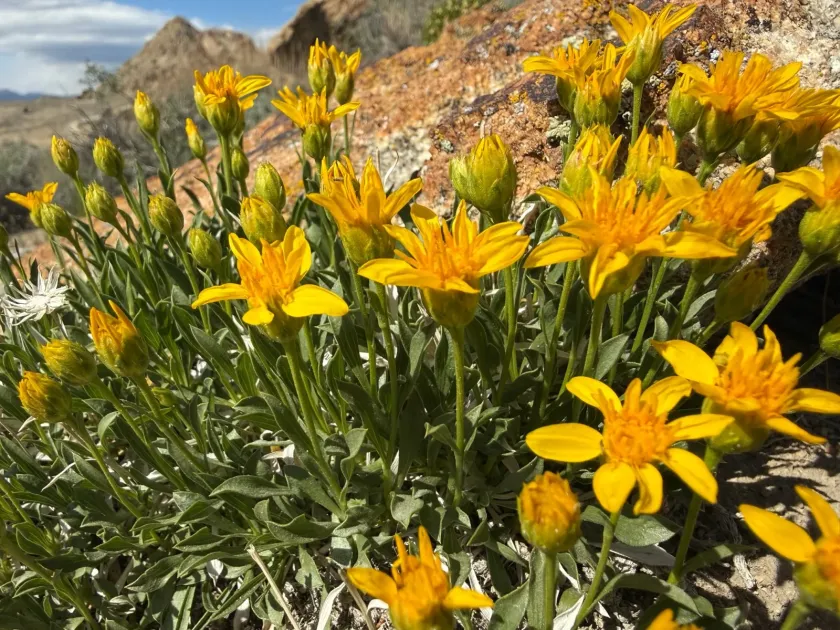
Stemless goldenweed (Stenotus acaulis) belongs to the Asteraceae family. It is a perennial herbaceous plant that grows in dense, cushion-like mats close to the ground.
The plant features narrow, linear leaves gathered in basal rosettes. These leaves often have a characteristic grayish or silvery tint due to fine, dense hair covering them.
Its flowering stalks are extremely short, often making the yellow flower heads appear as if they are sitting directly on the rosette of leaves at ground level.
Stenotus acaulis has a strong, woody taproot system that reaches deep into the soil, providing it with exceptional endurance in arid and nutrient-poor environments.
This species is well-adapted to extreme temperature fluctuations, allowing it to survive harsh conditions where many other plant species fail to thrive.
Where it grows
The plant is native to the western regions of North America, typically found in dry, rocky, and gravelly terrains, as well as alpine or subalpine mountain zones.
It prefers well-drained, sunny locations and is often observed on open slopes, hillsides, and disturbed areas where native vegetation has been thinned out.
In agricultural settings, it can infiltrate dry pastures and unmanaged rangelands, where it gradually colonizes bare patches of soil left by overgrazing.
It thrives on roadsides and along field edges, using these areas as a base for expansion into managed pastures and fields with low-density crop stands.
The plant demonstrates high tolerance for alkaline and salt-affected soils, which allows it to colonize challenging environments where other vegetation cannot persist.
Harm it causes
The primary harm caused by stemless goldenweed is its intense competition for limited soil moisture, which can significantly decrease the yield of neighboring crops.
By forming dense, low-growing mats, the weed effectively blocks space, light, and nutrients from the seedlings of desirable forage or agricultural plants.
It is generally unpalatable to livestock, which means that where this plant dominates, the overall grazing capacity of the land is drastically reduced.
The persistent nature of the plant, combined with its robust taproot, makes field preparation and mechanical harvesting tasks more difficult and costly.
Additionally, it can act as an alternative host for various pests or diseases that may migrate to nearby crops, complicating overall crop protection strategies.
How to control
Mechanical control involves deep primary tillage to sever the taproot, which is essential for killing established plants and preventing their vegetative regrowth.
Regular cultivation and harrowing in infested areas help deplete the plant's carbohydrate reserves, making it more susceptible to environmental stress.
Chemical control usually requires the application of systemic herbicides containing glyphosate or growth-regulating hormones during the active growth phase.
Improving pasture health through proper fertilization and controlled grazing can enhance crop competitiveness, limiting the ability of Stenotus to establish.
Preventative measures, such as monitoring field borders and controlling infestations before the plant sets seed, are crucial for long-term management on the farm.
Taxonomy
- Latin name
- Stenotus acaulis
- Family
- Сложноцветные (астровые)
- EPPO code
- HAPAU