
Soliva anthemifolia
Soliva anthemifolia
Description
How to tell it apart
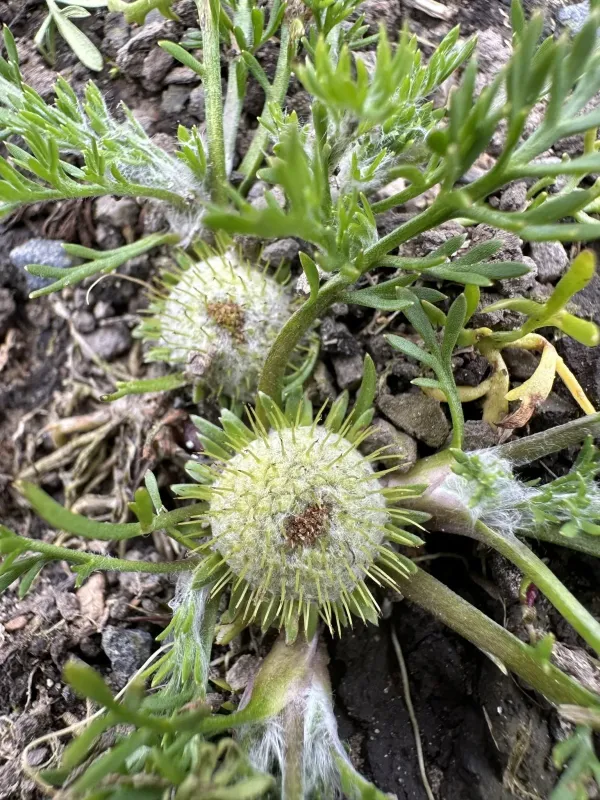
Soliva anthemifolia is an annual herb within the Asteraceae family. It typically exhibits a low-growing or prostrate growth habit, which allows it to thrive in diverse environmental conditions by hugging the ground.
The leaves are characterized by a deep, pinnately dissected structure. This finely divided foliage closely resembles that of Anthemis (mayweed) species, providing the plant with its specific botanical name.
The inflorescences consist of small, inconspicuous flower heads nestled within leaf axils. This hidden position makes the plant difficult to detect during its early stages of development.
Each plant produces numerous achenes (fruits) that often feature sharp, spine-like structures. These modifications assist significantly in the dispersal of seeds by attaching to animals or machinery.
The root system is primarily taprooted, allowing for efficient nutrient and water uptake. This physiological trait enables the plant to survive in compacted soils where other species might struggle.
Where it grows
This weed is a typical pioneer species of disturbed environments. It is frequently encountered along roadside embankments, in farmyards, waste grounds, and areas where the natural vegetation cover has been disrupted.
In agricultural settings, Soliva anthemifolia readily colonizes row crop fields, orchards, and vineyards. It is particularly successful in areas with frequent soil disturbance or irrigation management.
The plant has demonstrated an ability to colonize compacted pastures and forage lands. Its spread is often linked to the movement of soil or water, facilitating its introduction into new, productive areas.
It prefers sunny, open environments but can tolerate some degree of shade, allowing it to persist under crop canopies during the initial growth phases until competition intensifies.
In regions with mild, wet winters, the plant can establish rapidly, taking advantage of cool-season moisture to complete its life cycle before summer crops reach their peak growth.
Harm it causes
The primary agricultural impact of Soliva anthemifolia is its strong competition for water and soil nutrients. Infestations can lead to significant yield reductions in sensitive vegetable and grain crops.
The species presents a specific threat to livestock due to its spiny seeds. These can cause injury to the mouths and skin of grazing animals, leading to infections and reduced weight gain in livestock.
It serves as a host for various agricultural pests and pathogens. By maintaining these populations, the weed increases the overall disease pressure on neighboring healthy crop stands.
The low-profile growth makes it an insidious competitor, often going unnoticed until the weed has already set seeds. This contributes to the building of a persistent soil seed bank.
Furthermore, the presence of these weeds complicates harvesting operations. The seeds may contaminate harvested products, reducing the market value of the crop and complicating post-harvest processing.
How to control
Integrated management is essential for controlling this weed. Deep plowing effectively buries seeds at depths that inhibit germination, which is a key component of long-term cultural control.
Maintaining a robust crop rotation is beneficial. Rotating broad-leaf crops with grasses allows for the use of diverse herbicide chemistries, helping to deplete the soil seed bank of this species.
Chemical control is most effective when applied early. Post-emergence herbicides targeting broad-leaf weeds should be used during the seedling or early rosette stage before flowering occurs.
Maintaining clean field borders and managing surrounding areas is crucial to prevent the encroachment of seeds into productive land. This involves timely mowing and removal of infested vegetation.
- Regular monitoring of field edges for early detection.
- Usage of pre-emergent herbicides in high-risk zones.
- Mechanical cultivation in row crops to disrupt weed development.
- Sanitation of agricultural equipment between different fields.
Taxonomy
- Latin name
- Soliva anthemifolia
- Family
- Сложноцветные (астровые)
- EPPO code
- SOVAN