
Silphium mohrii
Silphium mohrii
Description
How to tell it apart
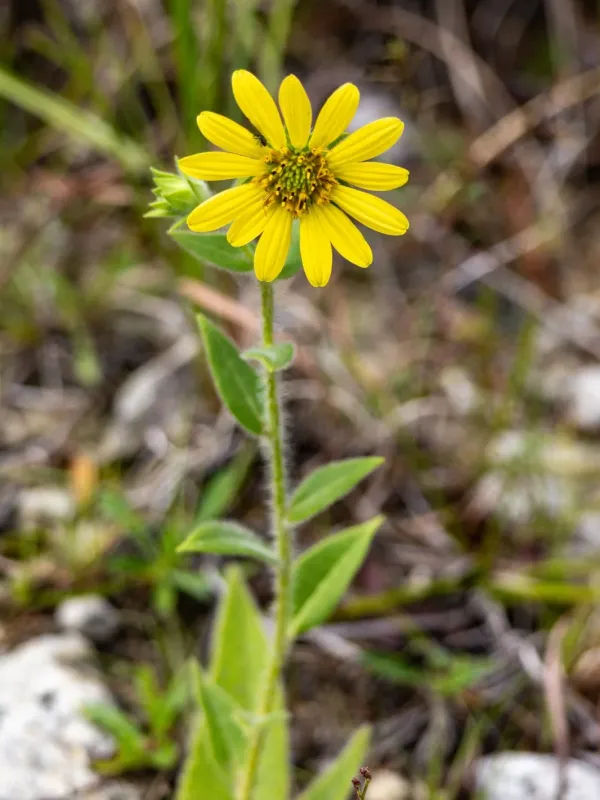
Silphium mohrii, commonly known as Mohr's rosinweed, is a perennial herbaceous plant belonging to the Asteraceae family. It is characterized by a robust taproot system that allows the plant to thrive in various soil conditions and recover quickly after mechanical disturbance.
The leaves are elongated, prominently coarse, and covered in stiff, rough hairs. The stem is upright and can reach heights of up to 1.5 meters, often branching at the top where the inflorescences develop during the blooming season in mid-to-late summer.
The yellow flower heads are arranged in corymbs or panicles, making the plant highly conspicuous in a field setting. Each head contains both ray and disk florets, typical of many members within the Aster family.
This weed reproduces both by seed and via its persistent, deep-seated root system. Once established, it can form dense colonies that are difficult to eradicate with shallow cultivation alone.
The plant demonstrates high adaptability to different environments, including dry, rocky areas as well as agricultural lands. Its ability to regenerate from small fragments of root stock makes it a significant management challenge for farmers.
Where it grows
Silphium mohrii is native to parts of the southeastern United States, often inhabiting open prairies and limestone-based soils. In agricultural landscapes, it frequently occupies field margins, fence lines, and abandoned pastures.
The plant poses a threat to row crops and perennial forage fields, especially where soil disturbances have occurred. It thrives in well-lit areas but can persist in partially shaded environments, competing for resources in a wide range of climates.
Poor crop rotation practices and long-term fallows create ideal conditions for Silphium mohrii to spread. Once it takes hold in a field, it often persists for several seasons due to its long-lived root system.
The movement of farm machinery is a primary vector for the dispersal of root fragments between fields. Additionally, contaminated seed lots can introduce the weed to previously clean production areas.
The plant is resilient against drought and poor soil quality, allowing it to colonize areas where sensitive crops might struggle. This persistence makes it a recurring problem in fields that are not actively managed for perennial weed species.
Harm it causes
The primary damage caused by Silphium mohrii is the intense competition with crop plants for water, sunlight, and soil nutrients. Its deep root system allows it to access resources that shallower crop plants cannot reach, directly reducing yields.
The weed's tall stature and dense foliage create significant shade for seedlings, hindering their development. This can result in stunted crop growth, irregular stands, and reduced competitive vigor against other weed species.
During harvest, the woody stems of the rosinweed can clog combine harvesters and other agricultural equipment. This causes downtime, slows down field operations, and increases the risk of mechanical damage to machinery.
The presence of this plant can also attract specific pests and pathogens that may later infect the primary crop. Acting as an alternative host, it complicates integrated pest management strategies.
Economically, the presence of Silphium mohrii increases production costs due to the need for higher herbicide application rates and repeated tillage operations. This reduces the overall profitability of the affected agricultural fields.
How to control
Controlling Silphium mohrii requires a long-term management strategy that combines cultural, mechanical, and chemical approaches. Deep tillage, such as moldboard plowing, is essential for disrupting the root system and preventing regeneration.
Cultural control measures, including aggressive crop rotation, help to shade out the weed and exhaust its energy stores. Rotating to competitive cover crops like rye or winter wheat can effectively suppress its growth.
Chemical control is most effective when the weed is in the rosette stage or early bolting. Systemic herbicides are preferred, as they are translocated into the roots to provide complete control rather than just foliage damage.
Regular monitoring of field edges and non-crop areas is necessary to prevent the encroachment of Silphium mohrii into active production fields. Timely intervention in these hotspots can save significant costs in the long run.
- Conduct frequent mechanical cultivation to exhaust nutrient reserves in the roots.
- Use systemic herbicides, such as glyphosate or 2,4-D, during active growth phases.
- Clean machinery thoroughly before moving between fields to prevent root fragment dispersal.
- Maintain competitive crop density to minimize light penetration to the soil surface.
Taxonomy
- Latin name
- Silphium mohrii
- Family
- Сложноцветные (астровые)
- EPPO code
- SIPMO