
Silphium integrifolium
Silphium integrifolium
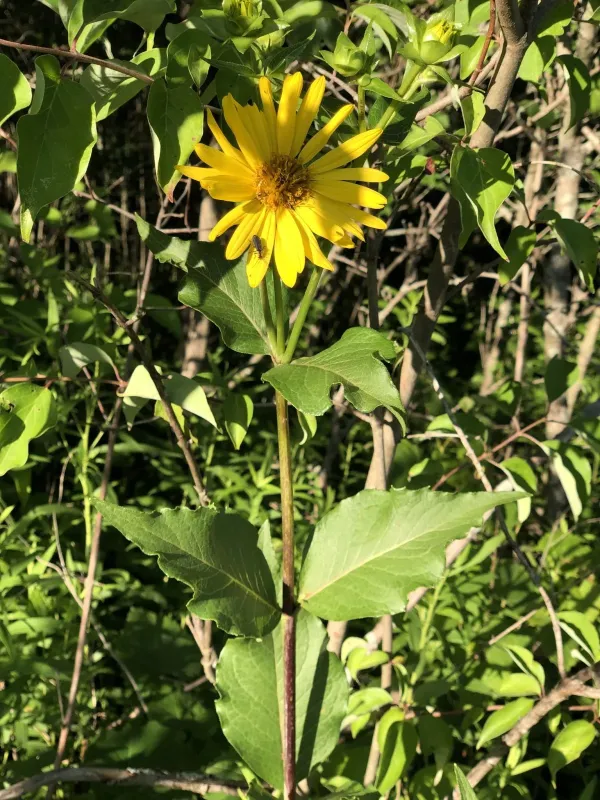
Description
How to tell it apart
Silphium integrifolium, commonly known as the whole-leaf rosinweed, is a perennial herbaceous plant belonging to the Asteraceae family. It is distinguished by its upright, sturdy stems and opposite leaves that have smooth, entire margins, setting it apart from other species in the genus.
The plant typically grows to a height of 1 to 2 meters. Its stems are often branched near the top, where they produce showy, yellow, sunflower-like flower heads. The root system is a deep, persistent rhizome, which makes the plant highly resilient to physical removal.
Its leaves are sessile or short-petioled, lanceolate to ovate in shape. This specific leaf morphology is the primary characteristic used to distinguish it in the field during the vegetative stage, before the flower heads develop.
During the flowering period, the plant releases a large amount of seeds that are dispersed by wind. These seeds can remain viable in the soil for significant periods, contributing to the persistent nature of this weed in agricultural landscapes.
The plant exhibits high regenerative potential from its rhizomes. Even if the above-ground portion is cut, the plant can quickly sprout new shoots, demanding intensive control measures for complete eradication.
Where it grows
Native to North American prairies, Silphium integrifolium thrives in sunny, open areas with deep, fertile soil. In agricultural settings, it frequently colonizes field edges, fence rows, and undisturbed prairie-like patches near cultivated crops.
It is often found in hayfields, pastures, and poorly managed croplands. The plant is drought-tolerant, which allows it to thrive even when adjacent crops are struggling due to lack of moisture, thereby increasing its competitiveness.
The movement of agricultural equipment is a primary vector for its spread. Seeds often lodge in the undercarriage of machinery and are transported across fields, establishing new colonies in previously clean areas.
Roadsides and drainage ditches often serve as reservoirs for this weed. Without proper maintenance of these areas, Silphium integrifolium can easily encroach into adjacent arable land, creating persistent weed pressure.
It prefers well-drained, nutrient-rich soils but shows a high level of adaptability. It can grow in full sun or partial shade, making it a versatile and difficult-to-manage intruder in various agricultural environments.
Harm it causes
Silphium integrifolium poses a significant threat to crop yields through direct competition for resources. Its rapid growth and large leaf surface area effectively shade out smaller, slower-growing crops during their early stages of development.
The deep root system enables the weed to access deep-soil water and nutrients that are often unavailable to annual crops. This resource depletion can significantly reduce the potential yield of crops like corn or soybeans.
Furthermore, the physical structure of the weed causes operational delays during harvest. Large, woody stems can damage harvesting equipment, clog combine heads, and increase maintenance costs significantly.
It may also act as an alternative host for various pests and pathogens that affect agricultural crops. By harborring these threats near the crop, it increases the risk of outbreaks and the subsequent need for chemical pest control.
The presence of this weed can lead to uneven field development, making standardized chemical applications less effective. The aesthetic and physical presence of the plant also complicates field scouting and maintenance activities.
How to control
Effective control of Silphium integrifolium relies on a combination of mechanical and chemical practices. Deep plowing can help sever and expose the rhizomes, leading to their desiccation, especially when followed by dry, cold weather.
Frequent mowing before seed production is essential to prevent the spread of the plant. However, because it grows back from its roots, mowing alone is rarely enough for total eradication and must be part of an integrated approach.
Chemical control using systemic herbicides, particularly those targeting perennial broadleaf weeds, is highly effective. Applications are most successful when performed at the bud stage or in late summer before the first frost, as this facilitates translocation to the roots.
Crop rotation to competitive species can help suppress the weed over time. Combining rotation with localized herbicide spot treatments can manage the population effectively without the need for broadcast applications across the entire field.
- Regular monitoring of field borders and fence rows.
- Sanitizing machinery to prevent seed movement between fields.
- Using systemic herbicides during optimal growth stages.
- Implementing deep tillage to weaken the root system.
Taxonomy
- Latin name
- Silphium integrifolium
- Family
- Сложноцветные (астровые)
- EPPO code
- SIPIN