
Sigesbeckia orientalis
Sigesbeckia orientalis
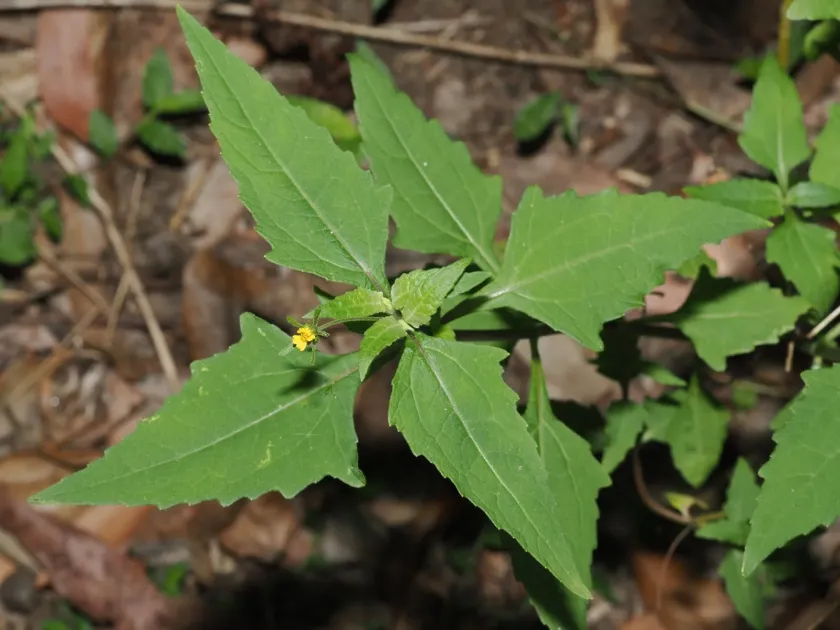
Description
How to tell it apart
Sigesbeckia orientalis is an annual herbaceous plant belonging to the Asteraceae family. It features a branched stem that can grow between 30 and 100 cm in height, depending on soil fertility.
The leaves are opposite, triangular-ovate in shape, with serrated margins. The surface of the foliage is covered in fine, stiff hairs, which gives the plant a characteristic rough texture.
Its inflorescences consist of small yellow flower heads arranged in loose panicles at the tips of the stems. These flowers are typical of the aster family but have distinct sticky glandular structures.
A key identifying feature is the presence of sticky glands on the involucral bracts of the flower heads. These glands enable the seeds to adhere easily to animal fur and clothing, aiding wide dispersion.
The root system is a robust taproot, providing the plant with the ability to secure water and nutrients efficiently from the topsoil, making it a highly competitive weed in agricultural fields.
Where it grows
This species thrives in moist, nitrogen-rich soils. In the wild, it is often found on forest edges, riverbanks, and in shaded, damp locations where humidity remains relatively high.
In agricultural settings, Sigesbeckia orientalis frequently infests row crops, vegetable gardens, and young orchards. It is particularly active in regions with warm and humid climates, rapidly colonizing fields.
As a classic ruderal plant, it is often spotted along roadsides, in waste areas, and on abandoned farmland. From these spots, seeds are easily carried into cultivated areas by machinery and wind.
In fields, it harms production by acting as a fast-growing weed that dominates the canopy. It quickly adapts to cultivated land, becoming a serious competitor to standard crops for light and nutrients.
While the species is primarily native to tropical and subtropical regions, it has successfully migrated into temperate zones, where it leverages modern agricultural practices to expand its range.
Harm it causes
The main impact of Sigesbeckia orientalis is its intense competition for soil moisture and mineral nutrients. This leads to stunted growth in crops and a significant reduction in overall yield quality.
By developing rapidly, the weed creates a dense canopy that restricts light penetration to the seedlings of the primary crop. This inhibits photosynthesis and compromises the vigor of the desired plants.
High seed production allows this weed to infest large areas very quickly. A single plant can produce thousands of seeds that remain viable in the soil for several years if not managed.
The sticky nature of the flower heads causes significant inconvenience during harvesting operations, as they stick to clothing and machinery, hindering efficiency and causing mechanical wear.
In addition to direct competition, the weed can harbor various pests and pathogens, potentially acting as a reservoir that encourages the spread of diseases to valuable agricultural crops.
How to control
Agrotechnical methods of control include strict adherence to crop rotation, which disrupts the weed's reproductive cycle. Regular mechanical soil cultivation before flowering is crucial to stop seed dispersal.
Maintaining optimal crop planting density is another effective method. Denser canopies limit the amount of light reaching the Sigesbeckia seedlings, effectively suppressing their growth early in the season.
Chemical control involves the use of systemic post-emergence herbicides during the early stages of field development. Selective herbicides that target broadleaf weeds are typically recommended.
- Deep plowing to bury seeds, preventing germination.
- Regular mowing of field margins and non-cropped areas to prevent seed set.
- Use of mulching materials in orchards to physically block weed growth.
Continuous monitoring of fields throughout the growing season is essential to prevent the formation of sticky fruits, which are the primary mechanism for the spread of this invasive weed.
Taxonomy
- Latin name
- Sigesbeckia orientalis
- Family
- Сложноцветные (астровые)
- EPPO code
- SIKOR