
Hawkweed oxtongue
Picris hieracioides
Description
How to tell it apart
Hawkweed oxtongue (Picris hieracioides) is a biennial or perennial herbaceous plant belonging to the Asteraceae family. It is characterized by a strong taproot and a stiff, branched stem that can grow from 30 to 100 cm tall.
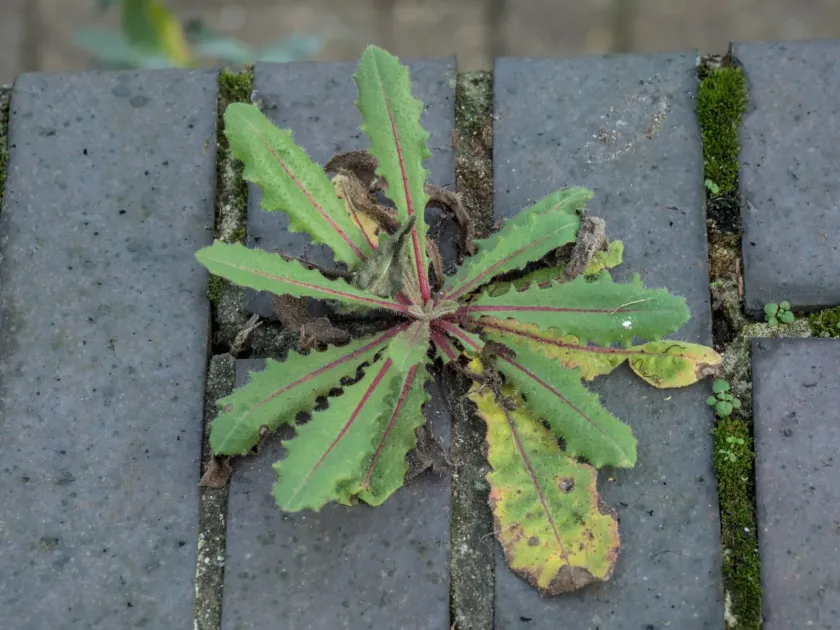
The plant is easily recognized by its rough texture caused by dense, hooked hairs covering the stem and leaves. Basal leaves form a rosette and are usually oblong-lanceolate with toothed margins.
The inflorescence consists of numerous bright yellow flower heads arranged in a corymbose-paniculate cluster. All florets are ligulate, which gives the flower head a distinct look similar to other hawkweeds.
The seeds are brown achenes with characteristic transverse wrinkles. Each seed is equipped with a feathery pappus, which acts as a parachute, allowing for long-distance dispersal by wind.
Flowering occurs from early summer through late autumn. A single mature plant can produce thousands of seeds, making it a highly successful colonizer of disturbed landscapes and agricultural land.
Where it grows
This weed is commonly found in disturbed habitats such as roadsides, fallow fields, pastures, and dry meadows. It thrives in well-lit areas and is particularly well-adapted to different soil types, including nutrient-poor soils.
In farming, it frequently invades perennial grass fields and cereal crops. It often establishes itself on field edges and neglected strips, where it serves as a source for spreading into the main crop area.
Harm it causes
The main threat posed by Hawkweed oxtongue is its strong competition for water and soil nutrients. Due to its deep root system, it can significantly reduce the vigor of nearby crops, leading to lower yields.
The broad basal rosettes block sunlight from reaching the soil surface during early growth stages, inhibiting the development of young crops and preventing them from establishing a competitive canopy.
On livestock pastures, the plant is considered a nuisance because its rough, bristly foliage makes it unpalatable for grazing animals, leading to a decrease in the overall nutritional quality of the forage.
How to control
Effective mechanical control involves deep plowing to bury the rosettes and disrupt the root system. Regular tillage before the plant sets seed is essential for keeping populations low in arable fields.
Mowing field margins and buffer strips before the plants bloom is a crucial practice. This prevents the wind-borne seeds from migrating into the production areas and reduces the seed bank in the soil.
Chemical control focuses on the use of herbicides effective against perennial broad-leaved weeds. Application should target the early rosette stage to ensure the most effective systemic uptake.
- Utilize crop rotation to break the life cycle of the weed.
- Manual removal of isolated plants before seeding occurs.
- Post-harvest application of non-selective herbicides where appropriate.
Taxonomy
- Latin name
- Picris hieracioides
- Family
- Сложноцветные (астровые)
- EPPO code
- PICHI