
Oxytenia acerosa
Oxytenia acerosa
Description
How to tell it apart
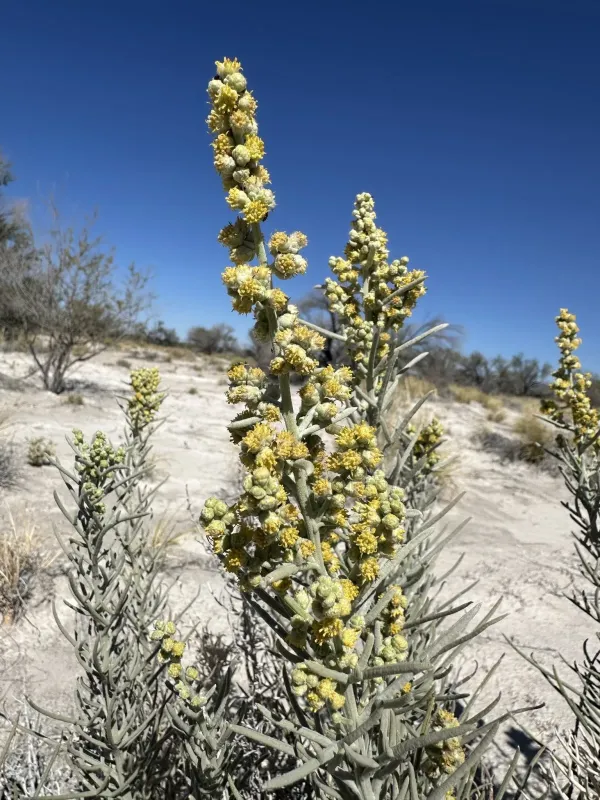
Oxytenia acerosa, commonly known as copperweed, is a perennial shrub belonging to the Asteraceae family. It typically reaches heights of up to 1.5 meters and features stiff, erect stems with deeply lobed, maple-like leaves.
During the late summer, the plant produces small, yellow-flowered heads at the tips of its branches. The entire plant is covered in fine, grayish hairs, which serve as an adaptation to reduce water loss in arid environments.
The root system is exceptionally deep and woody, allowing the plant to survive and thrive in harsh desert and semi-desert conditions. Its extensive root structure makes physical extraction highly difficult for land managers.
Seeds are equipped with small tufts, enabling them to be easily dispersed by the wind over long distances. This adaptation allows the species to rapidly colonize new areas, including roadsides, pastures, and disturbed soil.
The plant has a distinct, pungent odor that generally deters grazing animals. However, under conditions of feed scarcity, livestock may ingest it, resulting in severe toxic reactions and potential mortality.
Where it grows
The natural range of Oxytenia acerosa includes the arid and semi-arid regions of the Southwestern United States. It is particularly well-adapted to dry, sandy, or saline soil types.
It is commonly found along irrigation canals, on the edges of agricultural fields, and in degraded range lands. Because of its drought resistance, it outcompetes many native plants for vital moisture and nutrients.
Oxytenia often forms dense, impenetrable thickets that exclude other vegetation, making large tracts of land unsuitable for grazing. Its presence is frequently used as an indicator of saline soil conditions.
The spread of this weed is often exacerbated by human activities, such as the transport of contaminated equipment or the flow of irrigation water that carries seeds across vast distances along canal networks.
As climates change, the range of copperweed may expand, challenging farmers and range managers to implement more rigorous surveillance and control measures to protect valuable agricultural lands.
Harm it causes
The primary hazard of copperweed is its toxicity to cattle and sheep. Ingesting the plant leads to hepatic damage and central nervous system issues, often causing significant losses for livestock producers.
It acts as a strong competitor for resources in cultivated fields. Its deep roots deplete soil moisture from lower profiles, stressing neighboring crops and reducing overall agricultural yield.
Dense infestations interfere with farming operations, including cultivation and harvesting. The presence of these woody stems can damage equipment and contaminate harvested crop products with weed fragments.
Oxytenia can act as an alternative host for various pests and pathogens that affect commercial crops. Its aggressive colonization can lead to long-term degradation of soil structure and quality.
The management of this weed requires significant financial investment, increasing the costs of herbicides and specialized labor, thereby reducing the overall profitability of agricultural operations.
How to control
Mechanical control, particularly deep plowing, is effective if performed repeatedly to starve the plant's root system. This method is most successful when carried out before the plant enters the flowering phase.
Chemical control remains the most reliable strategy for managing large infestations. Systemic herbicides that can translocate into the deep taproot are necessary for long-term reduction of the population.
- Application of systemic herbicides like glyphosate or dicamba.
- Mowing before seed production to reduce seed bank potential.
- Rotation with competitive cover crops to suppress seedling growth.
- Spot treatment of individual plants with concentrated herbicide.
Integrated management involves combining chemical treatments with rangeland restoration. Re-seeding areas with native or competitive forage grasses helps close the canopy and denies weeds the light they need to sprout.
Constant monitoring is essential for early detection. Removing isolated patches before they become established populations is far more cost-effective than attempting to eradicate large-scale, mature infestations.
Taxonomy
- Latin name
- Oxytenia acerosa
- Family
- Сложноцветные (астровые)
- EPPO code
- OXTAC