
Matricaria tenella
Matricaria tenella
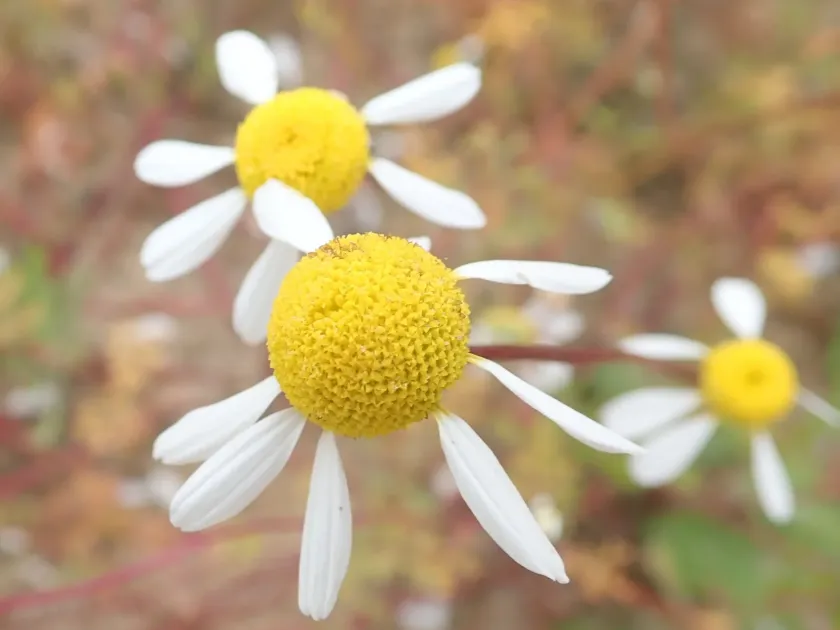
Description
How to tell it apart
Matricaria tenella is a herbaceous species belonging to the Asteraceae family. It is characterized by its slender growth habit and fine, thread-like foliage which distinguishes it from larger, more robust weed species.
The plant produces small, yellow-centered capitula (flower heads). While it belongs to the same genus as common chamomile, its morphological features are significantly smaller and less distinct.
It typically grows as an annual, completing its life cycle within a single season, producing a large quantity of small seeds that contribute to rapid infestation of agricultural lands.
The root system is primarily taproot-based, which allows the plant to anchor effectively in loose or disturbed soils, gaining quick access to nutrients and water.
Identification in the field is most reliable during the flowering stage, as the specific structure of the involucre and the shape of the receptacle are key indicators of this species.
Where it grows
This weed thrives in open, disturbed environments such as cultivated fields, fallow lands, and areas adjacent to rural infrastructure where competition from established perennial grasses is low.
Matricaria tenella exhibits high environmental plasticity, allowing it to colonize diverse soil types, ranging from sandy loams to heavier silt-clay soils with sufficient moisture.
It is commonly observed in the early spring, following the sowing of cereals, as it germinates readily at moderate temperatures, often outpacing the early growth stages of crops.
The species is frequently found along field borders and farm tracks, acting as a source for long-term seed bank replenishment if left unmanaged during the early season.
Its ability to establish in thin crop stands makes it a common invader of vegetable plots and newly established meadows where space is available for seedling emergence.
Harm it causes
The primary harm caused by Matricaria tenella is resource competition; it aggressively competes for sunlight, water, and soil nutrients, directly impacting the vigor and yield of primary crops.
By shading the lower leaves of crop plants during the critical growth phase, the weed reduces the photosynthetic capacity of the stand, leading to reduced biomass accumulation.
The presence of this weed creates a favorable microenvironment for various pests and fungal pathogens, potentially serving as an alternate host that bridges the gap between crop seasons.
Harvesting challenges arise when the weed is present in high densities, as it can interfere with cutting equipment and increase the moisture content of the harvested grain or produce.
Continuous presence of this species in a field leads to the depletion of nitrogen and phosphorus in the topsoil, negatively affecting the overall fertility and sustainability of the crop rotation.
How to control
Cultural control strategies, such as mechanical cultivation, are highly effective when applied early, targeting the weeds before they reach the flowering stage and produce seeds.
Crop rotation remains the cornerstone of management, as changing crop types disrupts the weed's lifecycle and allows for different herbicide modes of action to be used in succession.
For chemical control, contact and systemic herbicides labeled for Asteraceae species are recommended, applied when the weed is in the seedling stage for maximum efficiency.
- Use of pre-emergent herbicides to inhibit germination in highly infested areas.
- Manual removal in small-scale plots to prevent seed bank formation.
- Maintenance of clean field margins to prevent the ingress of new seeds via wind or machinery.
Field scouting is essential to identify the distribution of the weed, allowing for targeted or spot-spraying applications, which significantly reduces the total chemical footprint on the farm.
Taxonomy
- Latin name
- Matricaria tenella
- Family
- Сложноцветные (астровые)
- EPPO code
- MATTE