
Coulter's horseweed
Laennecia coulteri
Description
How to tell it apart
Coulter's horseweed (formerly Conyza coulteri) is an annual herb belonging to the Asteraceae family. It typically develops an upright stem that can reach significant heights under favorable growth conditions.
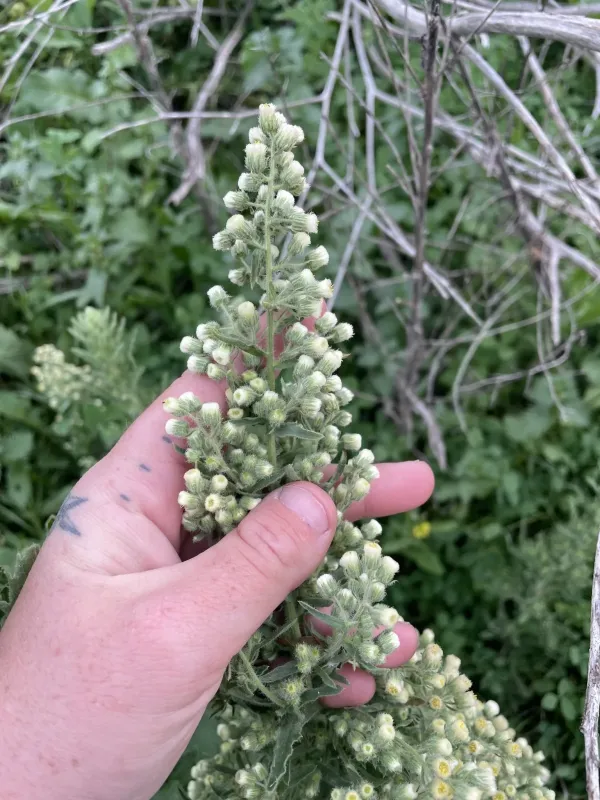
The leaves are usually alternate and often covered in fine hairs, an adaptation to manage water loss and protect the plant from harsh environmental conditions. The inflorescences are composed of flower heads arranged in panicles, a common characteristic of many species within this botanical family.
As a biological entity, it is classified as a summer annual that relies heavily on prolific seed production to ensure its survival and rapid spread within agricultural landscapes.
It possesses a strong taproot system capable of reaching deep into the soil, which provides the plant with access to moisture during dry spells, enhancing its resilience.
Accurate identification of Laennecia coulteri requires careful observation of floral bract characteristics and leaf hairiness, which are critical for distinguishing it from other similar species within the genus.
Where it grows
This weed species is native to North America, where it frequently colonizes natural environments and becomes a significant nuisance in various agricultural cropping systems.
The plant thrives in disturbed soil environments, including roadsides, field margins, abandoned lands, and heavily cultivated fields where management practices are not optimally executed.
Coulter's horseweed exhibits a high degree of ecological plasticity, allowing it to adapt to diverse soil types, ranging from light sandy loams to heavier clay-based soils.
In farming systems, it is commonly found in grain fields and vegetable crops, where the lack of competition or inadequate soil disturbance allows it to establish dense stands.
Under irrigation, the weed can become particularly aggressive, exploiting the available water and nutrients to outcompete standard crops for space and resources.
Harm it causes
The primary damage caused by Coulter's horseweed is due to direct competition with agricultural crops for essential resources such as water, light, and nutrients, leading to significant yield losses.
By effectively sequestering soil nitrogen and other macro-elements, the plant restricts the development of the primary crop, ultimately reducing the overall harvest weight and quality.
The presence of dense infestations acts as a physical barrier during mechanical field operations, complicating inter-row cultivation and increasing the time and cost of harvesting.
This species serves as a host reservoir for various agricultural pests and pathogens, which can subsequently migrate to healthy crops and cause disease outbreaks.
Seed contamination of harvested grain reduces the marketability of the crop, necessitating expensive cleaning processes before the product can be processed or sold.
How to control
Effective agrotechnical control begins with proper soil management, including deep tillage, which serves to bury seeds and prevent them from reaching the germination zone.
Implementing a diversified crop rotation is essential, as it disrupts the life cycle of the weed and significantly reduces the buildup of its seed bank over several seasons.
During the growing season, timely harrowing and mechanical inter-row cultivation are critical practices that destroy young seedlings before they reach the flowering stage.
Chemical control strategies involve the use of selective herbicides targeted at broadleaf weeds, ensuring application is timed to the most susceptible growth stage of the weed.
Ongoing field scouting is necessary to identify infestations early, preventing the weed from setting seed and ensuring that management interventions remain both effective and cost-efficient.
Taxonomy
- Latin name
- Laennecia coulteri
- Family
- Сложноцветные (астровые)
- EPPO code
- LNCCO