
Indian lettuce
Lactuca indica
Description
How to tell it apart
Indian lettuce (Lactuca indica) is a herbaceous perennial plant belonging to the Asteraceae family. It is widely recognized in its native regions as a robust and persistent weed that can adapt to various environments.
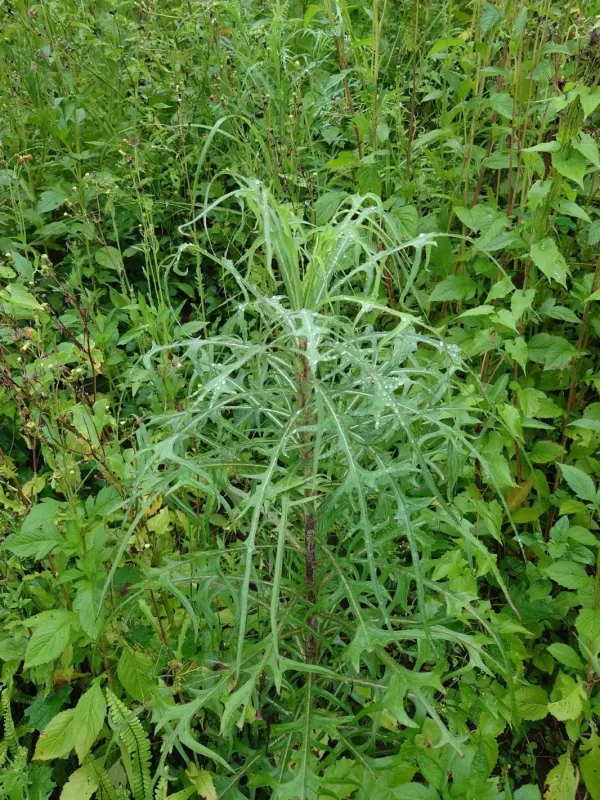
The plant features an erect, often branched stem that can grow to significant heights, typically between one to two meters. Its morphology is highly variable, with leaf shapes ranging from entire to deeply pinnately lobed.
The foliage contains a white, milky latex, which is a common diagnostic feature for the Lactuca genus. This sap is bitter and contains secondary metabolites that deter many herbivores from consuming the plant.
Inflorescences are composed of numerous small flower heads arranged in loose panicles. The flowers are typically yellow or pale yellow and consist of ray florets, which are standard for this taxonomic group.
The root system is well-developed, consisting of a strong taproot that allows the plant to survive in compacted soils and tolerate periods of drought, making it difficult to pull out manually.
Where it grows
The species is indigenous to East and Southeast Asia, including countries like China, Japan, and India. It has successfully spread to various other regions, often colonizing disturbed habitats and agricultural landscapes.
Indian lettuce thrives in well-lit areas with fertile, moist soil. It is commonly found in roadside ditches, field borders, abandoned farms, and in the margins of cultivated fields where moisture is abundant.
In agricultural settings, it is a significant nuisance in row crops, particularly where soil disturbance is minimal. It readily invades fields that are not properly maintained or left fallow for extended periods.
The plant is resilient to different environmental conditions and can grow in a range of soil types, from sandy loams to heavier clays, provided there is sufficient nutrient availability to support its rapid growth.
Seed dispersal is highly efficient due to the presence of a pappus, allowing wind to transport seeds over significant distances, leading to rapid expansion across agricultural plots.
Harm it causes
The primary agricultural impact of Indian lettuce is its aggressive competition for water and soil nutrients, which can lead to significant yield reductions in sensitive crops like soybeans and maize.
The weed can harbor various agricultural pests, including aphids and thrips, which act as vectors for viral diseases that can destroy entire crop yields if not properly managed.
Its presence significantly complicates the harvesting process. The tall, tough stems can interfere with the operation of combine harvesters, leading to mechanical stress, frequent stops, and increased maintenance costs.
If harvested along with forage crops, the plant can reduce the overall quality of the fodder. The bitter substances in the latex can affect the palatability of the feed and potentially impact livestock health.
By occupying space and sunlight, Indian lettuce suppresses the growth of desirable crops, forcing farmers to invest more in herbicides and manual labor to keep the fields clean and productive.
How to control
Cultural control is the first line of defense. This includes deep plowing to damage the taproot and weaken the plant's ability to regenerate, especially when performed during the dormant season.
Crop rotation is an essential strategy. Integrating competitive cover crops that grow rapidly can effectively shade out the weed and inhibit its establishment in the early stages of the growing season.
Regular mechanical cultivation of row crops is highly recommended. It is crucial to intervene before the plant enters the bolting stage, preventing the production of seeds and subsequent dispersal.
Chemical control is often necessary for severe infestations. The application of systemic, non-selective herbicides like glyphosate after the main harvest is highly effective at killing the entire root system.
For selective control during the growing season, farmers should use approved herbicides that target broad-leaved weeds. Always follow the manufacturer's instructions to ensure crop safety and minimize resistance development.
Taxonomy
- Latin name
- Lactuca indica
- Family
- Сложноцветные (астровые)
- EPPO code
- LACIN