
Povertyweed
Iva axillaris
Description
How to tell it apart
Povertyweed (Iva axillaris) is a perennial herbaceous plant belonging to the Asteraceae family. It is known for its ability to form dense colonies through an extensive and aggressive root system.
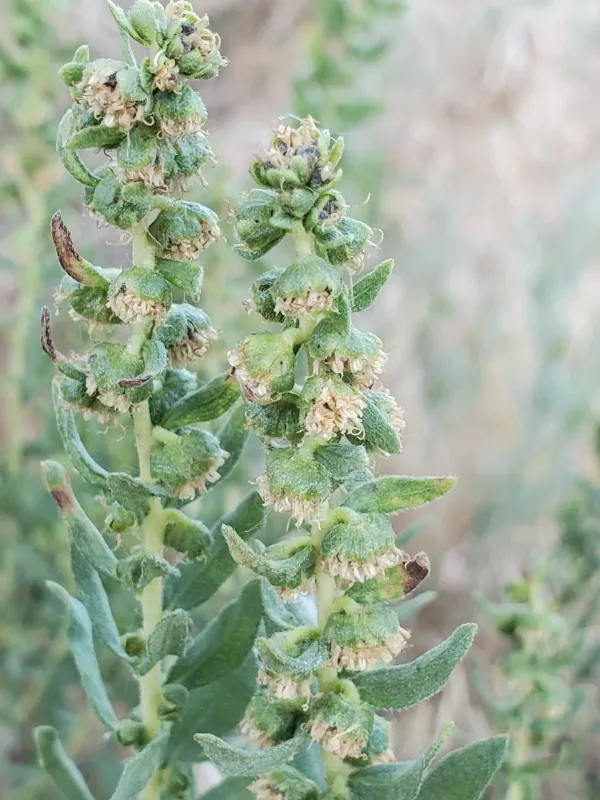
The stems of the plant are typically upright, reaching 20 to 60 cm in height. They are often branched and can exhibit a reddish tint, with the entire plant covered in fine, short hairs.
The leaves are narrow, lanceolate, or linear, arranged alternately along the stem. They are sessile, meaning they attach directly to the stem without a stalk.
Its botanical name comes from the characteristic small, greenish-yellow flower heads that appear in the axils of the upper leaves. The plant flowers throughout the summer months.
The root system consists of persistent horizontal rhizomes that contain numerous buds, allowing the plant to regenerate easily even after mechanical damage.
Where it grows
Povertyweed thrives in disturbed areas, saline soils, and dry environments. It is commonly found along roadsides, irrigation ditches, cultivated fields, and overgrazed pastures.
In agricultural settings, it is a significant nuisance for grain, vegetable, and pulse crops. It is highly adaptable and can establish itself in a variety of soil textures.
This weed is particularly prevalent in regions with low moisture, as its deep root system gives it a competitive edge over most traditional crops in arid climates.
It spreads primarily through the movement of soil containing rhizome fragments and through the dispersal of seeds by wind, water, or farm equipment.
The species is highly resilient and can persist in harsh conditions where other vegetation might struggle to survive, effectively turning the area into a monoculture of povertyweed.
Harm it causes
The primary economic impact of povertyweed is its intense competition for water and nutrients. Its deep roots deplete soil moisture to levels that can cause crop failure.
This plant exhibits allelopathic properties, releasing chemical compounds into the soil that inhibit the germination and development of adjacent crop species.
The dense thickets created by the plant interfere with tillage and harvesting operations. This leads to increased wear on agricultural machinery and slower fieldwork progress.
Contamination of harvested grain with povertyweed seeds reduces the commercial value of the crop and increases the costs associated with cleaning and grading.
- Significant reduction in overall crop yields.
- Increased expenditure on herbicides and mechanical cultivation.
- Degradation of soil quality and land productivity over time.
How to control
Managing povertyweed requires an integrated strategy that combines mechanical practices with well-timed chemical interventions. The focus should be on exhausting the nutrient reserves in the rhizomes.
Mechanical control involves deep, systematic cultivation to sever the rhizomes. Repeated cutting during the growing season helps weaken the plant, though it must be done carefully to avoid spreading root fragments.
Chemical control is most effective when using systemic herbicides (such as glyphosate) applied to actively growing foliage. This allows the herbicide to translocate throughout the root system, ensuring complete kill.
Crop rotation remains a vital tool; planting competitive crops that shade the soil effectively limits the growth of povertyweed by depriving it of the sunlight it requires to thrive.
Preventative measures are essential, including ensuring the use of certified weed-free seeds and performing thorough cleaning of harvesting equipment before moving between infested and clean fields.
Taxonomy
- Latin name
- Iva axillaris
- Family
- Сложноцветные (астровые)
- EPPO code
- IVAAX