
Catsear
Hypochaeris radicata
Description
How to tell it apart
Catsear (Hypochaeris radicata), also known as flatweed, is a perennial herb belonging to the Asteraceae family that closely resembles the common dandelion.
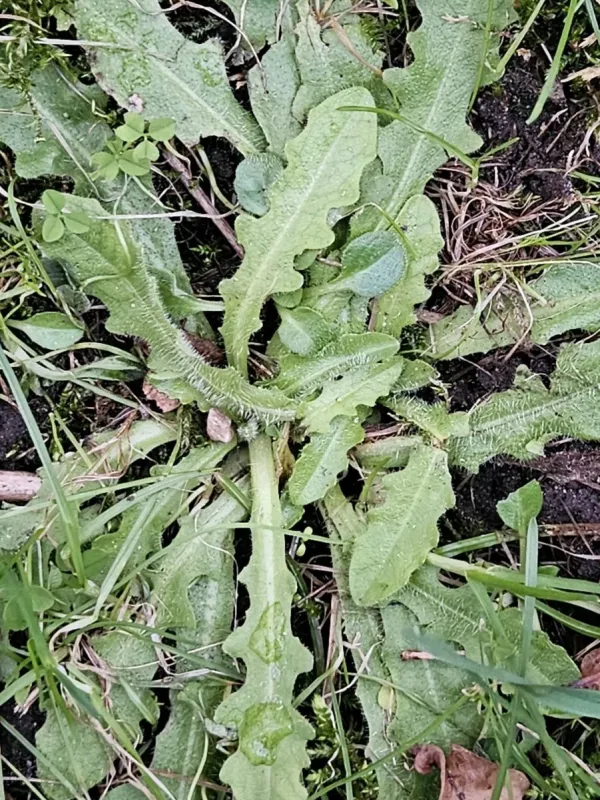
It forms a basal rosette of hairy, deeply lobed leaves that lie flat against the ground, allowing it to survive grazing and mowing attempts efficiently.
The plant produces branched, leafless stems reaching 20–60 cm in height, topped with small, bright yellow flower heads that bloom under sunny conditions.
Its root system consists of a thick, fleshy taproot that anchors the plant firmly in the soil and stores energy for rapid regrowth after damage.
The seeds are equipped with a feathery pappus, enabling them to travel long distances via wind, which facilitates the weed's colonization of new agricultural areas.
Where it grows
Catsear thrives in acidic, nutrient-poor soils but demonstrates high plasticity, allowing it to colonize a wide range of habitats including pastures, lawns, and roadsides.
In farming environments, it is particularly problematic in permanent pastures and hayfields, where it exploits gaps in the crop canopy to establish itself.
The plant is commonly found in areas with disturbed soil or degraded turf, as it quickly occupies space vacated by more desirable, less resilient plant species.
It prefers climates with moderate rainfall, though its deep taproot provides a significant advantage during dry spells by accessing moisture from lower soil layers.
Its ability to propagate through wind-dispersed seeds ensures that it persists in waste ground, creating a continuous seed bank that threatens adjacent productive lands.
Harm it causes
The primary economic impact of Catsear is the reduction of pasture productivity, as it displaces high-quality forage grasses and legumes with less valuable biomass.
While not highly toxic, the plant can be associated with health issues in livestock, such as stringhalt in horses, if consumed in large quantities over extended periods.
In cultivated fields, it acts as a competitor for essential nutrients and water, thereby limiting the growth potential of crops and reducing overall harvest yield.
The dense rosettes can shade out seedling establishment for desirable crops, significantly impacting the uniformity and success rate of newly planted agricultural zones.
The weed’s resilience and fast spreading rate increase maintenance costs for farmers and landowners who must dedicate resources to recurring weed control programs.
How to control
Cultural control involves maintaining a dense and healthy pasture sward, as Catsear struggles to germinate and establish where competition from healthy grass is high.
Mechanical removal, such as digging out the taproot, is effective for small infestations, but it must be thorough to ensure no fragments remain to regenerate.
Chemical control utilizing selective broadleaf herbicides (such as 2,4-D or dicamba) is the standard approach for large-scale infestations in grasslands and lawns.
Timing is critical for herbicide efficacy; applications are most successful when the plant is in the active rosette growth stage before the flower stems have developed.
Routine monitoring and pre-emptive control measures are essential to prevent the weed from seeding and becoming an unmanageable problem within the farm ecosystem.
Taxonomy
- Latin name
- Hypochaeris radicata
- Family
- Сложноцветные (астровые)
- EPPO code
- HRYRA