
Hymenoxys hoopesii
Hymenoxys hoopesii
Description
How to tell it apart
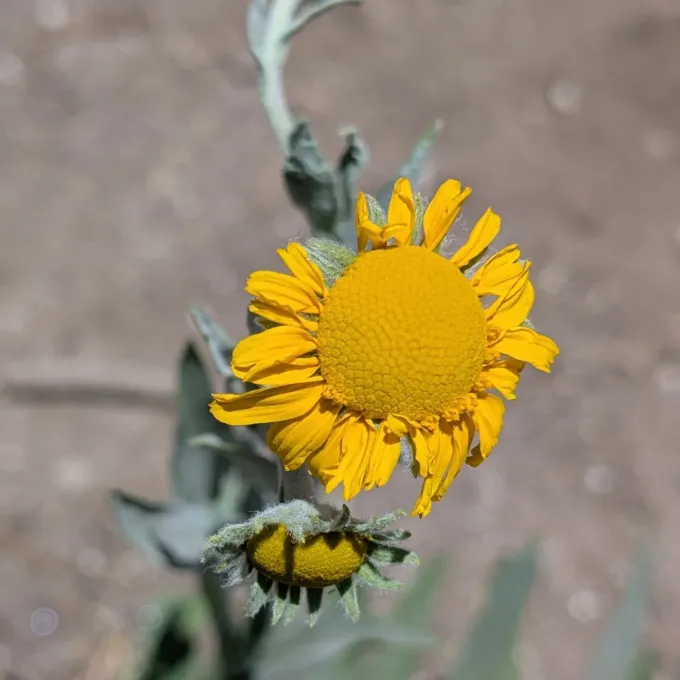
Hymenoxys hoopesii, commonly known as Orange sneezeweed, is a perennial herb of the Asteraceae family. It is recognized by its robust growth and bright yellow, daisy-like flower heads.
The plant features stout, erect stems that typically grow between 30 and 80 centimeters tall. The leaves are lance-shaped, alternate along the stem, and often possess a slightly pubescent texture.
During its flowering period in mid-summer, it produces large flower heads, often reaching 5 to 8 centimeters in diameter. These heads consist of ray and disk florets that create a dense, vibrant yellow appearance.
A deep, strong taproot system allows the plant to persist in difficult soil conditions, including rocky slopes and high-altitude areas. This root system is critical for its resilience and ability to regrow.
The plant has a distinct, bitter scent, which acts as a deterrent for many herbivores. Its biochemical makeup includes sesquiterpene lactones, which contribute to its toxicity and unpalatability.
Where it grows
Hymenoxys hoopesii is native to western North America, typically inhabiting mountain meadows, high-elevation slopes, and open rangelands. It thrives in both moist areas near streams and drier, disturbed sites.
This weed frequently colonizes overgrazed pastures. Because livestock often graze around it, the plant faces little competition, allowing it to expand its range across valuable agricultural land.
It adapts well to various soil types, particularly those that are disturbed. It is commonly found along roadsides, near irrigation ditches, and in neglected meadows where vegetation cover is sparse.
The plant spreads through wind-dispersed seeds and vegetative expansion. Its ability to withstand cold winters ensures its survival in mountainous and sub-alpine environments.
Due to its opportunistic nature, it quickly invades areas where native grasses have been depleted, significantly altering the composition of the local plant community.
Harm it causes
The primary concern regarding Hymenoxys hoopesii is its toxicity, particularly to sheep and cattle. The plant contains potent toxins that cause systemic illness in grazing animals.
Ingestion of the plant leads to "sneezeweed poisoning," characterized by liver and kidney damage, digestive distress, and general physical decline. In severe cases, the poisoning can be fatal to livestock.
A major risk factor is the presence of the weed in hay bales. Because the toxin remains stable even when dried, animals may consume the plant accidentally when mixed with nutritious forage.
Beyond animal health, the plant reduces the carrying capacity of rangelands. By crowding out beneficial forage grasses, it decreases the productivity of grazing land and economic output.
Management of poisoned animals and the loss of grazing potential represent significant financial burdens for ranchers and agricultural managers in affected regions.
How to control
Manual removal of Hymenoxys hoopesii is effective for small, isolated infestations. It is essential to remove the entire taproot to prevent the plant from re-emerging in the next season.
Improving rangeland health through controlled grazing management is a key agrotechnical strategy. Allowing pastures to recover helps native species outcompete the weed for resources.
Chemical control involving systemic herbicides is the most efficient method for managing large-scale infestations. Applications should target the plant during its active growth stage before flowering.
Mowing or cutting the plant prior to the seed-set phase is vital to minimize the expansion of the seed bank. Regular monitoring ensures that new infestations are addressed before they become established.
- Utilizing selective broadleaf herbicides to target the weed while sparing grasses.
- Implementing rotational grazing to prevent overgrazing and soil disturbance.
- Reseeding degraded areas with competitive, native perennial grasses.
- Conducting routine surveys of fields to detect and treat small patches early.
Taxonomy
- Latin name
- Hymenoxys hoopesii
- Family
- Сложноцветные (астровые)
- EPPO code
- HYXHO