
Prenanthes-leaved hawkweed
Hieracium prenanthoides
Description
How to tell it apart
Prenanthes-leaved hawkweed (Hieracium prenanthoides) is a perennial herbaceous plant belonging to the Asteraceae family. Its name is derived from the appearance of its leaves, which clasp the stem and resemble those of the Prenanthes genus.
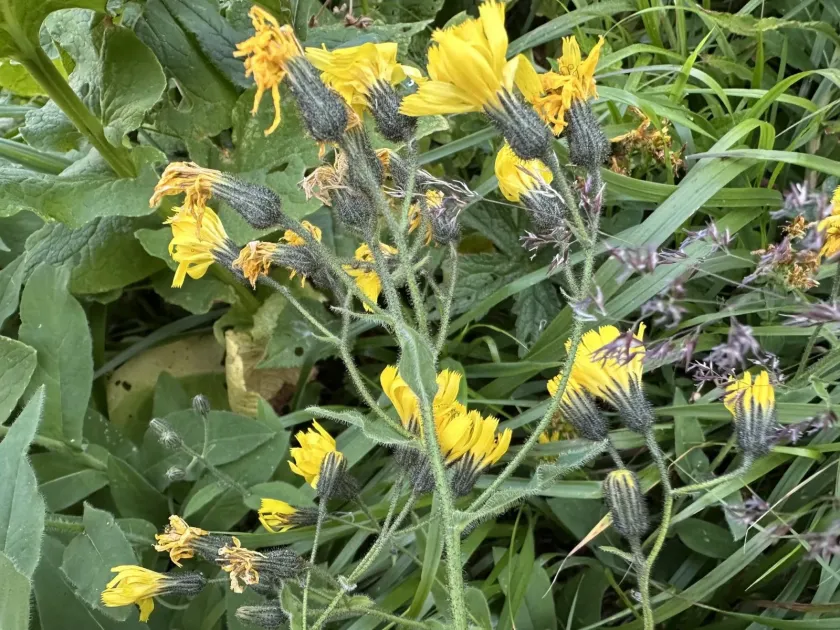
The stem is erect, densely leafy, and covered with glandular hairs that give it a rough, sticky texture. This distinctive hairiness is a primary taxonomic character used by agronomists to distinguish it from other similar hawkweed species found in the field.
The inflorescences consist of bright yellow flower heads arranged in a loose, corymbiform cluster. Each involucre of the flower head is also covered in glandular pubescence, reinforcing its identification as a significant, albeit invasive, weed in rural habitats.
The root system is well-developed, allowing the plant to persist through various seasons and regenerate efficiently. Because of this resilience, the plant can establish dense stands that crowd out more desirable vegetation in both managed and natural landscapes.
Seed production is prolific, with each seed equipped with a pappus for efficient wind dispersal. This mechanism allows for the rapid colonization of adjacent fields and creates a long-lasting seed bank in the soil, which complicates long-term weed management efforts.
Where it grows
Typically found in forest edges, meadows, and moist open areas, this plant often invades agricultural environments. It frequently becomes a problematic weed in perennial forage crops, pastures, and undisturbed hay fields where cultivation is infrequent.
Harm it causes
The harm caused by this weed stems from its competitive nature for soil moisture and nutrients. By suppressing the growth of forage grasses and legumes, it decreases the total biomass yield and lowers the overall nutritional quality of harvested hay.
How to control
Effective management begins with mechanical control methods, specifically thorough tillage and cultivation. Deep plowing and frequent discing are essential to disrupt the root systems, which significantly weakens the plants and reduces their ability to survive.
Mowing and grazing management are crucial to prevent seed set. By cutting the weeds before the flowering phase, farmers can break the reproduction cycle and limit the further dispersal of seeds across the field, thereby protecting neighboring productive areas.
Chemical control involving systemic herbicides is often necessary for severe infestations. Applying these products during the rosette stage, when the plant is most metabolically active, provides the highest level of translocation to the roots.
Strategic crop rotation is another key component of an integrated weed management plan. By alternating between different crop types and implementing intensive between-row cultivation, the competitive advantage of the hawkweed is significantly diminished.
Finally, maintaining optimal soil fertility and crop vigor is an essential defensive strategy. Healthy, dense stands of forage crops will naturally shade out the weed seedlings, making it significantly harder for Hieracium prenanthoides to establish itself.
Taxonomy
- Latin name
- Hieracium prenanthoides
- Family
- Сложноцветные (астровые)
- EPPO code
- HIEPN