
Spotted Hawkweed
Hieracium maculatum
Description
How to tell it apart
Spotted Hawkweed (Hieracium maculatum) is a perennial herbaceous plant belonging to the Asteraceae (Daisy) family.
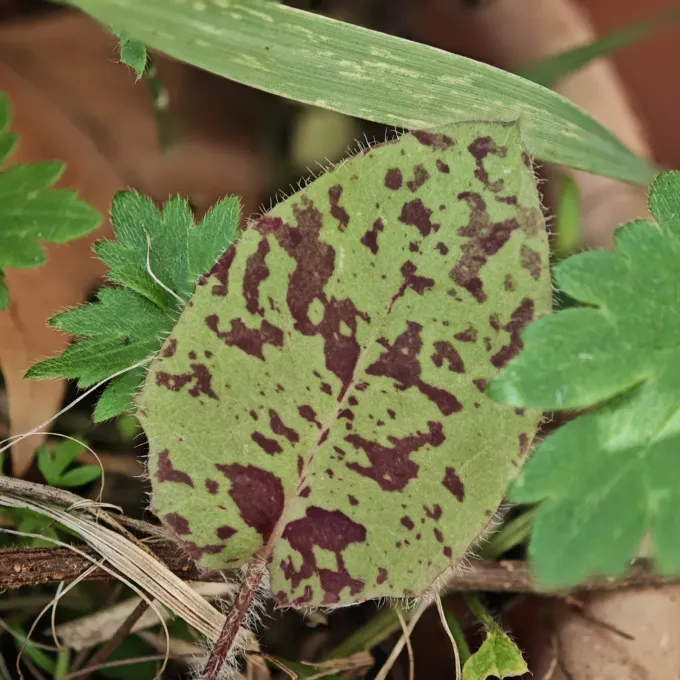
The plant is easily identified by the presence of distinct dark brown or reddish spots on the upper side of its basal rosette leaves.
It features a sturdy, hairy stem that can reach heights of 30 to 60 centimeters during its active flowering season.
The inflorescence consists of yellow flower heads arranged in a loose, branched cluster, which produces numerous wind-dispersed seeds.
Its root system includes short rhizomes that allow the plant to persist in the soil and propagate vegetatively throughout the growing season.
Where it grows
This weed typically thrives in dry meadows, forest edges, and along roadsides, frequently encroaching upon nearby cultivated agricultural fields.
In agrocenoses, Spotted Hawkweed is commonly found in pastures, perennial grass crops, and occasionally in small grain field borders.
It shows a preference for well-drained, sandy or gravelly soils and exhibits high drought tolerance, allowing it to survive harsh conditions.
Infestations often begin in areas with disturbed soil or thin crop cover, where the weed can establish its basal rosettes undisturbed.
The light seeds are highly mobile and can spread across large fields rapidly, making containment in early stages critical for farmers.
Harm it causes
The primary damage caused by Spotted Hawkweed is the competition for vital soil moisture and nutrients, which reduces the potential yield of crops.
Its wide basal rosettes cover the ground surface, inhibiting the growth of crop seedlings through shading and physical competition for space.
The plant serves as a host for various insects and fungal pathogens that can migrate to crops and cause further health issues for the plants.
In grazing lands, the weed is undesirable as it lacks nutritional value and is often avoided by livestock due to its tough, fibrous texture.
High levels of weed density significantly increase harvesting difficulties and the costs associated with cleaning grain contaminated with weed seeds.
How to control
Agronomic control starts with deep plowing, which is essential to sever the rhizomes and prevent the plant from re-establishing from its roots.
In row crops, mechanical cultivation of the soil between rows is highly effective at destroying young rosettes before they reach maturity.
Implementing a diverse crop rotation cycle reduces the ability of Spotted Hawkweed to become a persistent problem in the field.
Chemical control can be achieved by applying systemic herbicides during the early rosette stage to ensure translocation to the roots.
- Managing field boundaries to prevent seed ingress.
- Ensuring seed purity to avoid accidental infestation.
- Using selective herbicides during the active growth phase.
Taxonomy
- Latin name
- Hieracium maculatum
- Family
- Сложноцветные (астровые)
- EPPO code
- HIEMA