
Alpine hawkweed
Hieracium alpinum
Description
How to tell it apart
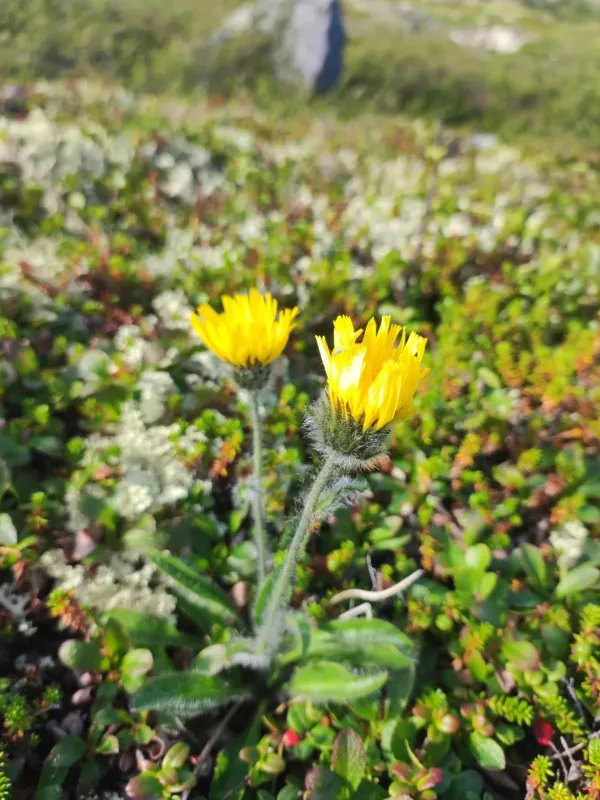
Alpine hawkweed (Hieracium alpinum) is a perennial herbaceous plant belonging to the Asteraceae family. It is characterized by a basal rosette of leaves and a short rhizome.
The stem is typically solitary, reaching heights of 10 to 30 cm, and is covered in dense glandular hairs that give it a characteristic grayish or brownish appearance.
The flower head is a single, terminal capitulum with bright yellow ligulate florets, which is a classic feature of the Hieracium genus.
The leaves are entire, lanceolate or oblong in shape, gathered at the base of the plant. The leaf surface varies from glabrous to moderately pubescent depending on environmental conditions.
The plant propagates primarily through wind-dispersed seeds equipped with a pappus, though it can also regenerate vegetatively from small root fragments if the soil is disturbed.
Where it grows
This species thrives in acidic, nutrient-poor soils. In its native environment, it is found in alpine meadows, mountain pastures, and stony slopes at high altitudes.
In agricultural settings, Alpine hawkweed is problematic in mountain grazing lands where the vegetation cover is sparse or degraded due to overgrazing.
It often spreads from the edges of meadows and forest borders, where it can establish stable populations before migrating into the open field areas.
The plant exhibits high ecological flexibility, allowing it to withstand harsh weather conditions, including low temperatures and high soil moisture levels.
While rarely found in frequently cultivated fields, it can become an aggressive invader in permanent pastures and low-maintenance meadows.
Harm it causes
The main harm caused by Alpine hawkweed is the reduction of forage quality in pastures. It actively replaces high-value grasses and legumes with less nutritious biomass.
Many livestock species avoid grazing on this plant due to the presence of secondary metabolites, leading to a decrease in the overall productivity of the grazing area.
The root system competes for water and nutrients within the upper soil layer, which can stunt the growth of neighboring forage species during the peak growing season.
Infestation by this weed accelerates the degradation of the sward, making the land more susceptible to erosion and further invasion by opportunistic weedy species.
The prolific production of wind-borne seeds makes it difficult to contain, often resulting in widespread contamination of nearby clean grazing lots.
How to control
Effective control starts with pasture management, specifically ensuring a dense grass cover that limits the amount of light reaching the weed seedlings, suppressing their establishment.
Proper grazing regimes should be implemented to prevent overgrazing, as soil compaction and vegetation damage create ideal conditions for Alpine hawkweed to thrive.
Mechanical management, such as discing or reseeding of degraded areas with aggressive, high-quality forage varieties, can effectively outcompete the weed.
Chemical control involving selective herbicides designed for broad-leaved weeds can be effective when applied during the early rosette growth stage.
Regular monitoring of pasture health and localized spot treatments can prevent the expansion of populations before they reach the flowering and seed-dispersal stages.
Taxonomy
- Latin name
- Hieracium alpinum
- Family
- Сложноцветные (астровые)
- EPPO code
- HIEAI