
Camphorweed
Heterotheca subaxillaris
Description
How to tell it apart
Heterotheca subaxillaris, commonly known as Camphorweed, is an annual or biennial herbaceous plant belonging to the Asteraceae family. It typically grows with a straight, branched stem reaching up to 1-2 meters in height.
The leaves are lanceolate to ovate, often with serrated edges, and are covered in glandular hairs. These hairs contain essential oils that give the plant a distinct, camphor-like scent when crushed.
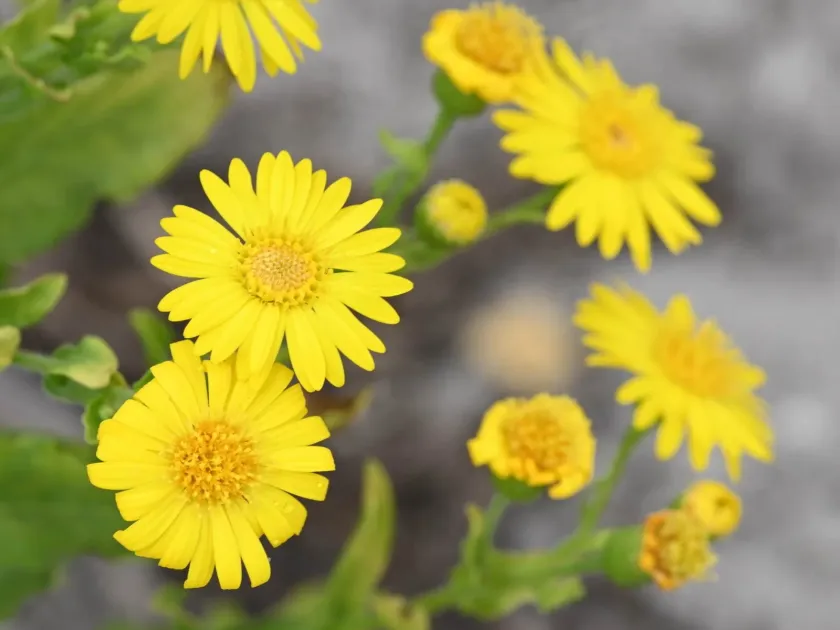
The inflorescence consists of bright yellow flower heads that are characteristic of the daisy family. After pollination, the plant produces achenes equipped with a feathery pappus, facilitating wind dispersal.
Its root system is deep and taprooted, allowing the plant to reach deep-seated water and nutrient reserves, which provides a competitive advantage in adverse environmental conditions.
The plant demonstrates high adaptability to sandy, disturbed, and even saline soil conditions, enabling it to establish populations in diverse ecosystems quickly.
Where it grows
Native to North America, Camphorweed has expanded its range across various regions globally, often becoming an invasive nuisance in disturbed environments and agricultural landscapes.
It thrives in open, sunny areas such as roadsides, abandoned fields, sandy dunes, and along the margins of managed agricultural fields where soil has been recently turned.
In farming, it is a significant concern in row crops, particularly soybeans, corn, and cotton, where it often competes for space and limited soil resources.
The plant frequently colonizes fallow land and pastures, where it can dominate native or cultivated forage, reducing the overall nutritional quality of the hay.
Human activities, such as movement of farm machinery and transport, play a major role in the spread of seeds between different geographical areas and fields.
Harm it causes
The primary damage caused by Heterotheca subaxillaris is intense resource competition, particularly during critical crop growth stages when water availability is limited.
Its rapid growth habit allows it to quickly shade out emerging crops, directly reducing the photosynthetic capacity and yield potential of the agricultural plants.
Research suggests that Camphorweed may exhibit allelopathic interactions, where its root exudates inhibit the germination and early development of neighboring plant species.
As a weed, it acts as a secondary host for various pests and pathogens, serving as a reservoir that facilitates the infection of nearby high-value commercial crops.
Harvesting efficiency is often hampered in heavily infested fields because the thick, resinous stems of the weed can clog harvesting machinery, causing mechanical delays and losses.
How to control
Mechanical control through deep primary tillage is highly effective, as it buries seeds deep in the soil profile, preventing successful germination of the population.
In-row cultivation and hoeing are essential early-season strategies to eliminate small seedlings before they develop a deep taproot and become resistant to physical removal.
Chemical control involving systemic herbicides is a standard practice; however, timing is critical, as treatment is most effective on young, actively growing rosettes.
- Sanitation of equipment moved from infested fields to clean areas.
- Use of weed-free, certified crop seeds to prevent initial contamination.
- Monitoring field boundaries and edge zones to prevent spread into the interior.
Implementing a diverse crop rotation helps break the cycle of infestation by introducing different cultivation methods and herbicide regimes that the weed cannot easily tolerate.
Taxonomy
- Latin name
- Heterotheca subaxillaris
- Family
- Сложноцветные (астровые)
- EPPO code
- HTTSU