
Silver-leaf everlasting
Helichrysum argyrophyllum
Description
How to tell it apart
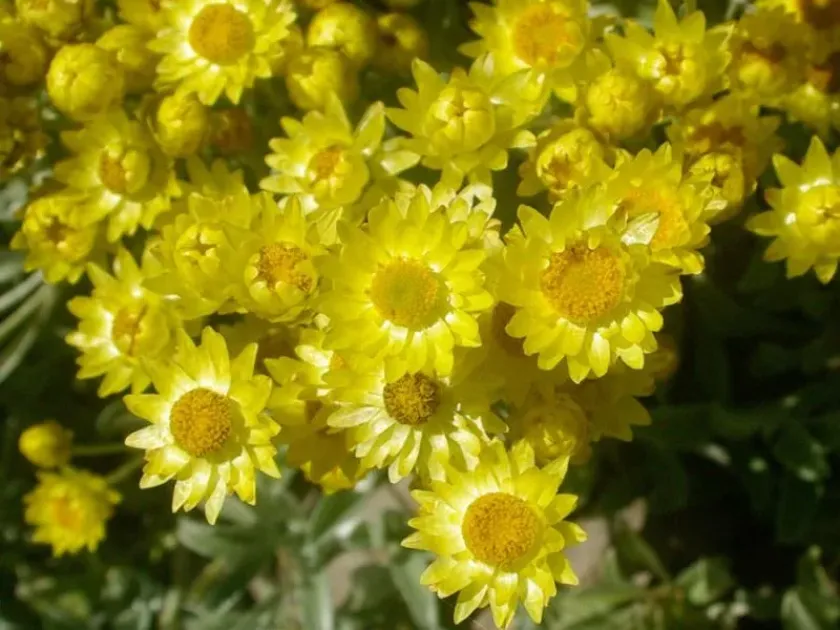
Helichrysum argyrophyllum, known as the silver-leaf everlasting, belongs to the Asteraceae family. It is a perennial herbaceous plant distinguished by the dense, silvery pubescence on its stems and leaves, providing a metallic appearance.
The plant features a robust root system adapted for efficient moisture absorption in arid conditions. Its inflorescences are small, dense flower heads that remain structurally intact even after being dried, a typical trait for the genus.
Biological resilience is enhanced by the waxy, hairy surface of the foliage, which significantly reduces transpiration. This makes the plant exceptionally well-suited for survival during hot, dry summer months.
Propagation occurs both through seeds, which are easily dispersed by wind, and vegetative reproduction via underground rhizomes. This dual strategy allows it to colonize new agricultural lands rapidly.
The silvery color makes it highly visible against the green background of standard field crops. Farmers and agronomists can identify infestations early by spotting these distinct silver patches in the field.
Where it grows
This species is predominantly found in regions with arid or semi-arid climates, favoring sandy or rocky soils. It thrives in open, uncultivated areas where moisture availability is limited for other plants.
In agricultural systems, the silver-leaf everlasting often occupies field margins, fallow lands, and neglected roadsides. If left unchecked, it gradually encroaches into arable fields and interferes with crop growth.
The weed is highly adapted to drought conditions, allowing it to dominate in agricultural zones prone to water scarcity. It often appears in wheat and other cereal crops, particularly when the crop stand is thin.
It prefers areas with disturbed soil, where it can quickly establish its root system. Once established, it remains a persistent occupant, dominating the stubble long after the main crop has been harvested.
Due to its hardiness, it successfully competes in fields where soil management practices are inconsistent. Its presence is often linked to poor rotation strategies or long-term neglect of soil health.
Harm it causes
The primary damage caused by this weed is the fierce competition for soil moisture and nutrients. It extracts water from the soil profile more efficiently than many cultivated crops, leading to water stress.
This intense competition results in significant yield losses, especially during years with below-average rainfall. Crop development is often stunted in the vicinity of dense weed patches, reducing overall production.
The tough stems and dense flower heads pose mechanical challenges during harvest, potentially clogging machinery and reducing the purity and quality of the collected grain.
It acts as a reservoir for various pests and pathogens, increasing the overall phytosanitary burden on the field. This necessitates increased pesticide use to protect the primary crop from secondary infestations.
Continuous presence of this weed contributes to soil depletion, as its extensive root system extracts nutrients from deeper horizons, limiting the available resource pool for the next planting season.
How to control
Agronomic control relies on deep plowing with moldboard inversion, which is essential to disrupt the underground root system. Timely field operations prevent the weed from reaching its flowering stage.
Integrating competitive crops into the rotation helps shade out the weed and limit its spread. Maintaining a healthy, dense crop canopy is one of the best preventative measures against this invader.
Chemical control involves systemic herbicides that can move through the plant to the root system. Effectiveness is highest when the plant is in an active growth phase and the environmental conditions are favorable.
Using herbicide mixtures with surfactants is highly recommended to overcome the waxy barrier on the leaves, ensuring better absorption and faster results in field conditions.
- Deep tillage to break down root systems;
- Use of systemic herbicides during active growth;
- Implementing competitive crop rotations;
- Regular clearing of field edges and borders;
- Precision spraying of weed hotspots.
Taxonomy
- Latin name
- Helichrysum argyrophyllum
- Family
- Сложноцветные (астровые)
- EPPO code
- HECAG