
Blue-weed
Helianthus ciliaris
Description
How to tell it apart
Blue-weed is a persistent perennial herb belonging to the Asteraceae family. It is notorious for its ability to spread rapidly through a complex system of underground rhizomes.
The stems are typically erect, reaching heights of 60 to 80 centimeters, and often branch at the top to support the flowering structures.
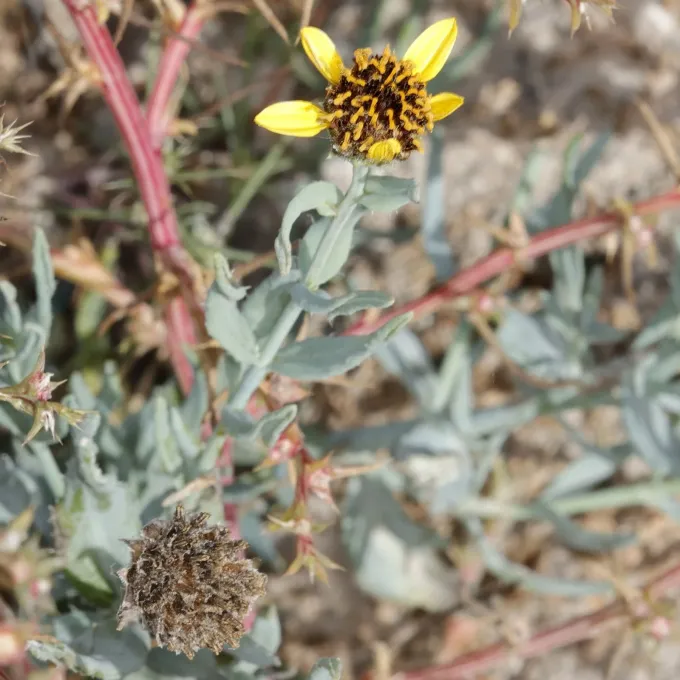
Leaves are alternate and distinctive due to their ciliated margins, which provide the primary visual identifier for this species during the early vegetative stage.
The flower heads are small, yellow, and sunflower-like, appearing in groups. They produce achenes equipped with a pappus, facilitating wind dispersal.
Its deep-seated root system features numerous dormant buds, making it incredibly resilient against standard cultivation practices that only disturb the topsoil.
Where it grows
Native to the arid regions of North America, blue-weed has spread globally, often colonizing disturbed habitats such as roadsides and abandoned agricultural lands.
The weed thrives in open, sunny environments and is particularly adapted to dry, sandy, or heavy clay soils that are common in many farming regions.
It poses a significant threat to irrigated cropland, where it can quickly dominate by exploiting the consistent water supply along water channels.
Once established in a field, the plant expands horizontally, creating dense, impenetrable patches that compete aggressively with the primary crop.
It is highly invasive in grazing areas as well, as livestock often avoid grazing on it due to its tough texture and potential chemical defenses.
Harm it causes
Blue-weed competes intensely for moisture and soil nutrients, often outperforming crops during critical growth stages and causing significant yield losses.
The plant exhibits allelopathic properties, releasing chemical compounds into the soil that inhibit the germination and development of surrounding crops.
Dense infestations can physically obstruct harvesting equipment, leading to slower operations and mechanical wear on agricultural machinery.
Contamination of harvested grain with the seeds of blue-weed requires additional cleaning processes, reducing the market value of the agricultural product.
It serves as an alternative host for various agricultural pests and pathogens, maintaining infection cycles within the field throughout the growing season.
How to control
Effective management of blue-weed requires a multi-year strategy focused on depleting the energy reserves stored in the plant's expansive rhizome system.
Consistent mechanical control, such as deep plowing and frequent cultivation, is necessary to stress the plant and reduce its regenerative capacity over time.
Chemical control is most successful when using systemic herbicides during the pre-flowering stage, allowing the active ingredients to translocate deep into the roots.
Crop rotation that includes competitive, dense-canopy crops can help shade out the weed and limit its ability to re-establish after initial control efforts.
- Integrated weed management strategies
- Systemic herbicide application in fallow periods
- Mechanical root disturbance during dry conditions
- Maintaining field hygiene to prevent seed dispersal
Taxonomy
- Latin name
- Helianthus ciliaris
- Family
- Сложноцветные (астровые)
- EPPO code
- HELCI