
Hazardia detonsa
Hazardia detonsa
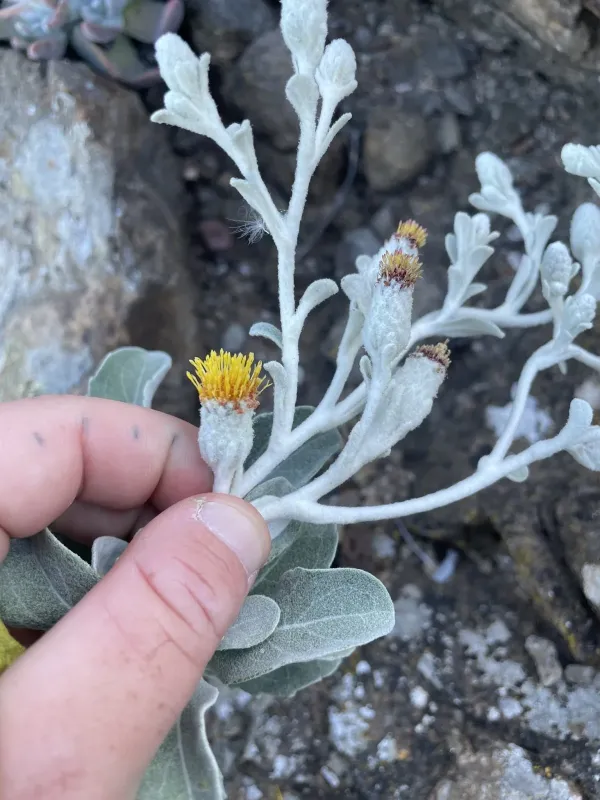
Description
How to tell it apart
Hazardia detonsa is a herbaceous perennial or subshrub belonging to the Asteraceae family. It is characterized by its specific morphological features that distinguish it within the genus Hazardia.
The plant is known for its relatively smooth stems, which lack dense pubescence, a feature reflected in its specific name. The leaves are typically lanceolate to narrow and arranged in an alternate pattern along the stem.
The inflorescences consist of dense flower heads containing tubular florets, typically yellow or creamy in color, which bloom during the second half of the growing season.
Its root system is strong and taproot-like, allowing the plant to store nutrients and water, which ensures survival in harsh or arid environmental conditions.
Seeds are equipped with a pappus, enabling efficient wind dispersal, which contributes to the plant's ability to colonize new agricultural areas and disturbed soils rapidly.
Where it grows
Hazardia detonsa is native to specific regions of North America, particularly California. It thrives in open, disturbed landscapes and agricultural zones with well-drained, sandy or light soils.
The weed frequently appears along field margins, fence lines, and non-crop areas, from where it can encroach into perennial pastures or fields if not managed properly.
It exhibits a high degree of ecological plasticity, allowing it to adapt to drought-prone environments where other less resilient plants might struggle to establish.
The plant is often found in sites where natural vegetation has been cleared, making it a persistent invader in agricultural lands that undergo frequent tillage or soil disruption.
Its presence in field edges is a common indicator of disturbed soil conditions, where it successfully competes for available light and minimal moisture during the dry season.
Harm it causes
The primary damage caused by Hazardia detonsa in agriculture is resource competition. Its extensive root system aggressively depletes soil moisture and nutrients, starving nearby crops.
In pastures or hayfields, the presence of this weed reduces forage quality. The harsh, woody nature of its stems makes it unpalatable for livestock, leading to a decrease in usable feed.
Its high seed production capability leads to a rapid increase in the soil seed bank, making future management progressively more difficult and costly for the grower.
The weed also obstructs field operations. Its robust structure can interfere with agricultural machinery, reducing the efficiency of harvesting and cultivation processes.
By outcompeting native or beneficial vegetation, it can alter the local flora, creating persistent patches of infestation that eventually require intensive remedial action.
How to control
Effective management begins with mechanical tillage. Deep plowing effectively eliminates young plants and disrupts the taproot system before it can establish a strong hold in the soil.
Regular mowing of field margins and non-crop areas is essential to prevent seed dispersal. This practice helps to exhaust the plant's nutrient reserves and restricts its spread to cultivated plots.
Chemical control using systemic herbicides during the active growth phase is highly effective. Targeting the plant at the rosette stage yields the best results in preventing infestation.
Crop rotation serves as a critical cultural practice. Alternating crops helps break the lifecycle of the weed by imposing different soil management regimes that are unfavorable for its growth.
A comprehensive integrated weed management (IWM) strategy, combining pre-emergent herbicides with routine field inspections and mechanical destruction, is the best approach for long-term control.
Taxonomy
- Latin name
- Hazardia detonsa
- Family
- Сложноцветные (астровые)
- EPPO code
- HZJDE