
Gutierrezia sarothrae
Gutierrezia sarothrae
Description
How to tell it apart
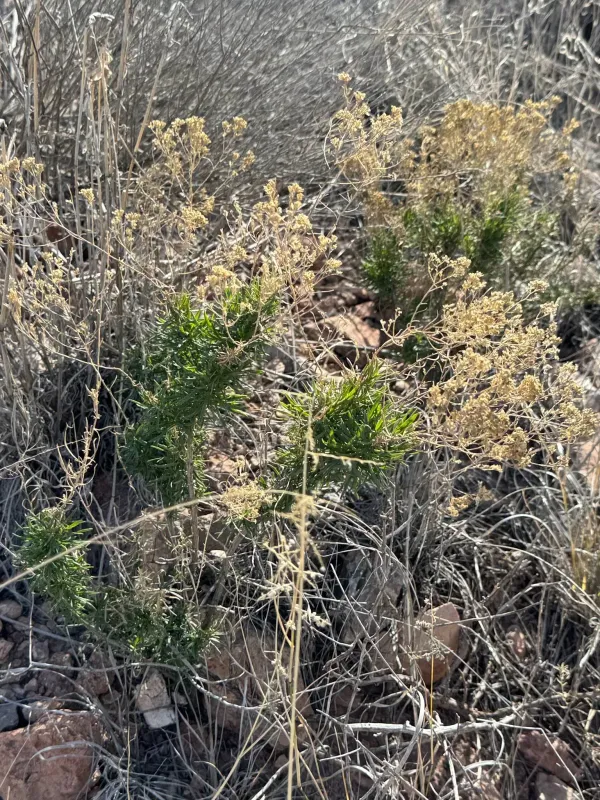
Gutierrezia sarothrae, commonly known as broom snakeweed, belongs to the Asteraceae family. It is a perennial subshrub growing 20 to 60 cm tall, characterized by numerous erect stems arising from a common woody base.
The leaves are alternate, narrow, linear, 1–4 cm long, and often covered with a resinous coating, giving them a shiny appearance. The plant emits a distinct, pungent odor due to its high concentration of essential oils.
Flowers are arranged in small heads that form dense, flat-topped clusters at the tips of the stems. Each head contains both yellow ray and disk florets, typical of the sunflower family.
It possesses a strong, deep-reaching taproot system, which allows the plant to survive in extreme drought conditions where many other forage species fail.
Flowering occurs in the late summer and early autumn. Once mature, the seeds are wind-dispersed, facilitating the rapid colonization of new, vacant areas.
Where it grows
This weed is predominantly found in arid and semi-arid regions of North America. It is a common inhabitant of prairies, steppes, and rocky desert environments.
It prefers well-drained, sandy, or loamy soils with low moisture content. The plant frequently colonizes degraded rangelands where competition from grasses is significantly reduced.
Gutierrezia sarothrae is highly adaptable to disturbed sites, including roadsides, industrial areas, and landscapes recovering from wildfires. Its plasticity allows it to dominate open niches quickly.
It often occurs in associations with sagebrush and other shrubs, but under favorable conditions, it can form dense, near-monoculture stands that displace valuable forage grasses.
From an agronomic perspective, it infests not only pastures but also adjacent fallow lands, acting as a persistent seed reservoir for the infestation of agricultural zones.
Harm it causes
The primary harm caused by this plant is its toxicity to livestock. The tissues contain saponins and other toxins that can cause severe poisoning in cattle and sheep.
Ingestion of significant amounts of vegetative mass is known to cause abortions in cattle, resulting in major economic losses for livestock operations.
The weed acts as an aggressive competitor for water and nutrients. Its deep taproot extracts moisture from lower soil profiles, depriving productive forage grasses of vital resources.
Under heavy grazing pressure, broom snakeweed spreads rapidly, converting productive grasslands into low-value shrublands that are unsuitable for grazing or hay production.
Furthermore, the plant increases fire risk in dry landscapes due to the presence of resins and essential oils in its stems, complicating land management and fire mitigation efforts.
How to control
Agronomic control strategies include the management of grazing pressure. Controlled, moderate grazing helps maintain the vigor of native grasses, which can outcompete snakeweed seedlings.
Mechanical methods, such as mowing or disking, may provide temporary suppression, but they rarely yield long-term control because the plant is capable of resprouting from its woody crown.
Chemical control is the most effective approach. The application of systemic herbicides containing 2,4-D, picloram, or their combinations provides the best results during periods of active growth.
It is critical to time herbicide application during the vegetative phase before the plant reaches the flowering stage, ensuring maximum systemic absorption of the active ingredients.
Following chemical treatments, reseeding the pasture with competitive perennial grasses is highly recommended to prevent the reinvasion of snakeweed in the treated areas.
Taxonomy
- Latin name
- Gutierrezia sarothrae
- Family
- Сложноцветные (астровые)
- EPPO code
- GUESA