
Gutierrezia microcephala
Gutierrezia microcephala
Description
How to tell it apart
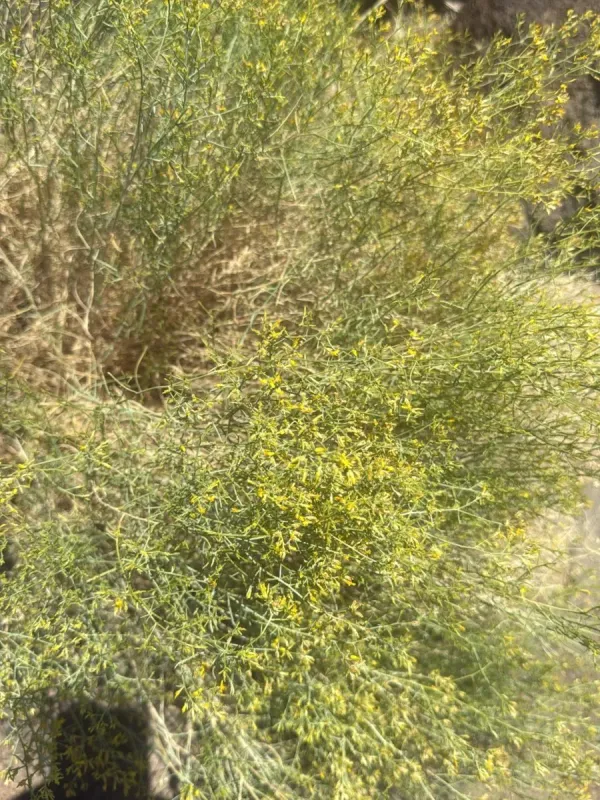
Gutierrezia microcephala, commonly known as threadleaf snakeweed, is a perennial subshrub belonging to the Asteraceae family. It typically grows 30–60 cm tall, featuring branched stems and narrow, linear leaves.
The plant produces numerous small yellow flower heads arranged in dense clusters. It possesses a deep taproot system, which allows the plant to survive in harsh, arid environments where other vegetation often struggles.
Growth begins in early spring, while the flowering period generally occurs in late summer and autumn. The seeds are small and lightweight, facilitating wide dispersal by wind.
A distinctive feature of the plant is its pungent, resinous odor when the foliage is crushed. Its morphology is highly adaptable to varying soil moisture and nutrient levels.
It acts as a colonizer on disturbed soils, often indicating overgrazing or land mismanagement in rangeland ecosystems.
Where it grows
This weed is primarily distributed throughout arid and semi-arid regions of North America. It frequently colonizes depleted rangelands, rocky slopes, and abandoned agricultural fields.
It prefers open areas with low competition from perennial grasses. It is commonly found along roadsides and in areas subject to heavy livestock grazing pressure.
The species is highly drought-tolerant, utilizing deep soil moisture to outcompete desirable forage species during dry seasons.
In grazing lands, Gutierrezia microcephala rapidly occupies gaps in vegetation created by excessive stocking rates or environmental stress.
Its presence is a clear diagnostic indicator that the range health is compromised and requires restorative management practices.
Harm it causes
The primary concern regarding Gutierrezia microcephala is its toxicity to livestock. The plant contains saponins and other toxins that can cause severe poisoning.
Cattle and sheep that ingest significant amounts of the plant may suffer from digestive disorders and reproductive issues, including abortions in pregnant animals.
Beyond its toxicity, it reduces the overall productivity of pastures by outcompeting desirable forage species, leading to significant economic losses for producers.
Dense infestations block sunlight and deplete soil nutrients, preventing the regeneration of high-quality grasses and legumes.
Additionally, the plant creates a fire hazard in late autumn, as the dried, resinous biomass becomes highly flammable and contributes to rapid fire spread.
How to control
A key agro-technical measure is the implementation of sustainable grazing management. Maintaining healthy grass cover is the most effective biological defense against snakeweed invasion.
Mechanical removal, such as mowing or grubbing, is feasible on a small scale but is often labor-intensive and ineffective for preventing long-term re-infestation.
Chemical control is the most reliable method for large-scale management. Herbicides, particularly those containing systemic active ingredients, provide effective suppression during the rapid growth phase.
Applications should ideally occur in the early growth stages before the plant develops thick, waxy cuticles that reduce herbicide absorption efficacy.
- Optimizing stocking rates
- Targeted herbicide applications
- Range reseeding and restoration
Taxonomy
- Latin name
- Gutierrezia microcephala
- Family
- Сложноцветные (астровые)
- EPPO code
- GUEMI