
Gutierrezia dracunculoides
Gutierrezia dracunculoides
Description
How to tell it apart
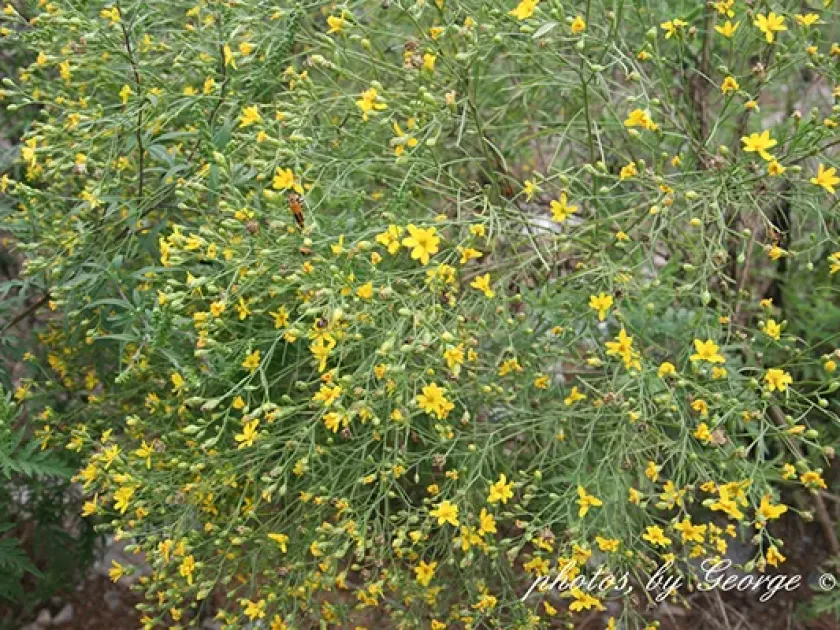
Gutierrezia dracunculoides, known as perennial snakeweed's annual relative, is a member of the Asteraceae family. It is an annual forb that typically grows to a height of 30 to 90 centimeters, featuring highly branched stems.
The leaves are linear, narrow, and alternate, often appearing similar to certain wormwood species, which is reflected in its specific epithet. This leaf structure is an adaptation to arid environments.
Its yellow flower heads are arranged in loose corymbiform cymes. The blooming period occurs from mid-to-late summer, facilitating the production of numerous wind-dispersed seeds.
The root system consists of a robust taproot designed to penetrate deep into the soil profile. This feature allows the plant to outcompete crops for deep-seated water and nutrients.
The plant produces small, achene-type fruits equipped with pappus, which ensures effective dispersal over vast distances via wind currents, making the weed difficult to contain.
Where it grows
This species is native to the prairies of North America and thrives in open, disturbed habitats. It is commonly found in overgrazed pastures, along roadsides, and on abandoned agricultural lands.
In agricultural settings, it frequently colonizes crop fields with insufficient canopy closure. It prefers well-drained soils and can tolerate a wide range of soil pH levels.
Gutierrezia dracunculoides is often considered an indicator of range degradation. Its rapid spread on neglected fields is a common issue for local farming communities.
It thrives in semi-arid regions where other vegetation may struggle during droughts. Its presence often indicates a shift in the local plant community due to over-use or poor soil management.
The weed is capable of establishing itself in diverse conditions, from rocky hillsides to fertile but neglected field margins, showing high ecological resilience.
Harm it causes
The primary agricultural impact of this plant is direct competition with crops for limited resources such as soil moisture and light, leading to significant yield losses in affected fields.
In grazing lands, it is a significant nuisance because it is largely unpalatable to livestock due to its chemical composition, which includes toxins that can be harmful if ingested in large quantities.
The presence of this weed reduces the carrying capacity of pastures. As it dominates the landscape, it crowds out beneficial forage species, diminishing the overall feed quality of the area.
Contamination of harvested grain with the seeds and foliage of Gutierrezia dracunculoides necessitates extra cleaning processes, adding to the post-harvest costs and logistical challenges.
It acts as a host for various agricultural pests and diseases, which can spill over into nearby crop fields, increasing the need for pesticide applications and monitoring.
How to control
Mechanical control is effective if performed early in the season. Frequent mowing before the plant reaches the flowering stage prevents seed set and helps exhaust the soil seed bank.
Tillage practices are crucial for the management of young seedlings. Deep plowing and timely cultivation between crop rows disrupt the root system and kill emerging weeds before they can establish.
Chemical control using systemic herbicides, particularly those labeled for broadleaf weed management, is often the most reliable method for controlling large infestations in industrial farming.
Integrating crop rotation and planting highly competitive crops can effectively shade out this weed, limiting its ability to grow and reproduce in the field.
- Regular field scouting for early identification
- Mowing before seed production
- Strategic application of selective herbicides
- Maintenance of vigorous and healthy crop stands
Taxonomy
- Latin name
- Gutierrezia dracunculoides
- Family
- Сложноцветные (астровые)
- EPPO code
- GUEDR