
Dwarf cudweed
Gnaphalium supinum
Description
How to tell it apart
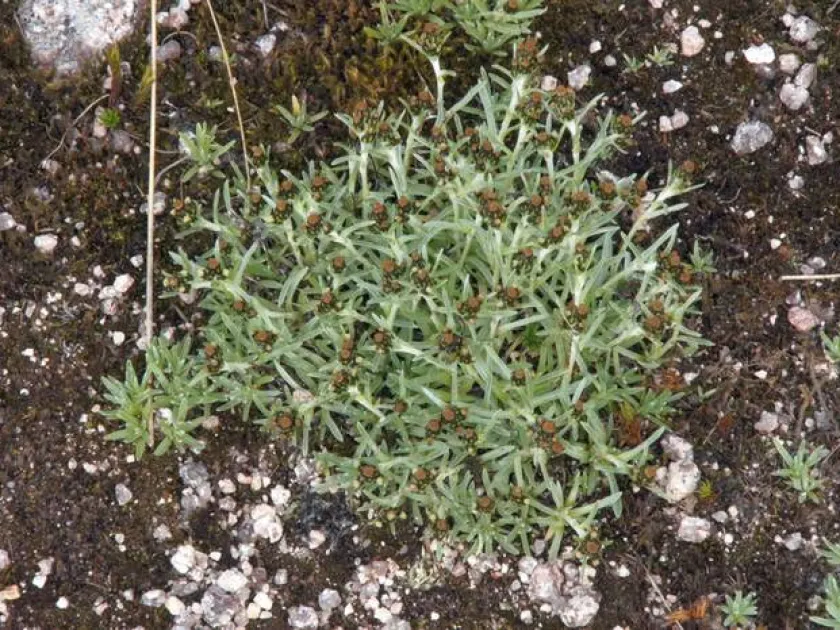
Dwarf cudweed (lat. Gnaphalium supinum) is a small perennial herbaceous plant belonging to the Asteraceae family. It typically reaches a height of only 5 to 10 centimeters, forming compact mats.
The stems and leaves are covered with a dense, woolly, silver-gray tomentum. The leaves are narrow and linear, often forming a basal rosette, which provides the plant with protection in harsh, windy environments.
The inflorescences are composed of small flower heads appearing at the tips of the shoots. A key identification feature is the dark brown or black margins on the bracts surrounding the flower heads.
Flowering occurs during the summer months. The plant produces numerous achenes with a pappus, allowing for efficient wind dispersal of seeds across alpine and subalpine landscapes.
Due to its biological adaptation to low temperatures and rocky substrates, this plant is a pioneer species that excels in nutrient-poor and high-altitude habitats where other vegetation may struggle.
Where it grows
The natural habitat of Gnaphalium supinum includes alpine and subalpine meadows, arctic tundras, and rocky mountain slopes. It is often found in areas with prolonged snow cover and moist, disturbed soils.
In agricultural settings, it commonly invades high-altitude pastures and rangelands. It frequently appears in areas where the soil has been disturbed by erosion, animal trampling, or shifting ground.
It prefers acidic to neutral soils and can thrive in areas where traditional crops would fail, making it a persistent weed in mountainous grazing regions.
Seed dispersal is aided by melting water and wind, allowing the weed to colonize new fields rapidly. The seeds can remain viable in the soil for several years before germinating under favorable conditions.
The plant is highly resilient and recovers quickly after disturbances, making it a challenging weed to eradicate once it has established a foothold in a pasture or meadow.
Harm it causes
The primary agricultural impact of dwarf cudweed is the reduction of forage quality in grazing lands. It acts as a competitor to more nutritious grasses and legumes, effectively lowering the carrying capacity of the land.
By forming dense mats, the weed prevents the regrowth of valuable forage species after grazing or mowing. This competitive suppression leads to a decrease in the overall biomass production of the pasture.
Although not toxic, the woolly texture and low nutritional profile make it unpalatable to livestock. Animals often bypass areas dominated by this weed, leading to uneven pasture utilization.
Dwarf cudweed consumes significant levels of soil moisture and nutrients, which are then unavailable for more productive forage crops. This depletes the soil and stunts the growth of desirable meadow species.
Its presence in large quantities can indicate land degradation or overgrazing. Once the plant dominates a sward, restoring the balance of the meadow requires significant time and financial investment.
How to control
Effective management begins with proper grazing pressure. Avoiding overgrazing helps maintain a healthy, dense sod that naturally prevents dwarf cudweed from colonizing the soil surface.
Regular mowing of pastures is recommended to weaken the plant's root system and prevent seed production. This is crucial for long-term population reduction in high-altitude meadows.
Soil improvement through fertilization can encourage the growth of vigorous competitive grasses. A strong, lush sward is the best defense against this low-growing weed, as it shades out the seedlings.
Chemical control using selective broadleaf herbicides can be employed when the weed infestation is severe. Applications should be timed to coincide with the plant’s peak growth period to maximize efficacy.
An integrated weed management strategy, which combines improved land management, rotational grazing, and targeted herbicide application, is the most successful approach to mitigating the spread of dwarf cudweed.
Taxonomy
- Latin name
- Gnaphalium supinum
- Family
- Сложноцветные (астровые)
- EPPO code
- GNASU