
Marsh cudweed
Gnaphalium
Description
How to tell it apart
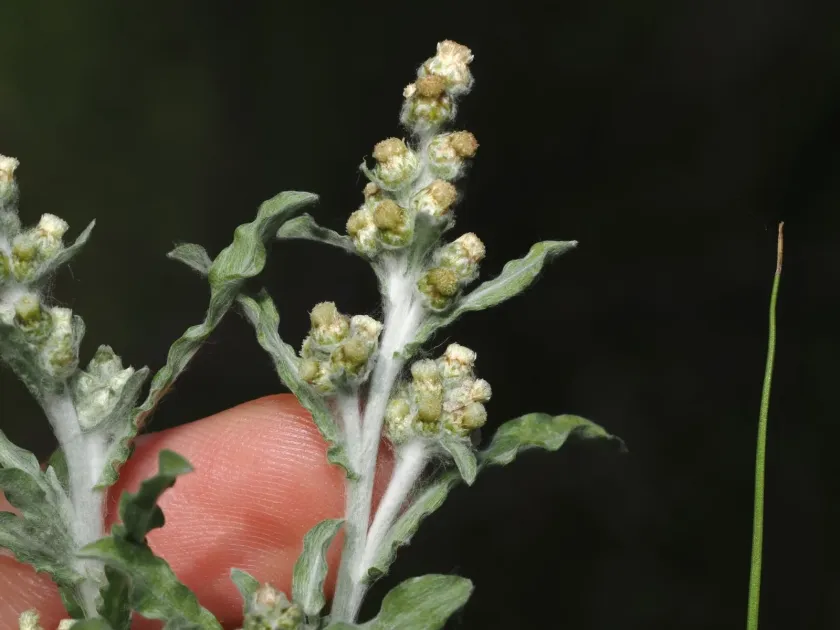
Marsh cudweed (Gnaphalium uliginosum) is an annual herbaceous plant belonging to the Asteraceae family. It is easily identified by its dense, woolly, grey-white hair covering the entire plant.
The stems typically grow 5 to 20 cm tall and are branched from the base, often forming mats or dense clumps in suitable environments.
The leaves are linear to lanceolate, narrow, and greyish-green. The inflorescences consist of small, clustered flower heads surrounded by leafy bracts, often with brownish tips.
Its root system is fibrous and relatively shallow, reflecting its ecological adaptation to damp soils rather than deep, dry root zones.
The plant produces a vast amount of tiny seeds that are easily dispersed by wind and water, allowing it to colonize new areas rapidly.
Where it grows
As its name suggests, Gnaphalium uliginosum is a moisture-loving plant. It thrives in damp fields, along ditches, pond edges, and marshy meadows.
In agricultural settings, it is a frequent invader of fields with poor drainage, heavy soils, or areas prone to temporary waterlogging during the growing season.
It is commonly found in grain crops, vegetable plots, and fallow fields where the soil remains damp for extended periods, preventing the growth of more competitive species.
The presence of Marsh cudweed is often a bio-indicator that the field requires better surface leveling or improved drainage systems for optimal crop performance.
It can also persist along field margins and access tracks, serving as a secondary source of infestation for neighboring cultivated areas.
Harm it causes
The primary damage caused by Marsh cudweed is the competition for water and soil nutrients, particularly in low-lying sections of the field where crop growth is already restricted.
At high densities, the weed shades out crop seedlings, resulting in reduced vegetative vigor and potential yield loss during the early development stages.
Its presence complicates inter-row cultivation and other mechanical maintenance tasks, potentially increasing labor costs and machine time in the field.
Marsh cudweed can harbor various insect pests and fungal pathogens, providing a shelter that allows these threats to persist and spread to the cultivated crops.
Seed contamination of harvested grain can decrease the market value of the crop, necessitating additional processing or cleaning before the grain can be sold or stored.
How to control
The most sustainable strategy to control Marsh cudweed is improving soil drainage and land leveling to remove the stagnant water conditions it requires to thrive.
Effective seedbed preparation, including timely cultivation and harrowing, helps destroy young weed seedlings before they become established in the crop.
In cases of heavy infestation, selective herbicides labeled for broadleaf weed control are used, though success depends on the correct timing of the application.
Integrated weed management, including crop rotation and the use of competitive crop varieties, significantly suppresses the weed's ability to dominate the field.
- Cleaning farm machinery to prevent the movement of seeds between fields.
- Using certified, weed-free seed for planting to prevent introduction.
- Applying herbicides at the rosette or early seedling stage.
- Managing irrigation systems to avoid long-term water saturation.
Taxonomy
- Latin name
- Gnaphalium
- Family
- Сложноцветные (астровые)
- EPPO code
- GNASS