
Yankeeweed
Eupatorium compositifolium
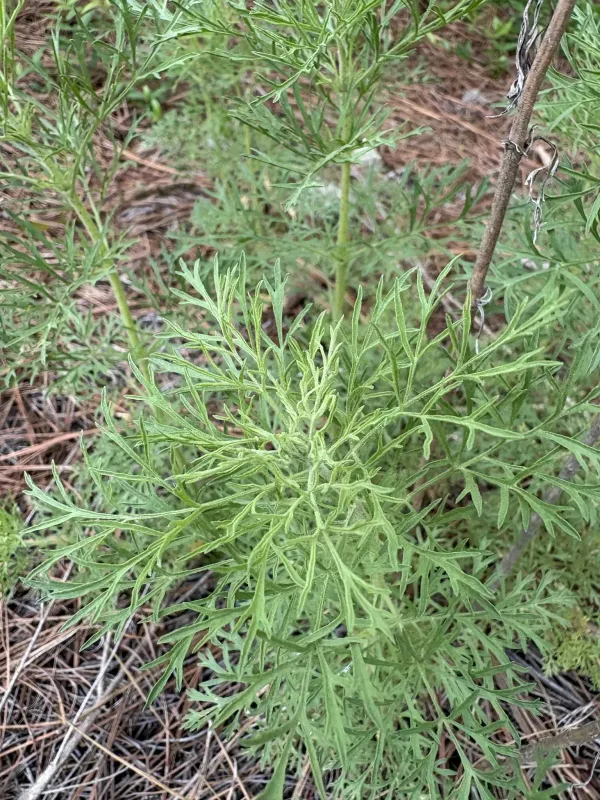
Description
How to tell it apart
Yankeeweed (Eupatorium compositifolium) is a perennial herbaceous plant belonging to the Asteraceae family, often recognized by its unique morphology.
The plant typically reaches a height of 1 to 1.5 meters, featuring an upright, branched stem that often turns woody at the base in mature specimens.
The leaves are finely divided into thread-like segments, providing a distinct, feathery appearance that separates it from other Eupatorium species.
It produces small, white or creamy-white flower heads arranged in flat-topped corymbs that bloom during the late summer and autumn months.
The root system is composed of a stout rhizome, which facilitates survival through winter and supports robust vegetative growth during the spring season.
Where it grows
Native to North America, Yankeeweed thrives in open, sun-exposed areas such as pastures, old fields, and roadside ditches.
It is particularly common in areas where the soil has been disturbed or where overgrazing has reduced the competition from desirable grasses.
The species displays a high tolerance for varying soil textures, including acidic and poorly drained conditions where other plants may struggle.
It frequently invades abandoned farmland, rapidly establishing itself as a dominant species in neglected landscapes.
The seeds are equipped with a pappus, allowing for long-distance wind dispersal, which assists in colonizing new agricultural plots.
Harm it causes
Yankeeweed is considered a problematic weed in agriculture primarily due to its toxicity, which poses risks to livestock, especially horses and cattle.
Ingestion of the plant material can lead to health complications in animals, and its presence in hay is a significant safety concern for livestock farmers.
It acts as a strong competitor in pasture settings, significantly reducing the carrying capacity of the land by displacing nutritious forage species.
The plant's aggressive nature leads to dense patches that are avoided by grazing animals, causing uneven pasture utilization and economic loss.
Its deep-seated root structure allows it to withstand drought conditions, ensuring it persists in fields even when other vegetation is suffering.
How to control
Effective management requires a multi-year strategy focused on preventing seed production and depleting the energy stored in the rhizomes.
Repeated mowing throughout the growing season can weaken the plant and prevent it from reaching the reproductive stage.
Chemical control using systemic herbicides is recommended during the period of active growth to ensure translocation to the roots.
Improving pasture fertility and promoting a thick cover of competitive forage plants is the most sustainable long-term management practice.
- Mowing consistently before flowering occurs.
- Targeted application of systemic herbicides.
- Over-seeding pastures to create competition.
- Manual removal of small infestations.
Taxonomy
- Latin name
- Eupatorium compositifolium
- Family
- Сложноцветные (астровые)
- EPPO code
- EUPCO