
Triumfetti's cornflower
Cyanus triumfettii
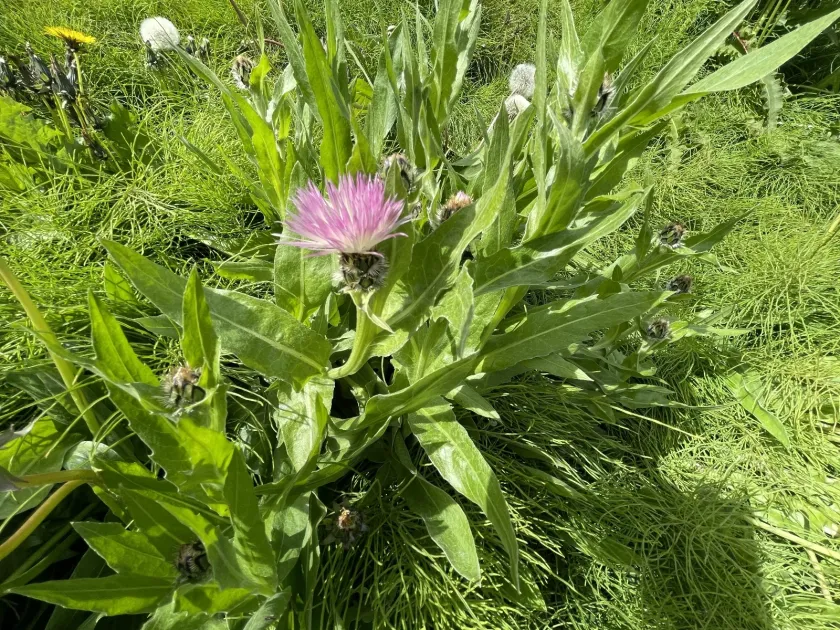
Description
How to tell it apart
Triumfetti's cornflower (Cyanus triumfettii) belongs to the Asteraceae family. It is a perennial herbaceous plant, typically reaching a height of 20 to 60 centimeters.
The plant is distinguished by a grayish-webby pubescence covering the entire stem and leaves, which gives it a unique appearance.
The leaves are entire, linear-lanceolate, and arranged in an alternate pattern along the stem, often with a grayish tint due to the fine hair.
The inflorescences are solitary, large flower heads with vibrant blue to violet florets, and the involucres are covered with characteristic dark-tipped appendages.
This species possesses a robust root system, enabling it to survive harsh conditions and emerge vigorously during the early spring season.
Where it grows
This weed is commonly found in dry meadows, rocky slopes, and forest edges, often spreading into adjacent agricultural lands and pastures.
It prefers well-drained, moderately fertile soils and thrives in open, sunny environments where competition from taller vegetation is limited.
In agroecosystems, it typically colonizes the edges of cereal fields, permanent grasslands, and fallow lands that have not been cultivated for some time.
Because its seeds are equipped with appendages for wind dispersal, it easily enters cultivated fields from nearby wild habitats.
Its ability to adapt to diverse ecological conditions makes it a persistent presence in areas where traditional tillage practices are infrequent.
Harm it causes
Triumfetti's cornflower competes aggressively with crops for essential nutrients, water, and light, particularly during the early vegetative stages.
The presence of this weed in fields leads to reduced yields and lower crop quality, as it depletes the soil resources intended for the desired plants.
High densities of the weed complicate harvesting processes, as the tough stems can increase grain moisture content and interfere with machinery performance.
The plant can act as an alternative host for various crop pests and diseases, increasing the overall phytosanitary burden on the farmland.
Contamination of harvested grain with its seeds reduces market value and necessitates expensive post-harvest cleaning and processing stages.
How to control
Effective management includes integrated strategies such as crop rotation, which disrupts the life cycle of the perennial weed and reduces its vigor.
Mechanical control, including deep plowing and timely cultivation, helps to deplete the root reserves of the plant and suppress its regeneration capacity.
Chemical control involves the application of selective systemic herbicides, typically during the early growth stages before the weed becomes woody.
Applying herbicides at the correct stage ensures maximum translocation to the roots, which is crucial for killing the plant rather than just suppressing growth.
- Regular monitoring of field margins and buffer zones.
- Using weed-free certified seeds to prevent the introduction of the plant.
- Strategic mowing of uncultivated areas to prevent seed maturation and dispersal.
Taxonomy
- Latin name
- Cyanus triumfettii
- Family
- Сложноцветные (астровые)
- EPPO code
- CENTR