
Crassocephalum crepidioides
Crassocephalum crepidioides
Description
How to tell it apart
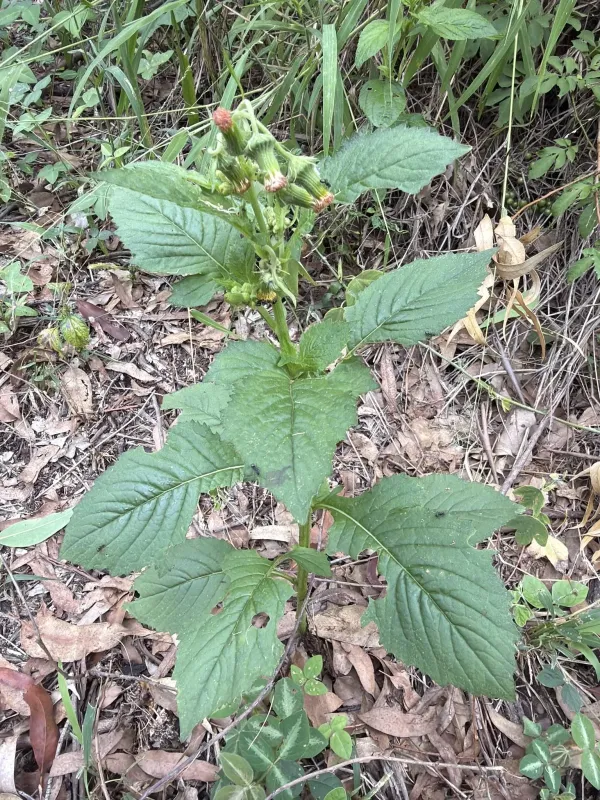
Crassocephalum crepidioides is an annual herbaceous plant belonging to the Asteraceae family. It typically features an erect stem that can grow to heights ranging from 30 to 120 centimeters.
The leaves are arranged alternately and vary in shape from entire to pinnately lobed. A distinctive feature for identification is the presence of serrated edges along the leaf blades.
The flowers are arranged in loose heads that often droop before opening. The petals are characteristically reddish-brown or orange, giving the plant a unique appearance among common weeds.
Seeds are equipped with a pappus, a tuft of hair that enables long-distance wind dispersal. This trait significantly increases the plant's ability to invade new agricultural landscapes rapidly.
As a biological entity, this plant thrives in open, sunny environments with moist, nutrient-rich soils. It is highly resilient and adaptable to a variety of disturbed habitats.
Where it grows
Native to tropical regions of Africa and Asia, Crassocephalum crepidioides has become a global invasive species, spreading rapidly through international trade and agricultural activity.
It is commonly found infesting vegetable plots, rice paddies, maize fields, and plantations of tea and coffee. The weed establishes itself effectively in both large-scale and small-scale farming systems.
Beyond cultivated fields, it frequently colonizes roadsides, waste areas, abandoned lots, and cleared forest lands where sunlight can reach the ground directly.
Dispersal is primarily facilitated by contaminated seed supplies, machinery moving between fields, and, in some cases, the transport of agricultural equipment contaminated with soil or plant debris.
The plant exhibits a preference for humid climates with consistent rainfall or irrigation, which explains its high success rate in tropical farming zones across the world.
Harm it causes
The primary damage caused by Crassocephalum crepidioides is the aggressive competition with crops for essential resources such as light, moisture, and soil nutrients during the critical growth phase.
Due to its rapid growth rate, the weed often shades out younger crop seedlings, leading to stunted development, reduced photosynthetic capacity, and overall lower yield quality.
It serves as a secondary host for various agricultural pests and viral pathogens. These can easily migrate from the weed to nearby crops, complicating pest management programs significantly.
Dense infestations create physical barriers that hinder field operations. This makes mechanized weeding and harvesting more labor-intensive and costly for farmers managing infested plots.
If left unchecked, the accumulation of seed banks in the soil can lead to long-term management challenges, requiring years of intensive control to restore the fields to productive use.
How to control
Mechanical control involves pulling or tilling the plants before they reach the flowering stage to prevent seed dispersal. Regular monitoring of fields is essential for early detection.
Agrotechnical methods such as proper crop rotation and deep plowing help bury seeds, significantly reducing their germination success and depleting the seed bank within the soil.
Chemical control using systemic herbicides can be highly effective, but applications must be timed correctly according to the weed's growth cycle and local label regulations.
Strict hygiene protocols for farm equipment are necessary to prevent cross-contamination between plots. Cleaning machinery after use in infested areas is a simple yet vital management step.
- Regular manual weeding before seed set.
- Strategic crop rotation to minimize weed niche.
- Targeted application of herbicides during active growth.
Taxonomy
- Latin name
- Crassocephalum crepidioides
- Family
- Сложноцветные (астровые)
- EPPO code
- CRSCR