
Siam weed
Chromolaena odorata
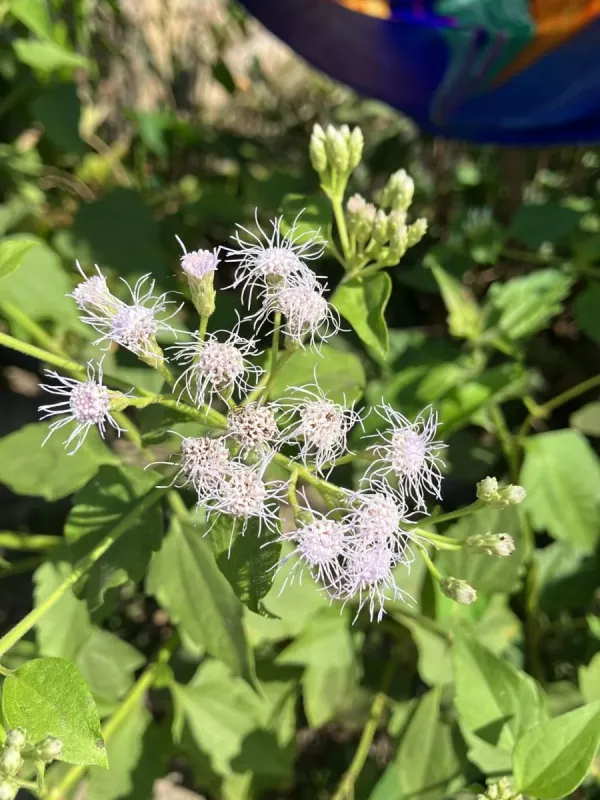
Description
How to tell it apart
Siam weed (Chromolaena odorata) is a perennial, herbaceous shrub belonging to the Asteraceae family. The plant is characterized by its rapid growth, forming dense, tangled thickets that can reach heights of 1.5 to 3 meters.
The leaves are opposite, triangular-ovate in shape, and possess a distinctive pungent odor when crushed. The flowers are arranged in dense terminal corymbs, consisting of pale lilac or white florets that lack ray florets.
Each seed is equipped with a pappus, which allows the plant to disperse its seeds efficiently via wind currents over long distances. The root system is robust and deep-seated, contributing to its extreme resilience in various environments.
Biologically, Siam weed is a light-demanding species that aggressively colonizes open areas. It is capable of rapid vegetative regeneration, allowing it to quickly form monoculture stands that displace native plant species.
The plant demonstrates significant ecological plasticity, enabling it to thrive in diverse soil conditions, from degraded lands to fertile agricultural plots. Its ability to regrow from stem fragments makes it notoriously difficult to eradicate.
Where it grows
The natural range of Siam weed spans the tropical and subtropical regions of the Americas, extending from Florida to Argentina. However, it has become a highly invasive species across vast areas of Asia, Africa, and the Pacific Islands.
The weed typically occupies open habitats such as forest margins, roadsides, abandoned pastures, and fallow agricultural land. It is a major nuisance in plantations of perennials, including rubber, oil palm, and tea.
Siam weed represents a serious agricultural threat in the tropics, where it colonizes arable lands with alarming speed. It causes significant yield losses in field crops, legumes, and various fruit tree plantations.
The plant competes aggressively for sunlight, soil moisture, and essential nutrients. Due to its fast-paced development, it can smother crop seedlings during their critical early growth stages, often leading to total crop failure.
In infested regions, Siam weed often becomes a dominant species, drastically altering the structure of local ecosystems. Its widespread dissemination is facilitated by both human disturbance and the absence of natural enemies in its non-native range.
Harm it causes
The primary harm involves the suppression of growth and development in agricultural crops. Beyond physical competition, Siam weed releases allelopathic chemicals into the soil that inhibit seed germination and root growth of neighboring plants.
The dense thickets pose a severe fire hazard, especially during the dry season, as the plant's dry biomass is highly flammable. This creates a significant risk for plantations, infrastructure, and nearby forested areas.
For the livestock industry, Siam weed is toxic due to the presence of pyrrolizidine alkaloids in its foliage. Consuming the plant can lead to severe health issues or fatalities in cattle and other domestic animals.
Damage is also reflected in the drastic reduction of pasture productivity. By invading grazing lands, the weed displaces nutritious forage grasses, rendering these areas hazardous and unproductive for livestock farmers.
Managing Siam weed requires substantial labor and financial investment. Because the shrub quickly resprouts from its root crown, mechanical clearing methods often provide only temporary relief and necessitate continuous follow-up interventions.
How to control
Agronomic control involves systematic weeding and manual removal of the plants, including their roots, before the flowering stage. It is crucial to prevent seed production, as a single plant can produce up to 800,000 seeds per season.
Deep tillage and regular discing can help disrupt the root system and deplete the plant's energy reserves. This method is effective only when carried out consistently over multiple seasons to exhaust the existing soil seed bank.
Chemical control relies on the application of systemic herbicides. Glyphosate-based formulations have proven effective, although they require spot-spraying to ensure that surrounding crops remain unharmed by herbicide drift.
Biological control has shown promise in several countries. The introduction of host-specific natural enemies, such as the moth Pareuchaetes pseudoinsulata, has been successful in reducing the density and vigor of Siam weed infestations.
An integrated weed management (IWM) strategy is the most effective approach. This includes combining mechanical removal, proper land use practices, and targeted herbicide application to maintain control and prevent the resurgence of this aggressive invader.
Taxonomy
- Latin name
- Chromolaena odorata
- Family
- Сложноцветные (астровые)
- EPPO code
- EUPOD