
Skeletonweed
Chondrilla juncea
Description
How to tell it apart
Skeletonweed (Chondrilla juncea) is a perennial member of the Asteraceae family. It is characterized by a deep, taproot system that allows it to thrive in challenging environments.
The stem is erect and highly branched in the upper portion, reaching heights of 30 to 100 cm. The base is often hairy, while the upper stems remain smooth and glabrous.
Basal leaves form a rosette, but they typically wither early. The stem leaves are minimal, linear, and inconspicuous, giving the plant its distinct rush-like appearance.
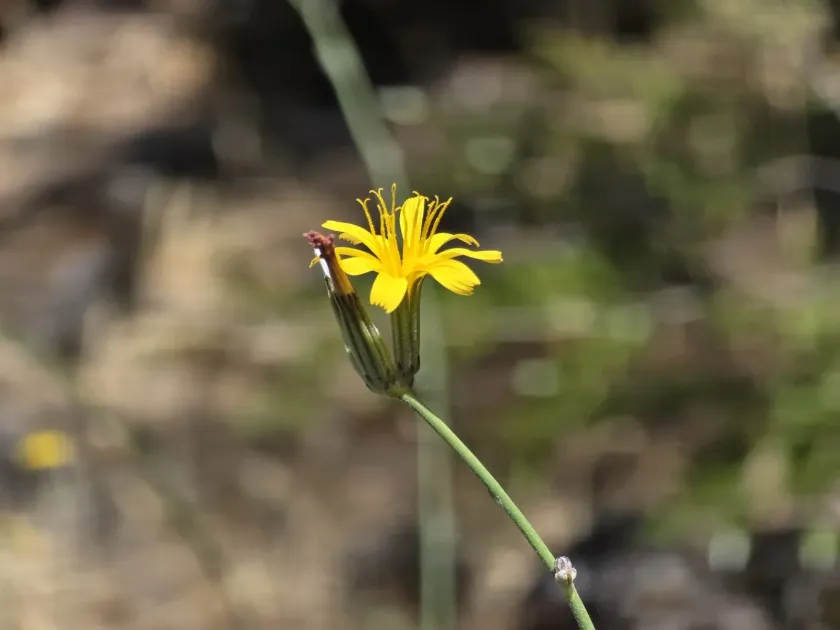
The yellow flowers are arranged in small heads at the tips of the branches. Like other members of the family, the plant exudes a milky latex when injured.
The fruits are achenes equipped with a pappus, which allows the seeds to be easily dispersed by the wind over long distances, aiding in rapid infestation.
Where it grows
This weed prefers dry, sandy, or rocky soils. It is commonly found in steppe regions, fallow fields, pastures, and along roadsides throughout temperate areas.
Skeletonweed is a major threat to winter grain crops, as it is highly drought-tolerant and competes aggressively for limited soil moisture.
It also infiltrates row crops and orchards, particularly in arid climates where other competing vegetation is naturally suppressed by water shortages.
The plant's ability to extract water from deep soil horizons allows it to persist even during prolonged dry spells that might otherwise limit weed growth.
It colonizes disturbed areas quickly and can form dense patches that completely displace native or cultivated plant species over a short period.
Harm it causes
The primary damage caused by skeletonweed is the excessive depletion of deep soil water and nutrients, which are critical for the development of grain crops.
By competing for resources, it significantly reduces the overall density of the main crop, leading to substantial yield losses at the end of the season.
The tough, wire-like stems of the plant interfere with harvesting operations, often clogging machinery and increasing maintenance costs for farmers.
It serves as an alternative host for various crop pathogens and insects, creating a cycle of infection that is difficult to break without complete field sanitation.
The presence of the weed necessitates additional post-harvest cleaning of grain, which adds to the operational cost and lowers the final product's market quality.
How to control
Mechanical control involves deep primary tillage to sever the deep taproots, which helps in preventing the plant from re-establishing itself during the season.
Frequent cultivation and harrowing are essential practices to exhaust the plant's root reserves, eventually leading to its decline in the field.
Implementing a crop rotation that includes competitive crops can help shade out the soil and limit the emergence and growth of new seedlings.
Chemical control usually requires systemic herbicides that translocate to the roots, such as those in the phenoxy or sulfonylurea chemical groups.
- Deep plowing for root destruction.
- Application of selective systemic herbicides.
- Crop rotation with dense cover crops.
- Regular monitoring of field margins to prevent spread.
Taxonomy
- Latin name
- Chondrilla juncea
- Family
- Сложноцветные (астровые)
- EPPO code
- CHOJU