
Common spikeweed
Centromadia pungens
Description
How to tell it apart
Common spikeweed (Centromadia pungens) is a resilient annual herb belonging to the Asteraceae family. It is characterized by its stiff, branching stems and aggressive growth habit.
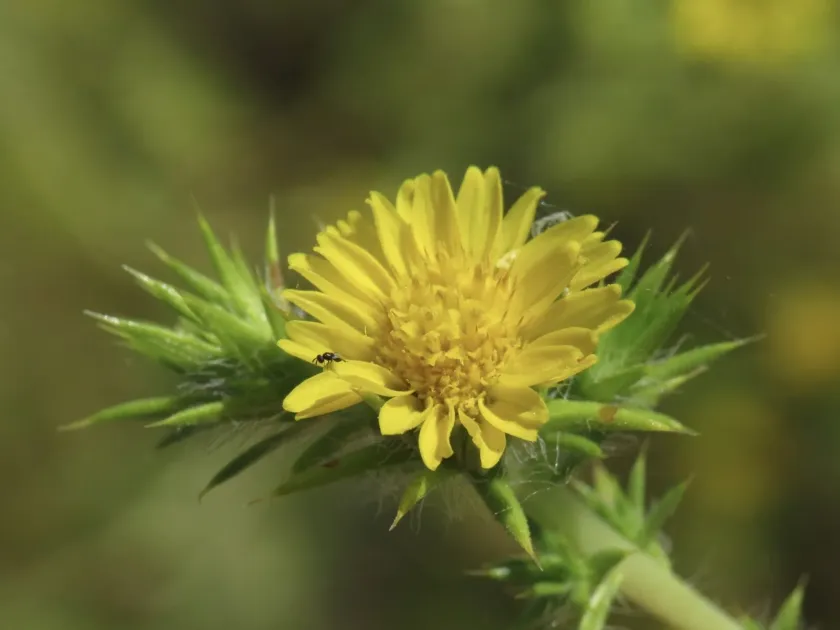
The plant is easily identified by its sharp, spine-like bracts surrounding the flower heads, which make it extremely painful to touch without gloves or protective equipment.
The leaves are also tipped with spines, further confirming its identification. The entire plant is covered in glandular hairs, which exude a distinctive, often pungent, odor.
Yellow flower heads bloom primarily during the summer and autumn months, producing seeds that are equipped with a pappus, facilitating wind-blown dispersal.
A deep taproot allows the plant to access subsoil moisture, giving it a significant competitive advantage in arid environments or during dry spells.
Where it grows
Common spikeweed typically thrives in disturbed sites, including roadsides, pastures, and fallow fields, where vegetation cover is sparse or damaged.
In agricultural settings, it frequently invades grain crops, often establishing itself in thin stands or areas with low soil fertility and high salinity.
The species is highly adaptable to various soil types, ranging from heavy clays to rocky substrates, and is particularly prevalent in regions with dry summers.
Its ability to tolerate saline conditions allows it to occupy niche environments where other beneficial crops or desirable forage species might fail to establish.
The plant spreads rapidly through contaminated equipment and wind, making it a persistent issue in both managed fields and adjacent non-crop land.
Harm it causes
The primary agricultural impact of common spikeweed is its role as a resource competitor, depriving crops of essential water and nutrients, leading to reduced yields.
Spiny structures pose a significant threat to livestock, as the sharp thorns can cause physical injury to animals' mouths and hooves when consumed or trampled.
The presence of this weed creates operational hurdles during the harvest season, as the rigid stems and spines can clog and damage combine harvester components.
It acts as a host for various pathogens and pests, potentially increasing the disease pressure within a cultivated field and necessitating additional spray applications.
Grain contamination is a major quality concern, as the small seeds of the spikeweed are difficult to separate from cereal grains, often leading to dockage at the elevator.
How to control
Cultural management is the first line of defense; deep plowing and cultivation are effective at destroying young plants before they reach the reproductive stage.
Maintaining competitive crop density is essential to shade out potential seedlings and prevent the weed from establishing a foothold within the field interior.
Chemical control involving systemic herbicides is most effective when applied at the rosette stage or early branching phase before the spines have fully hardened.
- Pre-emergent herbicide treatments in areas with a history of high infestation.
- Spot spraying or localized mowing to reduce seed production in fence lines and ditches.
- Utilizing integrated pest management (IPM) to deplete the soil seed bank over time.
Consistent monitoring and early intervention are required to prevent the weed from spreading, as individual plants can produce a massive amount of seeds.
Taxonomy
- Latin name
- Centromadia pungens
- Family
- Сложноцветные (астровые)
- EPPO code
- HEZPU