
Rock knapweed
Centaurea rupestris
Description
How to tell it apart
Rock knapweed (Centaurea rupestris) is a perennial herbaceous plant belonging to the Asteraceae family. It is recognized by its sturdy taproot and branching stems that can reach 60-80 cm in height.
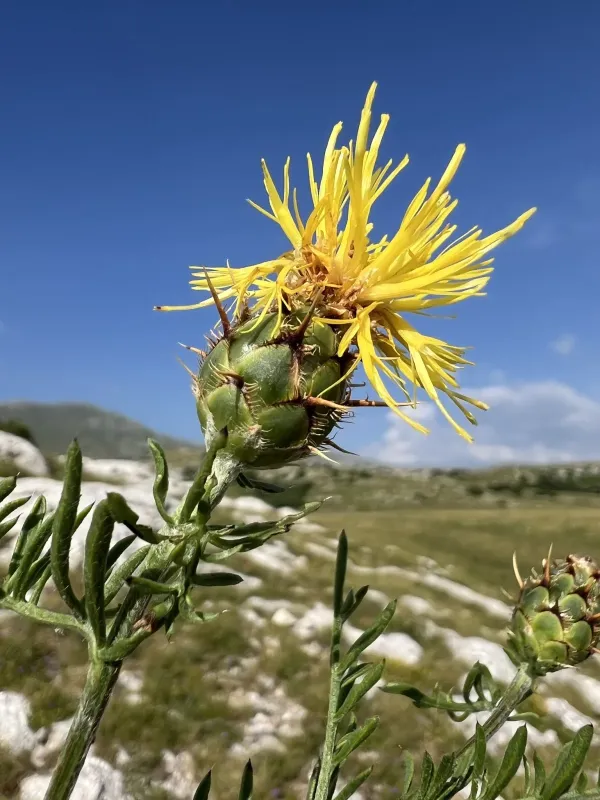
The leaves are pinnately dissected and often exhibit a grayish, pubescent texture, giving the plant a distinct silvery appearance. Basal leaves form a rosette, while stem leaves are alternate.
The inflorescence consists of flower heads with involucral bracts that feature characteristic fringed margins. The flowers are typically yellow, a notable trait compared to other knapweed species.
Seeds are equipped with a pappus, a tuft of hairs that enables efficient wind dispersal over significant distances, contributing to the plant's spread.
The plant exhibits high adaptability to varied soil types, allowing it to establish itself in both disturbed and undisturbed environments effectively.
Where it grows
This weed prefers dry, rocky, or calcareous soils, which is reflected in its common name. It is frequently found on mountain slopes, in steppe ecosystems, and on fallow lands.
In agro-ecosystems, rock knapweed often infests perennial grass crops, winter cereals, and field margins. It thrives in locations where other species might struggle due to moisture stress.
The plant is highly drought-tolerant, giving it a competitive advantage in arid regions and contributing to its status as a persistent agricultural weed.
In fields under reduced tillage, rock knapweed tends to accumulate over time, as its root system remains undisturbed and capable of regeneration.
Agricultural machinery is the primary vector for the dispersal of seeds into clean fields during harvest and cultivation operations.
Harm it causes
The primary damage caused by rock knapweed is the intense competition for soil moisture and nutrients, which is most critical during the early growth stages of crops.
Its deep root system allows the weed to access deep-soil water reserves, depriving crops of essential hydration, especially during dry growing seasons.
Infestation leads to reduced crop density and overall yield losses, as the weed shades the crops and physically competes for available light and space.
The presence of knapweed in fields complicates harvesting operations, reducing machinery efficiency and potentially increasing the moisture content of the harvested grain.
In pastures, rock knapweed can reduce the quality of fodder, as its coarse, fibrous structure makes it less palatable and nutritious for grazing livestock.
How to control
Agronomic control strategies include deep autumn plowing to bury weed seeds and disrupt the root systems, thereby inhibiting vegetative propagation.
Crop rotation incorporating competitive species that close the canopy quickly can suppress weed development and reduce the reliance on chemical inputs.
Chemical control is best achieved using selective herbicides targeting broad-leaved perennial weeds, ideally applied when the weed is in the rosette stage for maximum efficacy.
Proactive management of field perimeters and non-crop areas is essential to minimize seed bank replenishment and prevent re-infestation.
- Thorough cleaning of harvesting equipment between fields.
- Strategic timing of herbicide applications during peak metabolic activity.
- Use of certified, weed-free seeds for planting.
Taxonomy
- Latin name
- Centaurea rupestris
- Family
- Сложноцветные (астровые)
- EPPO code
- CENRW