
Rhaetian knapweed
Centaurea rhaetica
Description
How to tell it apart
Rhaetian knapweed (Centaurea rhaetica) belongs to the Asteraceae family. It is a perennial herbaceous plant known for its robust and persistent nature in various landscapes.
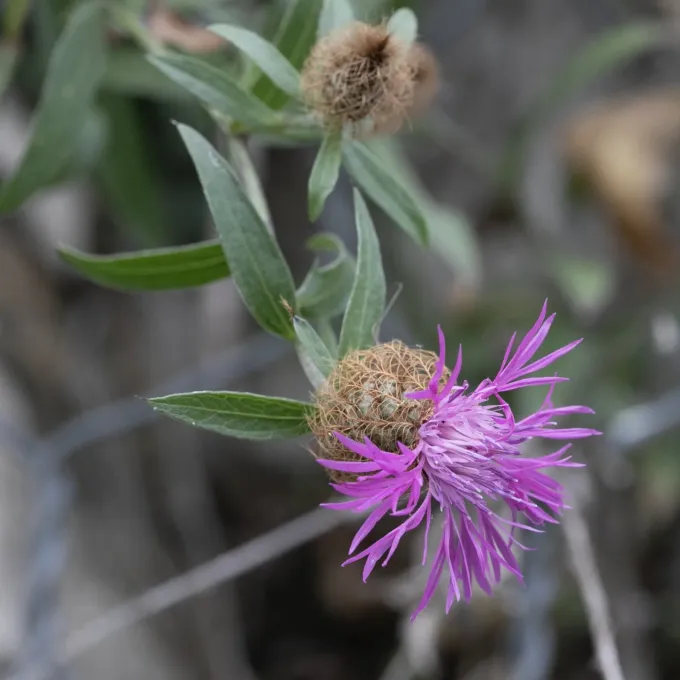
The plant features upright stems and deeply lobed leaves, which are often covered with fine hairs. The flowers form typical knapweed heads, showing vibrant shades of pink or purple.
Its biological cycle is marked by a long vegetation period. The plant produces numerous seeds that can persist in the soil seed bank for several years under favorable conditions.
The root system is well-developed, enabling both vegetative propagation through root segments and successful survival during periods of environmental stress.
Identification is largely based on the structure of the involucral bracts, which display distinctive fringes typical for this specific species within the Centaurea genus.
Where it grows
This species is naturally found in mountain and subalpine regions, particularly in the Alps. It prefers open, sunlit areas with well-drained, neutral, or slightly alkaline soils.
In agricultural settings, Rhaetian knapweed invades the edges of cultivated fields, pastures, and meadows that are adjacent to wild, undisturbed vegetation zones.
The plant is highly adaptable and can colonize disturbed sites, roadsides, and areas where the natural soil structure has been recently disrupted by human activity.
It often spreads into arable land from peripheral zones via wind-dispersed seeds or through mechanical movement of soil contaminated with root fragments.
It thrives in temperate climates and does not tolerate waterlogged conditions, making it more common on hillsides and well-draining agricultural plots.
Harm it causes
The primary damage caused by Rhaetian knapweed is intense resource competition. It aggressively absorbs soil moisture and nitrogen, depriving crops of essential nutrients.
Due to its rapid development, it shades out emerging crop seedlings, leading to reduced photosynthesis and overall stunted growth of the desired agricultural plants.
The presence of this weed significantly lowers the yield quality, necessitating extra effort and specialized equipment for cleaning harvested grains from weed seeds.
Rhaetian knapweed acts as a host for various pathogens, which may subsequently spread to cultivated crops, increasing the risk of diseases in the field.
Its ability to establish dense patches reduces the overall biodiversity of the field and requires immediate intervention to prevent the expansion of the weed colony.
How to control
Mechanical control involves deep autumn plowing, which is highly effective in disrupting the root system and exposing it to frost and dry conditions during winter.
Good agricultural practices, such as competitive crop rotation, help suppress the growth of this weed by ensuring full coverage of the soil surface.
Regular cultivation and hoeing in row crops can exhaust the carbohydrate reserves in the roots, eventually weakening and killing the perennial plants.
Chemical control is performed using selective herbicides during the early growth stage, which is the most sensitive period for the knapweed to absorb systemic substances.
Integrated weed management, combining tillage and chemical applications according to growth stages, is recommended to achieve long-term suppression of the species.
Taxonomy
- Latin name
- Centaurea rhaetica
- Family
- Сложноцветные (астровые)
- EPPO code
- CENRT